


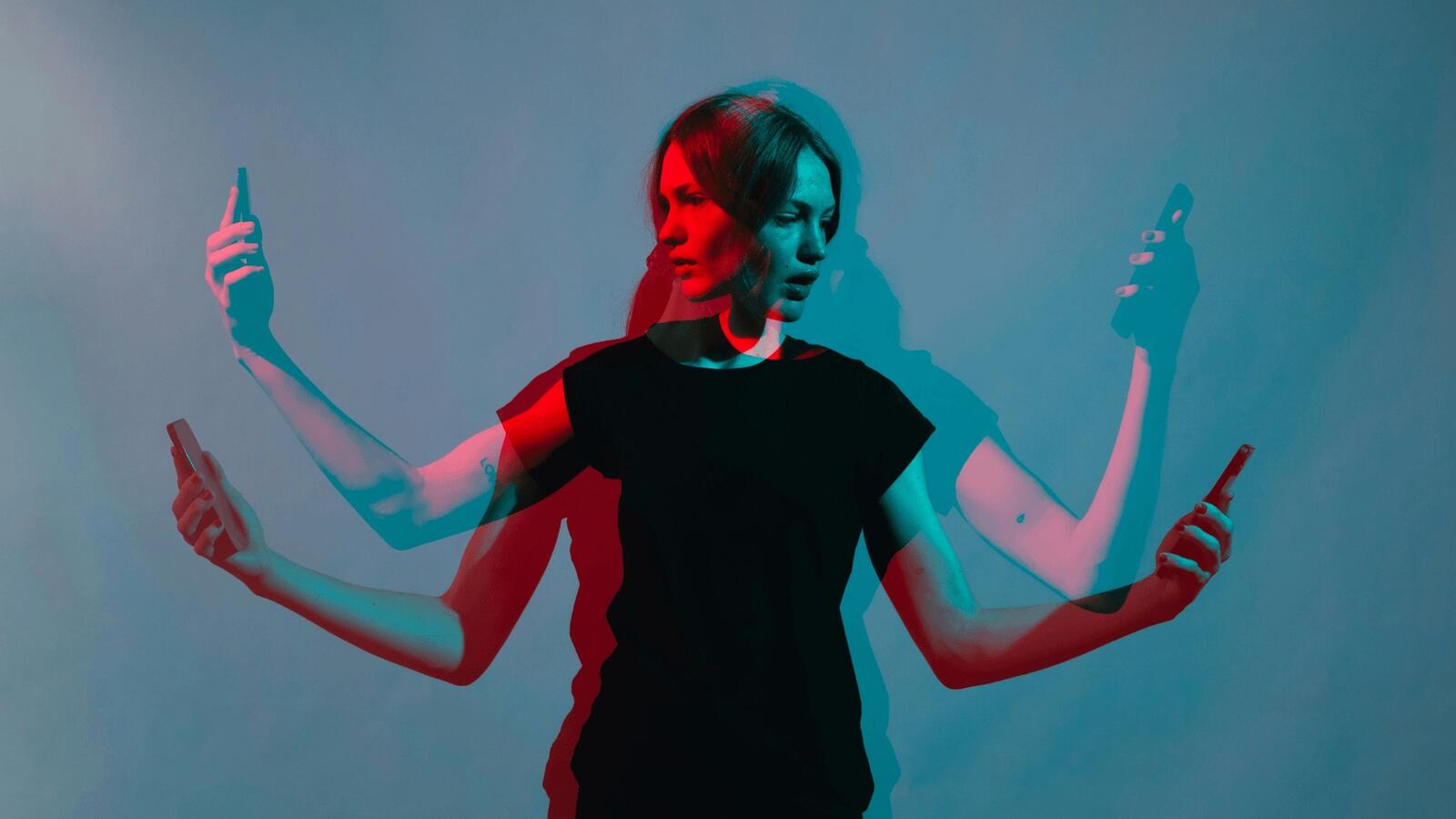
For most people, it’s almost impossible to start their day without a quick scroll on social media. Whether it’s following a content creator on TikTok or checking in on friends and family on Facebook or Instagram, it has naturally become part of our daily to-do list.
But as our screen time has increased, so has a collective sense of unease. Some point out that social media is a great way to stay connected. Others argue that it places immense strain on one’s mental health.
Yet the mental impact of social media isn’t quite a simple “good vs bad” debate. It’s an ongoing exchange of dopamine and comparison that affects our brains in ways that we are only just starting to understand.
How Has Online Usage Shifted In Recent Years?
According to Ofcom reports in 2025, 91% of UK residents between the ages of 16 and 24 use social media every single day, without fail. Is it a coincidence that one in five adults in England now live with a common mental health problem? While Gen Z and Gen Alpha have grown up with it, is the impact slightly worse for millennials?
Almost 73% of young adults across the UK explicitly believe that social media has a negative impact on them mentally. So not only have we seen a shift in increased social media usage, but also a shift in awareness of the toll that these apps are taking.
The Dopamine Loop Of Social Media
There’s a reason why it’s so hard to put our phones down and stay off social media platforms. They are designed to be an interactive experience that directly impacts the brain’s reward system.
Every like or share on a post triggers a small amount of dopamine, the same chemical associated with eating and exercising. Some psychologists have coined it as something called a random reinforcement schedule. Put simply, because you don’t know when you will receive that next notification, your brain remains in a constant state of anticipation.
What happens if a post doesn’t perform too well or users don’t get the dopamine hit they’re after? The opposite happens. A dopamine crash which lowers your mood and causes irritation. To fix it, you have the urge to keep checking your phone and staying online. It’s a continuous cycle.
More from Guides
- What Are Computer Chips And How Do They Work In Our Devices?
- What Synthetic Biology Actually Means for Everyday Life
- Working Abroad Requires The Right Visa – Which One Do You Need?
- What Is A Computer Cluster Or Cluster Computing?
- Going Global? Here’s What VoIP Can (And Can’t) Do For You
- How Do Social Media Algorithms Work?
- What Is Microbial Technology, And Why Does It Keep Showing Up In Biotech News?
- What Is The Digital Euro?
How Does Social Media Impact Mental Health?
Everyone has a different “for you page” depending on what you like and the content that you interact with. However, the impact of what you see online still falls roughly into four categories.
The Fear Of Missing Out
You may think FOMO is just a slang word, but it is a very real psychological phenomenon. People view social media as a place to post the nice and pretty parts of their life, including milestones from getting married to work promotions or buying a house. For viewers seeing that content who haven’t reached those “achievements” in their own life, it triggers a sense of inadequacy.
Naturally, these negative feelings can fester if not dealt with, leading to serious mental health disorders such as depression. In other words, social media has a way of hitting your self-esteem where it hurts the most.
The Comparison Trap
An extension of feeling like you are missing out on life experiences or events comes the ongoing comparison between your life and theirs. Social media is a carefully curated selection of highlights and moments, yet many people fall into the trap of comparing what they see to their day-to-day routine.
One very prevalent example is the “fitspiration effect.” The constant exposure to perfect edits and society’s standard of beauty has been directly linked to an increase in Body Dysmorphic Disorder. Mayo Clinic describes it as a condition where one can’t stop thinking about perceived flaws in their appearance. In reality, these “flaws” aren’t even noticed by other people. But it still affects one in eighteen women in the UK.
Sleep Deprivation
This is often overlooked but sleep quality is directly affected by social media usage. The blue light from screens actually suppresses melatonin, keeping your brain awake and active. Even something you perceive as exciting, like a post going viral, stops your brain from resting.
As a result, the lack of sleep then contributes to other mental health disorders like depression and anxiety. It’s the start of a spiral without you even realising it.
Is A Digital Balance Possible?
It’s not all doom and gloom. For a lot of people, social media has offered support systems and communities regardless of where you are in the world. There have been plenty of cases where online campaigns have urged social media users to speak up if they need help and that it’s okay to do so. It creates a sense of acceptance and inclusivity even if a user doesn’t have that in their immediate physical vicinity.
Some mental health experts do believe that you can have a healthy relationship with social media by taking up a couple of digital hygiene habits. If you follow an account that consistently makes you feel like you aren’t enough, unfollow it. Give yourself a time limit on scrolling and stick to it, to avoid falling into a doomscrolling trap.
And when it comes to bedtime, put your phone as far away as you can – even in another room if possible. It will help you break the cycle of sleep procrastination.
It all comes down to being aware of how content affects you. Everyone feels things differently so you need to monitor your own internal reactions and adjust your social media habits accordingly.


