


A few years ago, sustainabiltiy was a buzzword, but now, it seems like the sector is entering a more complex and consequential phase. What began as a values-driven movement, spurred by a lot of emotion and social charge, has evolved into a strategic business discipline, increasingly shaped by regulation, risk management, operational performance and capital allocation.
By 2026, sustainability will no longer sit at the margins of corporate strategy. It will influence how companies report, invest, build, insure, source materials, design products and plan for long-term resilience.
Rather than focusing on bold pledges or headline commitments, the conversation is shifting toward credibility, execution and outcomes. Businesses are under pressure to demonstrate that sustainability initiatives are not only ethically sound but commercially rational. At the same time, climate disruption, geopolitical instability and technological acceleration are reshaping the operating environment.
So, what’s to come for 2026?
Sustainability To Become A Core Business Infrastructure?
One of the clearest shifts underway is the movement of sustainability from external storytelling into internal decision-making. Increasingly, environmental and social considerations are being treated not as communications priorities but as operational and financial ones. This is changing who owns sustainability within organisations, how success is measured and how investment decisions are made.
Regulation is playing a central role in this transition. As reporting requirements tighten and enforcement becomes more tangible, companies are being forced to confront the quality of their data, the robustness of their supply chain visibility and the credibility of their transition plans. That pressure is cascading through value chains, pulling smaller suppliers into the same accountability frameworks as large corporates.
At the same time, sustainability is becoming more tightly linked to risk management. Extreme weather events, resource scarcity, infrastructure vulnerability and energy volatility are no longer theoretical future risks. They are already influencing insurance pricing, financing conditions, procurement decisions and site selection. Businesses that fail to integrate these realities into strategy risk being caught unprepared.
The result, it seems, is a redefinition of sustainability itself. It’s increasingly understood not as a reputational exercise but as a form of corporate resilience – a way of protecting long-term performance in an unpredictable world.
More from Business
- Five Themes To Watch At Singapore FinTech Festival 2026
- How Is The UAE Attracting More Businesses?
- Why Are Brands Turning To Pop-Up Stores Instead of Permanent Shops?
- How AI Video Indexing Is Reshaping Influencer Marketing And Creator Content Strategy
- What Is The UK Doing To Attract More Entrepreneurs?
- Is Singapore’s Small Market Actually Its Biggest Strategic Advantage?
- What Is The US Doing To Attract Entrepreneurs?
- How Have SHEIN And Temu Gamified Online Shopping?
Efficiency, Resilience and Competitive Advantage By Means of Sustainability
Alongside growing regulatory pressure, there is a parallel shift in how sustainability is justified inside organisations. The emphasis is moving away from abstract impact metrics toward tangible business outcomes. Cost savings, operational efficiency, supply chain stability, asset longevity and access to capital are becoming central to the sustainability case.
This evolution is also changing how sustainability is discussed publicly. Many organisations are becoming more cautious in their language, focusing less on virtue signalling and more on practical benefits for customers and stakeholders. The underlying activity has not disappeared; instead, it is being reframed around performance, value and competitiveness.
Technology is accelerating this shift. Advances in data infrastructure, AI, sensors and software are enabling far more granular understanding of environmental performance. That, in turn, is making it possible to link sustainability decisions directly to financial outcomes. Companies can now see where inefficiencies exist, where risks are accumulating and where investment can deliver both commercial and environmental returns.
As a result, sustainability is increasingly being treated as a lever for differentiation. Organisations that embed it effectively are not just managing risk; they are positioning themselves to outperform competitors in areas such as resource efficiency, resilience, innovation and trust.
Our Experts:
- Daniel Usifoh: Co-Founder of Axiom Sustainability Software
- Juliette Devillard: Founder and CEO of Climate Connection
- Jim Mellon: Executive Chairman of Agronomics
- Dana Haidan: Chief Sustainability Officer at Virgin Media O2
- Kamil Kluza: Co-Founder of Climate X
- David Delfassy: Investment Director at TDK Ventures
- Sam Hill: Investment Analyst at TDK Ventures
- Carlota Galván: Global Head ESG at HBX Group
- Sam Stark: CEO and Founder of Green Project Technologies
- Mike Smeed: Managing Director at InMotion Ventures
- Alyssa Zucker: Senior Industry Principal at Workiva
- Richard Neish: CEO at Crosstide
- Robert Schogger: Co-Founder and CEO of MetSpace
- Nishith Rastogi: CEO and Founder of Locus
- Rebecca Scottorn: Partner at L.E.K. Consulting
Daniel Usifoh, Co-Founder of Axiom Sustainability Software

The sustainability landscape will move from broad reporting to radical accountability. With the full implementation of CSRD and the arrival of CSDD, the era of ‘estimation’ is over; companies now require granular, primary data from across their entire value chain. The most significant shift is the mainstreaming of Double Materiality, requiring firms to disclose not just climate risks to their business, but their business’s tangible impact on the planet. As Scope 3 emissions, often comprising over 80% of a footprint, move into focus, we anticipate a significant ‘SME squeeze’ as large enterprises demand high-fidelity ESG data from their smaller partners.
Juliette Devillard, Founder and CEO of Climate Connection
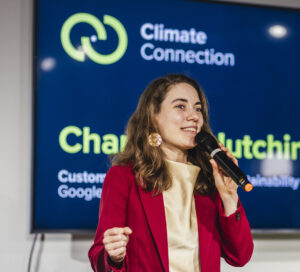
“2026 will be the year of ‘quiet climate’. Climate startups and investors will still be working on the same solutions, but they will quietly rebrand themselves and their work to take ‘climate’ out of their communication.
“We’ve already seen this in action: investors branding new venture capital funds as ‘efficiency tech’ or ‘deep tech’, even though they’re investing in the exact same companies they were before Trump got elected.
“Companies in the climate sector won’t change their fundamental mission, but their communication will focus on outcomes for customers, cost savings, and efficiency, rather than “impact” or “climate” metrics.
“There are lots of climate businesses that will have great success in 2026 because they offer valuable, efficient solutions that help their customers save money.”
Jim Mellon, Executive Chairman of Agronomics
“How we produce our food will be a major sustainability focus area as we head into 2026.
“Last year was a time of food insecurity, rising prices and weakening supply chains. From beef to sunflower oil, chocolate to coffee, climate shocks have made food less stable and more expensive. As this trend looks set to continue, food security will no longer sit at the margins of government policy but move front and centre.
“The positive news is that we now have the technologies to make our food system far more resilient. Clean food solutions – from fermentation to cell cultivation – are moving out of the lab and into the factory. As well as this, major food ingredient companies are committing to the technology.
“The choice for this year is clear: treat food shocks as a new normal, or use them as the catalyst to build a cleaner, smarter and more secure food system.”
For any questions, comments or features, please contact us directly.

Dana Haidan, Chief Sustainability Officer at Virgin Media O2

“2026 will mark a shift from ambition to accountability and sustainability. That was the strongest theme to emerge from COP30 this year. Organisations that are open about their challenges, from complex supply chains to data gaps, will be better placed to build trust and make real progress.
“The bar for sustainability reporting is rising fast. Regulators, investors and customers want clear, comparable and trusted data. As a result, sustainability is moving beyond a communications exercise and becoming a core business discipline and risk management priority.
“We’re also seeing a decisive move away from surface-level sustainability claims. Organisations that cannot evidence real impact will be challenged by regulators and consumers, while those investing in robust measurement and transparency will earn long-term trust.
“Alongside carbon, organisations will also be expected to account for their impact on nature. Most industries, including telecommunications, rely on nature for their long-term prosperity, and those links are becoming evident.
“Finally, circular economy principles are moving into the mainstream because they make business sense. Designing products and services for longevity, reuse and repair reduces waste, strengthens resilience, and delivers better outcomes for both customers and the environment.”
Kamil Kluza, Co-Founder of Climate X

“Climate resilience will be one of the major sustainability topics in 2026, grabbing the attention of everyone from investors to policy makers as the world comes to terms with the now normal occurrence of extreme weather events – and seeks ways to better protect communities and our physical infrastructure.
“With momentum from the 2025 COP summit, where climate adaptation (rather than emissions reduction) was a major focus, greater investment will be poured into making buildings, infrastructure and other physical assets more capable of resisting and surviving natural disasters such as flooding, major storms, extreme heat and wildfires.”
“In turn, properties and assets with verified climate adaptation measures – e.g. flood defences, cooling systems, fire-resistant materials – will begin securing better insurance terms and preferential lending rates. Investors, lenders and insurers are already repricing risk at unprecedented speed, and will increasingly reward resilience alongside penalising exposure in 2026.”
David Delfassy, Investment Director at TDK Ventures

“We are likely to see the concept of power flexibility for large commercial power users break into the mainstream next year. The grid is fundamentally slow and expensive to change, yet the emerging wave of compute-intensive infrastructure, especially AI and hyperscale data centres, requires unprecedented amounts of power. That mismatch is creating momentum for flexible hybrid models in which data centres can dynamically switch between grid power and on-site generation. A blend of new transformer hardware and increasingly sophisticated software orchestration layers are the tools in the toolbox that will enable the energy transition.”
“Geothermal will gain real momentum in 2026, propelled by the first commercial demonstrations of next-gen systems like Rodatherm. Traditional geothermal has been constrained by limited site suitability, inconsistent heat, and toxic chemicals. Next-gen approaches flip the model by leveraging oil-and-gas drilling innovations to reach deeper, hotter, and more reliable reservoirs, opening access far beyond historic capabilities.”
For any questions, comments or features, please contact us directly.
Sam Hill, Investment Analyst at TDK Ventures

“The global push for AI infrastructure is now one of the strongest drivers of energy-transition investment. In the face of slow grid connection timelines, access to reliable power has become a key bottleneck and is forcing developers to look beyond traditional locations. Twinned with the demand for sovereign capability, Big Tech is moving aggressively into Europe and the Middle East, and companies like Groq are already deploying sovereign AI infrastructure in these regions. This shift is rewriting global maps of both compute and energy investment, and investors who understand these dynamics will be best positioned for Climate Tech 3.0.”
Carlota Galván, Global Head ESG at HBX Group

“2026 will bring more urgency on combatting overtourism; companies will increasingly lean on technology to tackle this issue. For example, using the data of footfall to predict peak times when an area may be at or over-capacity. This is the information that will be crucial for local authorities to make decisions around appropriate measures to reduce the environmental impact, but also to ease social pressure on residents — a factor that is becoming just as important as environmental protection when designing sustainable tourism policies.
“Travel companies also play a key role in shaping a more balanced tourism model. Beyond promoting lesser-known alternatives to overcrowded destinations, the focus is shifting towards co-creating sustainable micro-destinations in collaboration with local communities. This approach responds to what many travellers — especially younger generations — are increasingly seeking: authentic, respectful experiences rooted in local culture and traditions.
“Done responsibly, these micro-destinations generate meaningful economic opportunities for rural and smaller communities, helping reduce depopulation and fostering a stronger sense of pride and stewardship over their natural and cultural heritage. They must, however, be developed carefully, ensuring they remain sustainable both environmentally and socially, and that tourism growth aligns with the capacity and aspirations of each community.”
Sam Stark, CEO and Founder of Green Project Technologies

“2026 is shaping up to be a year defined by action and efficiency for sustainability. We are already seeing that simply measuring sustainability, is no longer enough to secure leadership support without a clear path to improving sustainability outcomes and driving financial benefit.
“The focus is shifting toward the business value of sustainability, whether that comes from strengthening supply chain resilience or improving operational efficiency. Organizations are recognizing that sustainability efforts must directly support performance and long-term stability. At the same time, major company commitments are approaching quickly, with 2030 Net Zero climate commitments closer than many are accounting for.
“As a result, measurement alone is losing its influence. Stakeholders now expect visible progress supported by concrete decisions. One of the clearest examples is the growing emphasis on renewable energy procurement, which is becoming a core requirement not only for internal operations but also for supplier expectations. The momentum is moving toward meaningful implementation that delivers both environmental impact and business results.”
For any questions, comments or features, please contact us directly.
Mike Smeed, Managing Director at InMotion Ventures

“Battery tech, specifically circular supply chains and critical materials, attracted attention in 2025 and will continue to do so next year. Rare earth elements, battery materials, and supply chain resilience technologies are no longer just environmental plays; they’re national security imperatives. With China’s export restrictions on gallium and germanium, and broader onshoring pressures, circular economy solutions will receive investment from corporates across multiple industries.”
“In 2025, just shy of one-fifth of all VC dollars in Europe went to climate tech, proof that there’s still innovation and opportunity in the sector, and I expect Europe, and the UK specifically, to continue leading in these areas. Advanced materials are gaining major traction and will continue to do so in 2026. What’s notable is that investors are prioritising companies with multi-sector applicability. Proving the technology across different use cases accelerates commercialisation and de-risks the investment. As electrification scales, the strain on ageing grid infrastructure is becoming the bottleneck. We’re closing monitoring at technologies that enable intelligent energy management, and I also expect to see an uptick in investment in the sector next year.”
Alyssa Zucker, Senior Industry Principal at Workiva

“As climate change continues to impact corporate budgets – through supply chain disruptions, increased operating costs, or extreme weather events – sustainability considerations are becoming more critical to finance and enterprise risk management teams. And investor demands and disclosure requirements for transition plans that demonstrate resilience and growth potential add even more pressure.
“In 2026, sustainability will enter a phase of strategic internalisation where investment and integration into core business models will intensify, despite what might appear as narrowing or quieting of external communication. Globally, we will see a shift in the vernacular of sustainability transforming from niche domain into fundamental business language and approach that anchors programs, investment, and results in financial terms.
“Despite the rise of corporate ‘greenhushing’, companies are not abandoning sustainability commitments or programs but rather changing the communication channel and framing to one that leaves behind value-based preferences in exchange for fundamental financial impact and corporate governance. Investments in resilient supply chains, operational efficiency, and renewable energy will grow – with ownership of this strategy remaining with the CSO but shifting from the CMO’s office to the CFO’s budget.”
Richard Neish, CEO at Crosstide

“Your AI strategy is in direct conflict with your carbon reduction commitments. Advancements in green computers and the longer-term potential for DNA data-storage are not going to keep up with the growing computing demand and data centre energy consumption driven by increased AI adoption.
“Until the improved energy efficiency promised by quantum computing can achieve scale, enterprise businesses will have to make a choice in 2026 between achieving their AI ambitions and honouring their carbon targets.”
For any questions, comments or features, please contact us directly.
Robert Schogger, Co-Founder and CEO of MetSpace

“As we grow closer to 2030 and tighter EPC regulations (e.g. ratings of B+), sustainability is already moving from being a ‘nice to have’ to a commercial necessity. The biggest shift we’ll see this year is landlords and occupiers treating sustainability as a long-term investment rather than a short-term cost.
“The smartest operators will focus on refurbishing and futureproofing existing buildings, using durable, responsibly sourced materials and designing spaces that perform well over multiple years and occupiers. MetSpace’s starting point is to ask what the most intelligent and durable use of materials and landlord investment looks like; that’s when sustainability becomes commercial foresight. Done well, sustainable refurbishment is also one of the most effective ways to create more Grade A workspace, which is in short supply across London.”
Nishith Rastogi, CEO and Founder of Locus

“Within the next decade, energy will become one of the most critical constraints on supply chains as AI adoption accelerates. Each layer of AI-driven optimisation adds to global compute demand, and logistics will feel the effects alongside every other industry. Nuclear power will shift from being a long-term ambition to an operational necessity if economies are to sustain growth while keeping emissions under control.
“Supply chain leaders who treat energy as a strategic variable now, factoring in volatility, pressure cost and sustainability, will be better positioned than those who still see it as a background concern. The ability to secure affordable and reliable energy will become as central as staffing or financing decisions.”
Rebecca Scottorn, Partner at L.E.K. Consulting

“Sustainability continues to show progress and return on investment, as organizations shift from target setting to granular transition planning; given the global uncertainty, organizations will continue prioritizing the highest ROI and impact initiatives at their companies.
“Regulation is shifting from a future potential to a current issue for organizations, as many deadlines come into play (e.g., EU’s CSRD, California’s SB 261 and SB 253); the final impacts of these new regulations remains to be seen as implementation and enforcement begins
“In energy, waste, and water, there’s a lot of opportunity across the ecosystems. Equipment and service players are benefiting from the infrastructure upgrades and build-outs, with energy security remaining top of mind. Technology advancements, including sensors, software, recycling technologies, automation, and AI, are developing in parallel with capacity expansion. Operational performance, efficiency, and resilience are critical to success.”
For any questions, comments or features, please contact us directly.


