


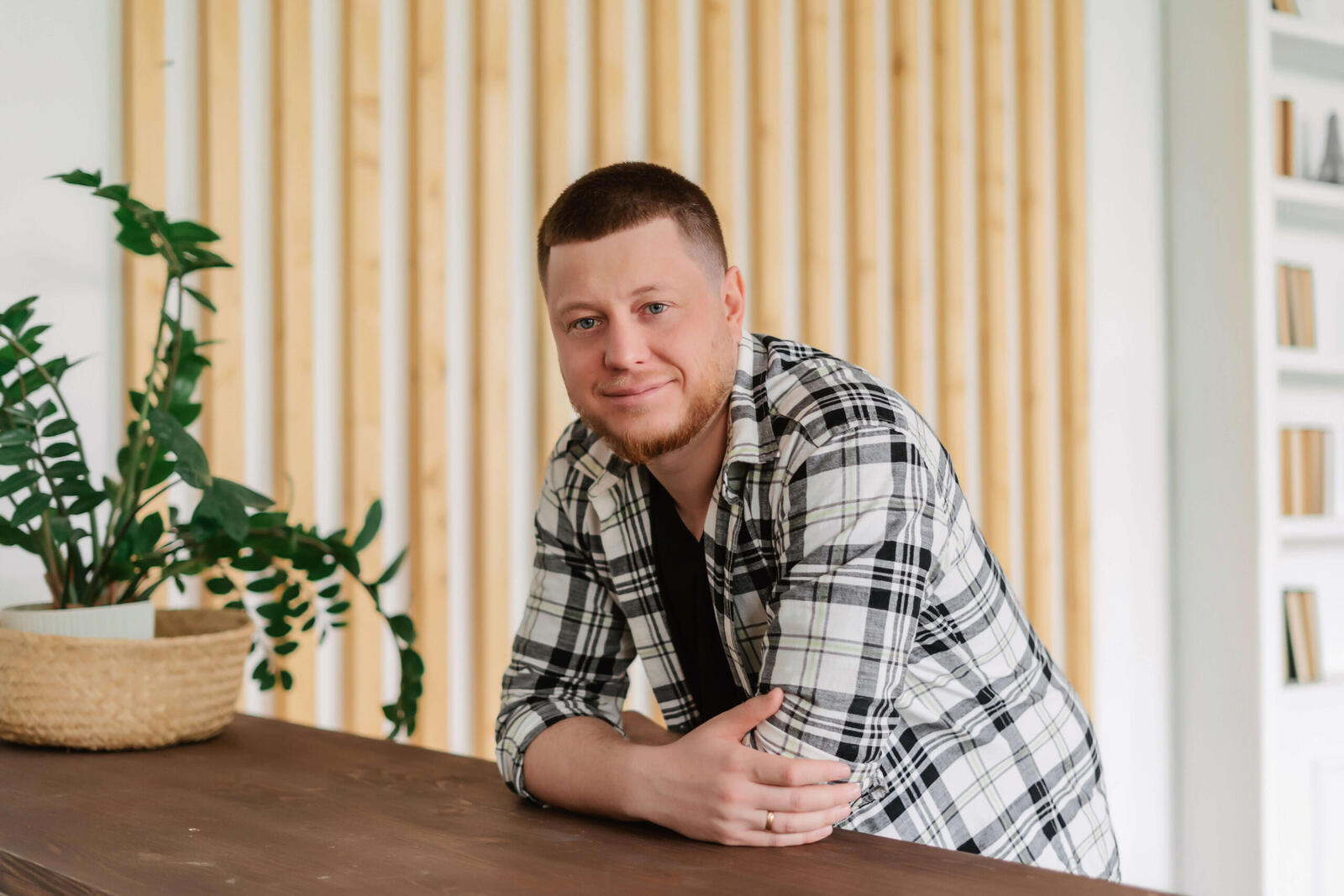
In an era when the digital industry is moving at the speed of artificial intelligence, Aleksandr Kalinin remains one of those who not only keep up with the times, but actually set its rhythm.
An expert in SEO technologies, digital platform architecture, and data-driven marketing solutions, he has broken through the wall of routine approaches and turned automation into a tool for strategic growth.
Today, his developments have been recognised with the international Global 1000 Award and by the professional community. Aleksandr has also joined the jury of the NOVA Awards, where he evaluates innovations at the forefront of the digital industry.
Aleksandr, Many Companies Today Face The Question Of How To Quickly Scale An IT Product Without Drowning In Operations. Where Should This Process Begin?
First of all, with an honest audit. You need to understand exactly where the bottleneck is: people, processes, or technology. Sometimes the problem is not in the code, but in task formulation or data structure. Once there is clarity, you can choose the right tools: for some, it’s microservices; for others, automation via APIs.
The key is not to try to solve everything at once. Scaling is a marathon, not a sprint.
Recently, You Spoke About An Internal Improvement Related To Content. What Was The Final Outcome?
Yes, it’s an interesting case. We had the task of filling tens of thousands of pages with text. Doing it manually would have been too slow and expensive.
We developed a tool that connects to a neural network via API: a script checks a page and if there is no text, it is generated and immediately written to the database. This way, the entire project is gradually filled.
The main secret lies in a well-designed prompt. If you set the parameters correctly, the content turns out to be adequate, aligned with the project’s style, and free of generic templates.
So You Integrated AI Into The System Rather Than Using It As A One-Off Tool?
Exactly. Many people experiment with AI, but we made it part of the infrastructure. The neural network works “in the background.” It does not replace people, but removes routine work. As a result, specialists focus on analytics and architecture instead of mechanical content generation. This is the right way to apply artificial intelligence.
More from Interviews
- A Chat With Laura Harrison, Education Lifeguards: Rethinking Teacher Wellbeing This World Mental Health Day
- A Chat With Luca Steinmetz, FARAWAYHOME: How AI Search Is Rewriting The Rental Listing
- A Chat With Lucid Software’s Jamie Lyon: Why Shared Context Is Becoming AI’s Real Competitive Edge
- A Chat With Tomas Milar: What Startups Should Look For In A Cap Table Management Platform
- A Chat With Danny Sullivan, CEO Of Nomada Digital And PR54 Judge
- Dear Mr. Prime Minister: Mike Bray, VP, Technical Solutions At RS Group
- A Chat With Sisi Ncube, Founder Of FibreTempo, On Building Health Habits That Actually Stick
- A Conversation With Paul Dawalibi, CEO Of Innovation City
You Recently Received The Global 1000 Award In The Category “For Outstanding Achievements In SEO-Driven Digital Platform Development.” What Does This Award Mean To You?
It confirms that we are moving in the right direction. For me, it is important that the award is not just about development, but about a systemic approach where SEO, architecture, and automation work as a single organism.
We do not chase trendy solutions; we build ecosystems that genuinely deliver results for clients.
You Also Serve On The Jury Of The NOVA Awards. What, For You, Is The Criterion Of “True Success” In Digital Projects?
I always look not only at design or technology, but at the purpose. A project must be clear, solve a specific problem, and deliver results. Even the most beautiful platform is meaningless if there is no strategy behind it.
Successful projects are a synergy of analytics, UX and engineering. Serving as a juror at the NOVA Awards gives me the chance to see how different teams implement the same ideas and that is truly inspiring.
Nowadays, Many People Fear That Neural Networks Will “Take Over Jobs.” How Do You See This From Inside The Industry?
On the contrary. AI removes routine tasks and opens opportunities for growth. Previously, a specialist would write code manually; now they design the architecture and manage the generation process. The human role doesn’t disappear; the level of tasks changes. It’s not a threat it’s an evolution.
Which Technologies, In Your Opinion, Will Define The Next 3-5 Years In IT?
Integrations with neural networks at the infrastructure level, infrastructure as code, and personalised AI agents. Everything is moving toward technologies becoming invisible, not just tools, but part of the environment. Those who learn to build this “intelligent ecosystem” will be a step ahead.
And Still, What Will Remain The Domain Of Humans In This Race?
Responsibility for meaning. Technology can speed up processes, but only a human can set the direction, define the goal, and see the connections. That is why I am confident: the future belongs to those who can think systematically and are not afraid to automate even what once seemed impossible.


