


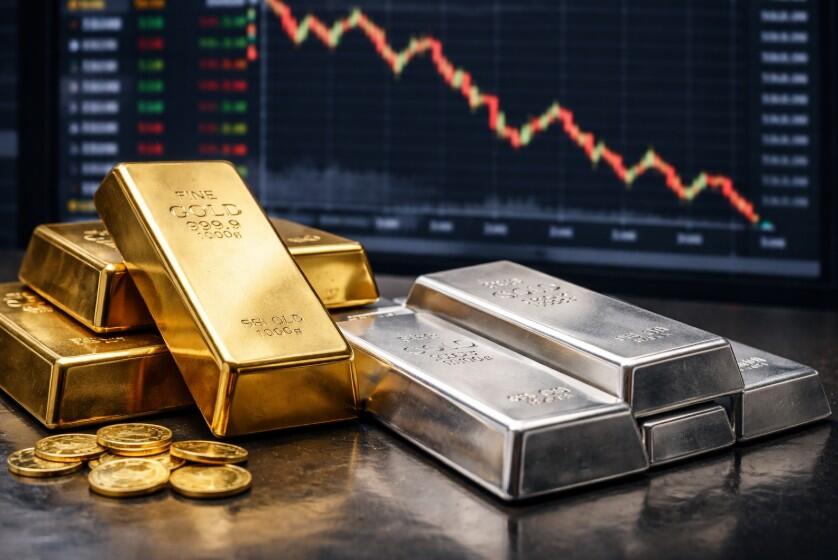
Just a few days ago, gold and silver looked indestructible. Gold was trading over $5000 an ounce, silver was over $120.
Even at TechRound, we wrote about how the perception of these assets as a ‘safe haven‘ was driving them to the sky. To everyone, it seemed like these precious metals were the investment of the year.
That is, until, almost overnight, they plummeted.
Gold fell close to 20% below its peak, silver dropped more than 30%. Newspapers were talking about a ‘crash’ and for investors, thousands of dollars were wiped off in an instant.
But why did gold and silver crash so hard? Here, we take a look…
What Caused The Gold and Silver Rally?
To understand what caused the crash, it’s important to explore what drove the rally.
Gold and silver have been climbing quickly since late 2025 as investors considered them ‘safe-haven’ assets. At the time, it was a mix of global conflict, trade tariffs, political instability in the US and worries about the Federal Reserve that pushed investors into investing in this asset type.
As a general rule, gold tends to become more popular when the world feels unpredictable. Its value rises with inflation, making it a safe asset to hold. Normally, silver follows suit.
But 2025 didn’t just see gold rise, it saw it totally explode. Gold was up 65% by the end of the year according to BullionVault, and everyone was trying to get a piece of the action.
The problem is, fast rises often come with fast falls, so for many, the run was a ticking time bomb.
Nigel Green of deVere Group commented “Gold rose too far, too quickly into record territory, and the structure of that rise left it exposed once prices started to slip.
“At the peak, large parts of the gold market were held by traders using borrowed money. Futures contracts, options, and leveraged ETFs all expanded rapidly as prices surged above $5,000 an ounce.
“Those positions only function smoothly while prices move higher or sideways. Once prices began falling, the mechanics turned hostile.”
What Caused The Fall?
In the US, many investors were waiting on President Donald Trump to appoint a new Federal Reserve chair that would succeed Jerome Powell.
Trump has long criticised the Fed, and Powell, for not cutting interest rates quickly enough, which he believes is stifling the US economy.
The problem with an aggressive cut in interest rates is that it could lead to even worse inflation. Not knowing who he was going to appoint, but guessing that Trump would angle for a chair that would cut rates, investors piled in on gold, an asset that typically rises alongside inflation.
But instead of doing this, President Donald Trump nominated former Fed Governor Kevin Warsh to take over from Powell after his term ends in May.
Warsh is known for being a credible and responsible candidate that is unlikely to be forced into irresponsible cuts. In short, Warsh was the total opposite if what many investors were expecting.
Almost immediately, knowing rate cuts were unlikely, the US dollar became stronger and the drive to hold gold vanished, causing a sell-off.
Susannah Streeter, Chief Investment Strategist, Wealth Club commented “The shock unravelling of prices demonstrates just how concerned investors had been about perceived attacks on the independence of the Federal Reserve. There had been concerns that a Trump cheerleader would be installed at the central bank, which could lead to politically led decision-making, and risks of runaway inflation.
“But now financial industry heavyweight Kevin Warsh has been anointed as successor, with deep Fed experience, he’s not expected to be a pushover and that’s sparked this big reversal of safe-haven positions. Silver was down 38% on last week’s highs, while gold is down by around a fifth.”
Why Does The Price Of The Dollar Matter?
Gold and silver are priced in US dollars, so when the dollar rises, these metals become more expensive to international buyers, which affects demand.
Since Warsh was appointed, the dollar has rallied. This alone would be enough to affect the price of gold, but put it alongside his interest rate policies, and demand quickly dropped.
Ultimately, when investors think that interest rates are going to stay high, keeping money in bonds or high-yield accounts becomes more appealing, and investing in assets becomes less so.
And as demand drops, so does the price.
Was It A Crash, Or A Correction?
Whilst headlines are warning of a ‘crash’, many have been quick to point out that gold’s rally has been unusual, meaning the latest price drop is more of a correction.
And the truth is, even after this massive drop, both metals are still trading much higher than they were over a year ago.
The problem with rallies like this is that whilst everyone piles in at the same time, they also leave together. This means markets can shift, and fast.
Where Are Gold And Silver Heading Next?
In the short term, gold and silver are likely to keep experiencing some volatility.
Investors are still looking to understand how a new Fed might be managed and what this means for interest rates and inflation in the US.
And ultimately, markets are unpredictable, and things come up just as quickly as they come down.


