


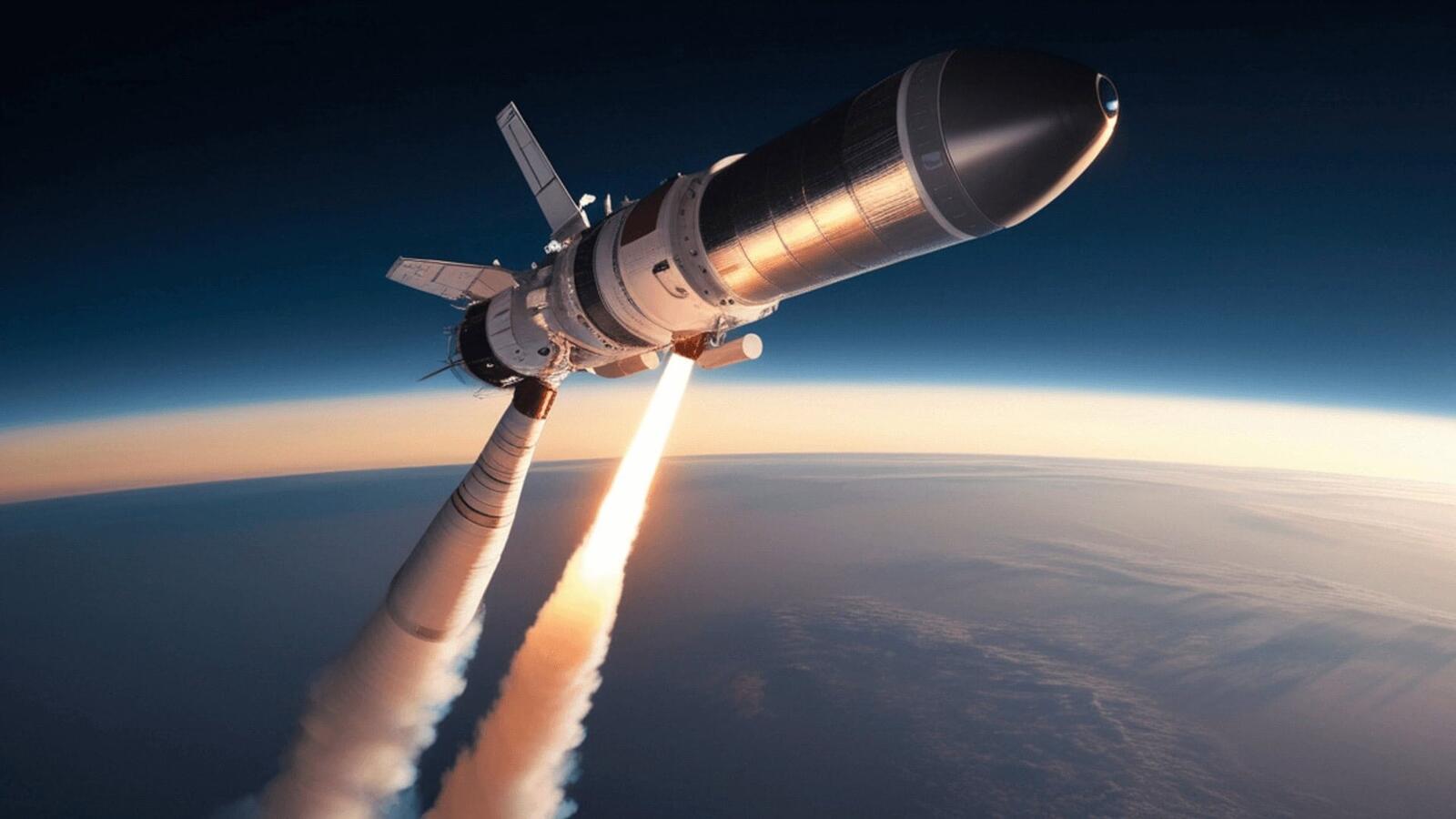
In the US, new startups are challenging the traditional model of space exploration and aviation. With the skies and orbits around Earth once reserved for government agencies and legacy contractors, nimble, tech-driven companies are completely changing the narrative.
Space is not just a place for astronauts, but a thriving, commercial market for private companies to make money and provide services used on Earth. In fact, projections show the global space economy could exceed $1 trillion by 2030 thanks to space tourism and in-orbit infrastructure.
US Aerospace Innovations Shaping The Industry
The US aerospace landscape has changed significantly, with startups tackling 3D-printed rockets to space debris removal and autonomous drone logistics.
Recent developments have included micro-geostationary satellites which sit in high orbits, delivering broadband where only traditional GEO satellites were once found.
In an effort to achieve sustainable space operations, some startups are developing spacecraft that can track space debris and remove obsolete satellites.
7 Aerospace Startups To Watch In The US
With such exciting innovations happening in this space (pun intended), let’s take a look at some of the startups who are redefining technology in the skies and beyond.
1. Relativity Space

Relativity Space is a Los Angeles-based startup using 3D printing to build rockets as a way to significantly reduce part count and manufacturing time compared to traditional methods. Their first launch vehicle, Terran 1, was an experimental rocket to demonstrate the use of 3D-printed components.
The company’s next big project, Terran R, will be a much bigger, partially reusable rocket which can carry satellites, and possibly crews, into orbit.
One of Relativity’s most notable funding rounds includes a $500 million Series D and $650 million round led by Fidelity Investments. This launched the company to a reported $4.2 billion valuation.
2. Astranis

Astranis is a satellite company specialising in smaller, cost-efficient communication satellites that operate in geostationary orbit, which is approximately 35,000km above the Earth. These satellites are able to provide broadband Internet to underserved regions around the world, while being cheaper and quicker to deploy than traditional satellites.
They already have multiple satellites in orbit already with dozens more scheduled in the coming years.
In 2024, Astranis raised $200 million in a Series D round, with its total capital amount reaching $750 million. They are expected to pursue more rounds which could see the company valued at more than $2 billion.
3. Turion Space

Turion Space focuses on sustainability, space domain awareness and orbital debris removal. While not the most glamorous part of aerospace, it is one of the most important and remains one of the biggest challenges in space today. The company is building aircraft which can monitor space objects, service satellites and even de-orbit space debris to avoid collisions.
Their technology is an autonomous “Droid” spacecraft which tracks and identifies objects in orbit while gathering space data and carrying out proximity operations vital to space safety.
Turion raised an early seed round of approximately $6.3 million through Y Combinator, one of the most prominent startup accelerators. They have also secured government contracts including a $32.6 million US Space Force contract for surveillance satellites.
More from Startups
- Startup of the Week: SnoreLab
- Columbia University: Successful Alumni That Founded Startups
- What Is Germany Doing To Attract More Startups?
- Are Hiring Challenges Preventing Startups From Reaching Their Full Potential?
- Meet The Startups Crowdfunding w/c 12.10.2026
- The Cold Start Problem: Why Getting A Startup Off The Ground Is So Difficult
- Founder Of The Week: Ryta Zasiekina
- Top Industrial Tech Startups To Watch In 2027
4. Wardstone

A new startup founded just last year, Wardstone is building satellites that can intercept ballistic and hypersonic missiles from orbit. These defence satellites are equipped with interceptors and advanced sensors to track and neutralise evasive weapons globally.
The company is backed by engineers from leading aerospace and defence backgrounds, including NASA and Amazon Prime Air.
While the satellites are in their early stages, Wardstone has successfully completed demonstrations of ground-based intercept prototypes and has already built relationships with the US Space Force and Air Force research groups.
5. Firefly Aerospace

Firefly Aerospace is a Texas-based startup which builds small to medium-lift rockets and spacecraft. They aim to serve both commercial customers and government contracts with a broad portfolio of launch, lunar and orbital capabilities.
Reuters reported in 2025 that Firefly successfully delivered the Blue Ghost lunar lander to the moon, making it one of the first private companies to carry out a lunar landing.
They raised a whopping $868 million IPO last year, valuing the company at $6.32 billion with earlier private funding rounds already resulting in a valuation of over $2 billion.
6. Flexjet

Flexjet is not a traditional rocket or space startup, but a leader in private jet aviation. They have transformed the aviation experience for corporate and high-net-worth flyers through state-of-the-art aircraft and premium services and offer fractional jet ownership and leasing.
The company is a great example of how aerospace innovation isn’t only reserved for rockets and satellites, but also includes changing the way in which humans travel.
In 2025, Flexjet completed an $800 million equity investment round led by L Catterton, valuing the company at around $4 billion.
7. Skyways

Founded in Austin, Texas, Skyways builds long-range, heavy-payload autonomous drones. These drones are designed to operate in areas where traditional helicopters and conventional delivery systems are unable to do so.
Their aircraft combine vertical takeoff with fixed-wing cruising which enables them to carry significant payloads for +20 hour missions, which is far more than what typical electric drones can manage.
Skyways’ systems are already being implemented across humanitarian supply delivery, defence operations and remote logistics routes.


