


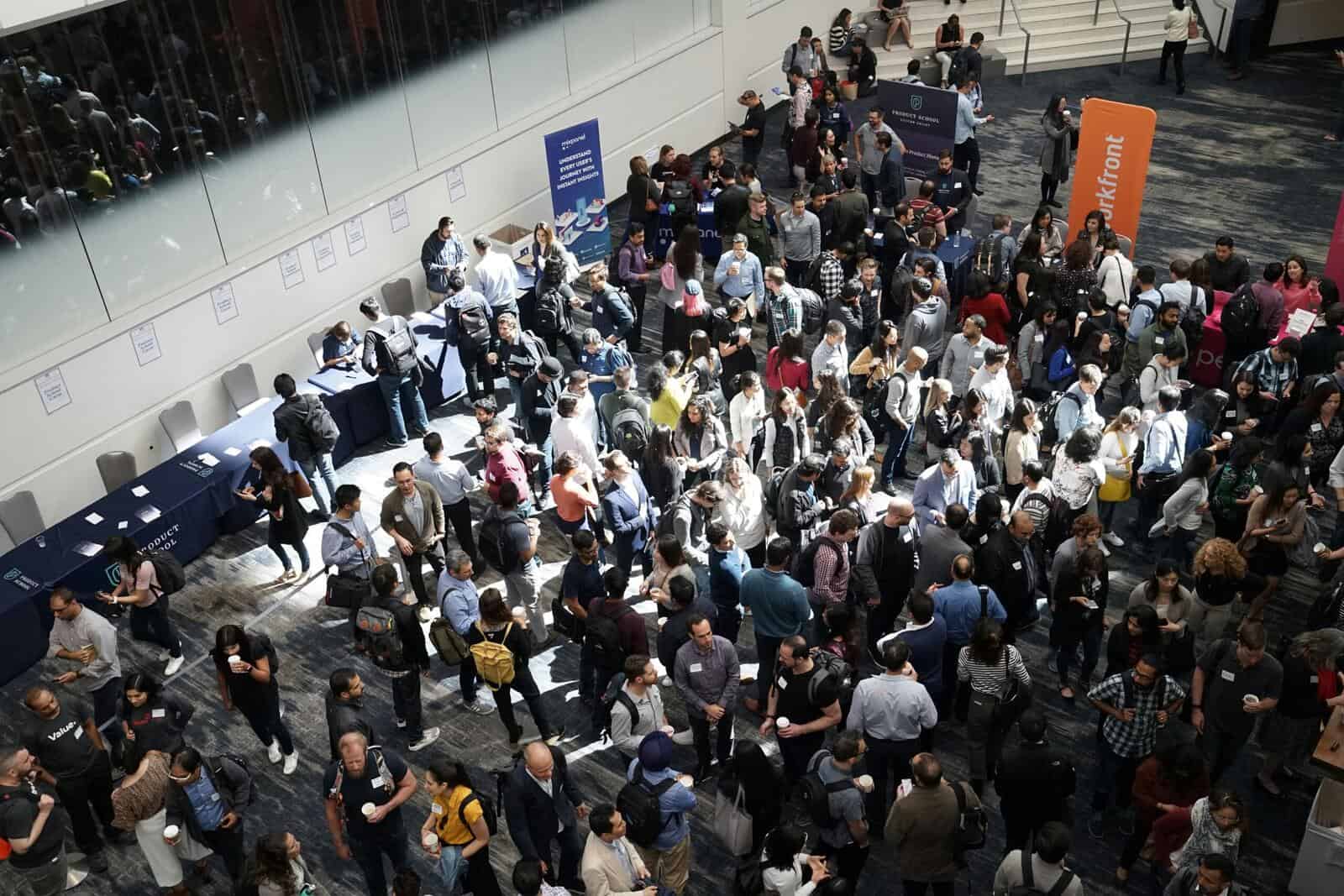
The India AI Summit 2026, held in Delhi in February this year, drew global attention not just for the high-profile attendees, but for the logistical chaos that seemed to mark the event. Long queues, sweltering heat and reports of stolen devices created an atmosphere that seemed more like a festival gone wrong than a high-stakes tech summit, according to multiple media reports.
Bill Gates pulled out at the last minute, and the absence of smooth coordination seemed to overshadow the presence of major AI leaders, including Sam Altman and Dario Amodei.
Indeed, the disruptions have prompted questions across the tech world – does this disorder signal an overheating AI market, or is it simply a growing ecosystem struggling to match its ambition with operational readiness?
A Summit of Star Power and Chaos
The summit drew AI leaders including Sam Altman, CEO of OpenAI, and Dario Amodei, co-founder of Anthropic, who were expected to make public appearances and speak on the global AI agenda. But, according to multiple reports, the event suffered from a series of logistical issues. Attendees complained about long lines stretching outside the venue, stolen devices and sweltering temperatures indoors which made participation uncomfortable and chaotic.
Notably, Bill Gates, who had been scheduled to appear and speak, pulled out at the last minute, adding to the sense of disarray, according to CNBC. Despite these challenges, the summit still featured notable discussions on AI adoption, enterprise deployment and government policy, allowing the event to retain some of its intended purpose.
Unfortunately, the symbolic weight of the summit became unavoidable.
“The AI India Summit was struck with symbolism: If two of the most prominent AI leaders in the world, Sam Altman and Dario Amodei, cannot hold hands in symbolic unison on a stage, what does that say about our ability to coordinate the release of artificial intelligence into modern society?” said Chris Rynning, CEO and Co-Founder of Umanitek. He noted that the moment highlighted a deeper structural issue that is, humanity’s lack of alignment even as AI deployment accelerates.
Rynning argued that a significant issue is that the focus of global summits has been on metrics like model size, benchmark performance and capital raised, rather than coordination, verification or governance. “Human alignment must precede machine alignment,” he said, emphasising the need for cross-company frameworks, shared safety standards, independent verification, clear liability structures and public transparency agreements.
More from Artificial Intelligence
- Quantum Computing: Is It The Next Data Centre Revolution, Or Just Another Tech Hype Cycle?
- How Marco Robinson Is Using AI To Build Profitable Human-Led Business Chapters At Scale
- Nvidia’s Mega Deal With Meta Signals A New Era Of Strategic Chip Alliances In AI
- Has Trump’s AI Executive Order Given Startups Clarity Or Created New Barriers?
- Is Europe’s Cautious Approach To AI Becoming A Problem For Startups?
- Industry Reactions: India Kicks Off AI Impact Summit, The Global South’s First Major AI Gathering
- New Research Reveals Whether Scale Up Founders Are Ready For The AI Shift
- Top AI Startups In The Netherlands
Chaos or a Market Signal?
For some, the India AI Summit’s disorder was taken as a cautionary sign that the AI market is overheating. According to Firstpost, the stolen devices, long lines and heat contributed to the perception that the event was poorly prepared for the scale of attendance. OutlookMoney reported that attendees were frustrated with slow registration processes and poorly managed facilities, further fueling the impression of disorganisation.
Edward Tian, CEO of GPTZero, however, offered a nuanced perspective on the chaos. “As a professional who develops and assesses artificial intelligence systems for their use in companies, colleges and governments around the world, I often observe where capital, public policy and the technology actually exist in reality, diverge from each other,” he said. “The chaos around the India AI Summit appears to be less of an AI bubble bursting and rather the resulting situation that occurs when the growth of an ecosystem exceeds its readiness for operation.”
Tian explained that while the demand for AI is genuine – enterprise adoption, model deployment and inference costs are all increasing – public perception can, unfortunately, be skewed when logistical failures coincide with high expectations.
“When the logistical issues surrounding an event fail or expectations regarding an event’s success don’t line up with what actually took place, the public perception will be that there is too much growth in this area, and it will create a perception that the underlying fundamentals of these markets are cooling off,” he said.
He added that a more important signal lies in whether there is sustained investment in infrastructure, compute capacity, talent development, governance frameworks and production-quality AI systems – the most important things to consider, according to Edward Tian. “If any of those four areas are behind the announcement of the event, then the end result will be spectacle without stability,” Tian noted.
The Demand for AI Remains Real
Despite the chaos, the summit certainly highlighted the global appetite for AI. According to Free Press Journal, an eight-year-old keynote speaker met with leaders such as Sam Altman and Sundar Pichai, highlighting the broad engagement and symbolic ambition of the event. CEO Today Magazine noted that the summit saw pledges from multiple countries and companies to invest in AI, signaling a genuine commitment to the technology. These are big moves by anybodies standards – not exactly what you’d expect to see in a failing market.
Interestingly, Rynning described the summit as a “dark premonition,” not because of a market collapse, but because it revealed structural misalignment. “We are racing to deploy systems of unprecedented power while lacking even symbolic cohesion among those building them,” he said. He warned that the potential of AI to shape elections, influence financial markets, generate industrial-scale deepfakes and alter societal perceptions makes coordination critical.
“Trust is the most valuable currency in the AI age. Right now, we are spending it faster than we are rebuilding it,” he added. I must say, it’s hard to disagree with that sentiment.
Lessons for the AI Ecosystem
Experts suggest that the chaos at the India AI Summit should be read not as evidence of an overheated market but rather as a lesson in aligning ambition with execution.
Tian urged stakeholders to examine whether AI ecosystem builders are pairing their level of ambition with operational readiness. “Rather than looking at the apparent lack of capacity at a venue as being evidence of a collapse of the AI market, we should be looking to see if the builders of this ecosystem have paired their level of ambition with their level of execution,” he said.
The takeaway for companies, policymakers and investors seems to be clear, despite the chaos at the summit – AI adoption and investment are growing rapidly, but coordination, governance and infrastructural capacity must keep pace. Spectacle alone doesn’t indicate overheating. But a lack of sustainable growth and operational alignment do.
India’s AI Summit Chaos Raises Questions About the Market’s Readiness
The India AI Summit chaos may serve as a cautionary tale, but it also highlights the energy and potential in the AI market. Long-term indicators – things like capital investment, compute infrastructure, talent development and governance frameworks – remain the most reliable measures of market health.
As Tian and Rynning note, the AI market’s fundamentals are still strong, but human coordination need to catch up with technological capability. So, the summit may have stumbled in execution, but the demand for AI and the global effort to build the ecosystem are far from cooling, it seems.