


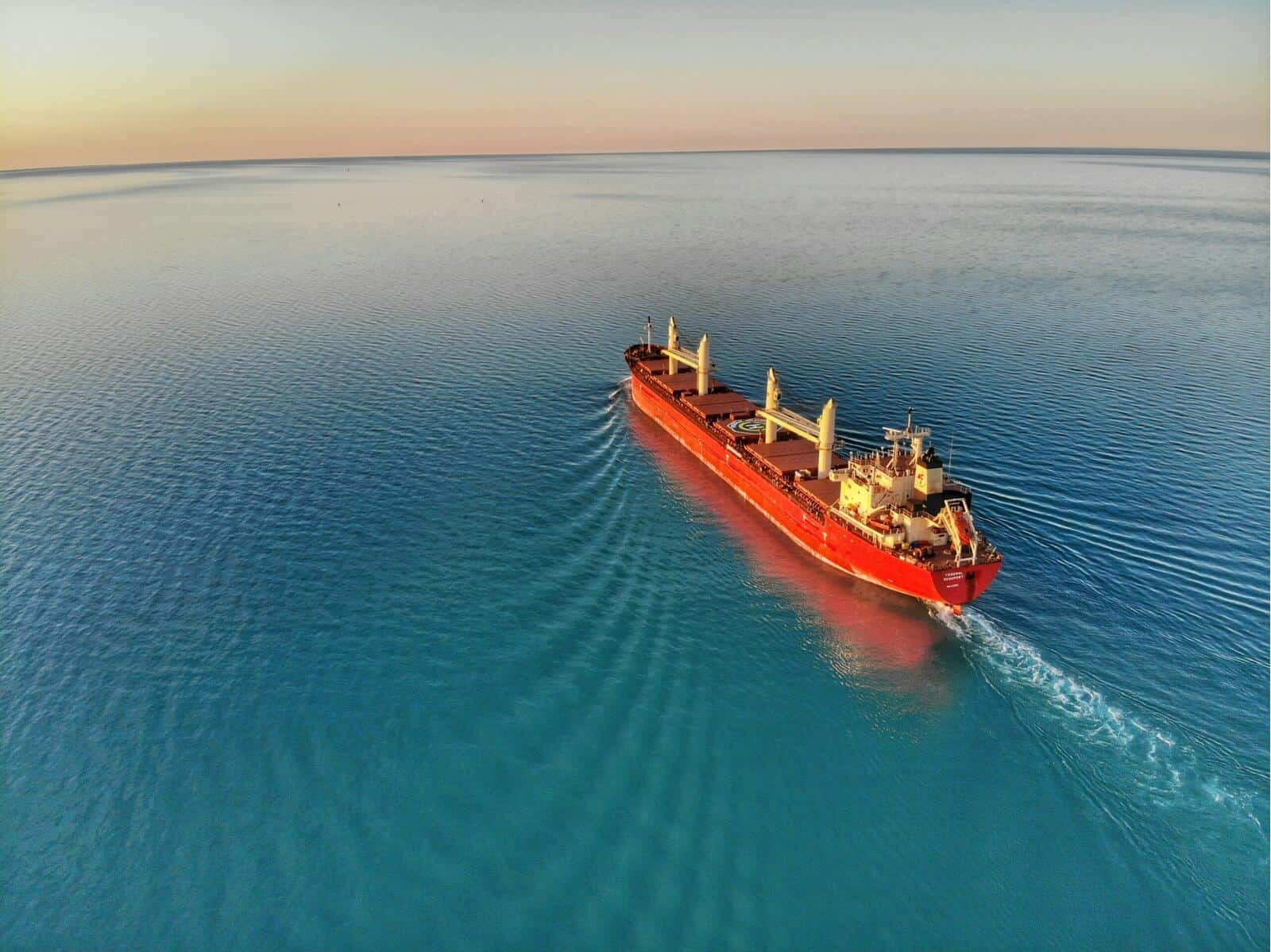
Shipping is officially entering its digital era. Modern vessels use connected navigation systems, real time cargo monitoring and automated engine management. Owners say these tools make journeys safer and more efficient. Insurers are watching carefully.
Marine cover has always depended on assessing risk. Protection and indemnity insurance, known as P&I, covers third party liability such as collisions and pollution. The UK writes 60% of global P&I cover, according to the UK government. That puts the London market at the centre of global shipping risk.
Mathieu Berrurier, managing director of marine insurance broker Eyssautier Verlingue, told AFP that vast amounts of cash were required for potential payouts caused by disasters at sea. This results in insurers forming P&I clubs that “are able to offer guarantees equal to the risks involved in” events including “a major oil spill or “collision with an oceanliner”, he said. “Colossal amounts are needed,” he stressed, adding that such disasters can potentially cost “billions of dollars”.
Digital systems can track a vessel’s position, detect mechanical faults early and monitor weather in real time. Owners argue that better data means fewer accidents and lower claims. If accidents fall, insurers could see claims go down over time.
Are Insurers Making Stricter Rules In Response To Global Pressures?
Insurance does not operate on its own. Geopolitics and climate policy are changing how insurers assess and price risk. The UK government will ban the provision of insurance for ships carrying Russian oil. The Treasury confirmed the move, cutting off access to the Lloyd’s of London market for seaborne Russian cargoes.
UK chancellor Jeremy Hunt said: “We’ve banned the import of Russian oil into the UK and are making good progress on phasing it out completely. This new measure continues to turn the screws on Putin’s war machine, making it even tougher for him to profiteer from his illegal war.”
The EU has introduced a similar ban. Commerzbank analyst Carsten Fritsch said the insurance ban “would have further-reaching consequences for the oil market than the EU oil embargo”. Marcus Baker, international head of marine at US broker Marsh, said: “There is going to be an impact and there is going to be a pricing impact. A similar ban was used in 2012 when the EU prohibited European insurers and reinsurers from covering vessels carrying Iranian oil.”
Data from the Insure Our Future campaign shows 62% of reinsurers now have coal exit policies and 38% have oil and gas exclusions. The market share of reinsurers with oil and gas restrictions has grown from 3% to 38%, the group said.
Does Technology Change How Insurers Price Risk?
Smart ships may lower mechanical failure and navigation error. At the same time, digital systems bring cyber exposure. A connected vessel can face hacking, GPS spoofing or ransomware. Insurers must decide whether they want to prioritise fewer traditional accidents over new possible digital threats.
The UK Treasury said it had set up a new team in the Office of Financial Sanctions Implementation to run the oil price cap licensing and enforcement system and to monitor its impact. Insurers are discussing a system of attestations to protect themselves if they unknowingly cover overpriced oil.
With as much as 95% of the P&I insurance market handled by EU and UK based insurers, according to experts quoted by AFP, access to western cover is essential for many operators. An oil shipping executive told AFP: “There is not a very mature and deep alternative insurance market out there.”
Smart technology can lower certain risks at sea. Insurers are recalculating premiums in a world influenced by digital systems, sanctions and climate policy.
More from News
- Scammers Are Using Fake Google Security Checks To Steal User Passwords, Reports Find
- Industry Reactions To The 2026 UK Spring Budget Statement
- What Will Rachel Reeves Announce In The 2026 Spring Statement? Experts Share Their Predictions
- Middle East Conflict Hits An AWS Data Centre – Can Cloud Platforms Withstand Geopolitical Disruption?
- How Does VCT Funding Influence Scaling Businesses And The UK Economy?
- Is There A Link Between Wet Weather And UK Workers’ Productivity?
- UK Female Founders Reveal That Human Connection Matters Most In Business
- Cybercrime Is Slowing Down, But Attacks Are Getting Faster, Smarter – Are Cybercriminals Shifting Strategies?
How Do Experts Say Smart Ships Impact Insurers?
Experts also gave their views on this…
Tony Abate, Vice President and Chief Technology Officer at AtmosAir Solutions, a sustainable air purification and monitoring technology company that works with cruise companies to make their ships healthier and more sustainable, said: “Smart ships are key to improved health and wellness for passengers and crew and a cruise company’s brand and reputation.
“For example, many cruise companies have invested and installed smart high-tech HVAC technologies like bi-polar ionisation air purification and continuous 24/7 air-quality monitoring that allow operators to detect and mitigate airborne risks in real time, lowering the probability of onboard outbreaks and operational disruptions and reducing the chances of insurance lawsuits.
“Norwegian Cruise Line, Oceania Cruises, Regent Seven Seas, Princess Cruise Line, Antartica21, Celestyal Cruises, and Virgin Voyages are just a few of the major brands using bi-polar ionisation air purification & monitoring technology to make their ships healthier and more sustainable.
“Further, smart HVAC technology is transforming cruise ship operations by enabling a shift from traditional reactive measures to proactive, preventive strategies.
“Through the adoption of advanced smart HVAC monitoring systems operators can now detect potential airborne risks in real time. This capability allows for immediate intervention, reducing the likelihood of onboard outbreaks and minimising operational disruptions. By focusing on prevention, these technologies support healthier environments for both passengers and crew while strengthening the cruise lines’ overall brand and reputation.
“These smart technologies provide verifiable data, which helps insurers better assess risk, justify premium differentiation, and reward proactive operators.
“Smart data-driven ships are more insurable ships. Continuous air-quality data gives underwriters confidence that risks are being actively managed, not just insured against—signaling a long-term shift in how cruise risk is priced.”
Bruce Shields, Founder at ABS Tag & Title said: “Modern tech is fundamentally changing maritime operations in the same way that telematics is changing trucking and fleet management. These “smart ships” are implementing things like advanced sensors, real-time data transmission, AI-assisted navigation, and more. These are going to dramatically reduce human error and maritime incidents overall.
“I’ve seen that smart ships are equipped with condition-monitoring tech that tracks engine performance, hull stress, and environmental factors in real-time. Operators are able to now anticipate and address issues before they happen, instead of just reacting. From an operations standpoint, that lowers the likelihood of breakdowns and grounding.
“For insurers, access to this real-time operational data allows them to assess risk with better precision. Insurers are able to now evaluate how a ship is being operated without ever having to step foot on the boat. The answers to those questions are going to ultimately impact risk exposure.
“Insurers are now starting to shift from the traditional static underwriting to dynamic risk assessment instead, as vessels become more technologically advanced. But new threats will come out of this eventually, such as cybersecurity threats. A smart ship is only as secure as it’s digital infrastructure, which means insurers have to evaluate cyber resilience in addition to mechanics.
“Smart ships are a clear example of how tech can lower operational risk, but it also requires insurers to evolve just as quickly, as the future of risk management lies in data visibility and predictive analytics.”
Josh Qian, the COO and Co-Founder of LINQ Kitchen said: “Modern shipbuilding has transformed the shipping business through smart ship concepts integrated with IOT devices and advanced Data Analytics to create new levels of safe, efficient shipping operations. Smart Ships can analyze data from all of its systems in real time. Therefore, they can detect potential issues before a failure occurs, thus reducing the number of incidents caused by mechanical failures. Smart Ship concepts can optimize routing and fuel efficiency, improving overall operational efficiency and reducing ship-related incidents.
“The modernisation of the shipbuilding industry has significant implications for the Insurance Industry because it provides accurate data to assess the level of risk associated with each vessel and enables tailoring premiums accordingly.
“Data from smart ships’ operations and maintenance processes enable a more accurate assessment of risk for a specific vessel and may result in reduced premiums for owners who have implemented smart technology in their fleets. This development will encourage shipping companies to invest in innovative solutions for their fleets, enhancing the safety of the marine environment and creating a more positive insurance market for them.”