


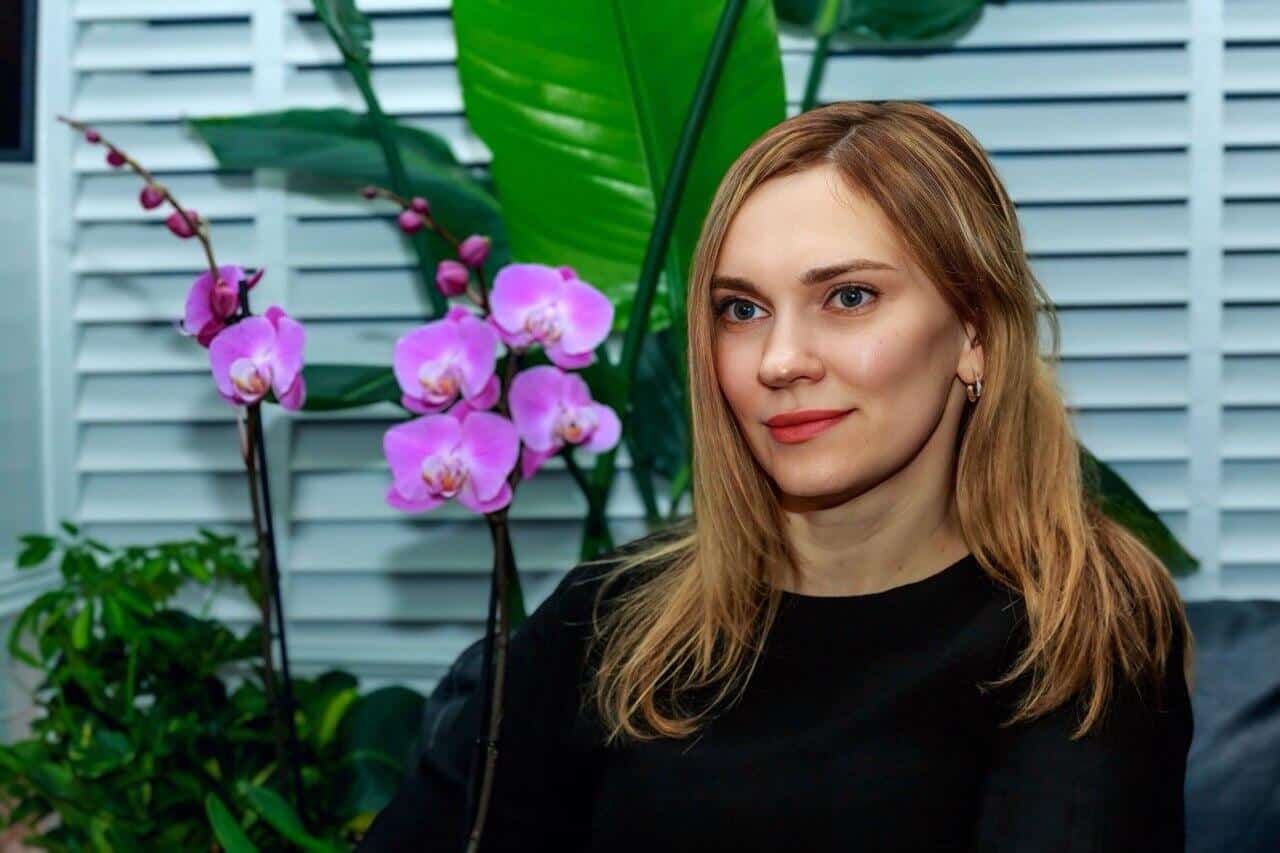
Please tell us about yourself and your journey in the tech/startup world.
I was born in the USSR in a small provincial town into a modest Soviet family. My father was an engineer, my mother an economist. I earned a BSc in Linguistics but decided to move to a big city and by a twist of fate, joined a large engineering company producing embedded hardware and software for critical environments as an apprentice.
Over eight years, I grew from Sales Support Specialist to Marketing Manager, working closely with product teams and engineers and learning from them to later translate complex technology into clear messaging for tech and non-technical audiences. Looking back, I realise I unknowingly combined both of my parents’ professions – my father’s engineering mindset and my mother’s economics background. Tech Marketing turned out to be the bridge between the two.
What has been one defining moment in your career so far, and how did it shape the way you lead or build today?
Working in engineering 2013-2018, I saw clearly that traditional marketing was shifting toward data and that every marketing investment needed to be justified by numbers. That realisation pushed me to go further. I moved into a regional marketing role, joining the EMEA East team at a global AV solutions vendor, then relocated to the UK to complete my MSc in Digital Marketing, making data the foundation of every marketing decision after that.
Then came AI. Seeing how automation started to change how companies work, reducing costs, and creating new growth opportunities, I realised this was my second big turning point.
Today I work at the intersection of CRM and digital marketing, connecting technical CRM operations with marketing strategy and turning the CRM from a static database into a live operational hub that drives personalised customer engagement. As an early adopter of AI in CRM, I bring AI tools into everyday workflows.
What challenges have you faced as a woman in the tech/startup landscape, and how did you navigate them?
Challenges still exist – the tech world is evolving, but equality often feels incomplete. According to the Bureau of Labor Statistics, women hold just 26.7% of tech jobs, and McKinsey puts women at only 11% of executive positions in the industry. You feel that gap in the room. The main stage still belongs mostly to men, sometimes shaped by ego, rigid hierarchies, and solely male networks.
I handled it by becoming technically strong and outcome-focused. I didn’t argue for credibility; I ran the data and reporting that made decisions easier. The numbers speak for themselves, and a carefully crafted report with factual data can outvoice anyone regardless of gender.
What’s something you think the tech world/startup industry is getting right when it comes to supporting women?
I believe the rise of women-led tech communities is one of the greatest strengths of the current ecosystem. These networks help women share expertise, support one another, and grow together – something I rarely see among men. A vivid example is Ladies Who Tech, the community I belong to, and its inspiring members.
Mentorship and community programs have also become genuinely useful, women now have more structured access to peer learning, leadership networks, and confidence-building opportunities that drive real growth.
Here in the UK, the government launched the Women in Tech Taskforce in December 2025 – a real sign that support is getting more serious and practical.
Conversely, where is there still work to be done in supporting women in tech and startups?
In corporate environments, especially, I think there should be more trust placed in women – particularly when it comes to leading technical, high-impact challenges. Women are present, but often not assigned the high-impact tech projects that drive real results.
There’s also a persistent double standard: when a man is direct, he’s “confident”; when a woman is direct, she’s “difficult.” This subtle bias still affects promotion, visibility, and influence. True support in my opinion means access to important projects, fair evaluation, and clear paths to leadership. Women often bring detail orientation, creativity, and resilience that strengthen teams.
Looking ahead, what change would you most like to see for women in tech over the next five years?
According to the Department for Science, Innovation and Technology every year, the UK economy loses up to £3.5 billion because women leave the tech sector or change jobs due to barriers that should not exist. Now UK launches Women in Tech Taskforce to ‘break down barriers’ for women in technology which is a great initiative in my opinion.
Over the next five years I’d love to see more women founding tech startups and leading technical ventures of their own. I want women to be recognized not as diversity hires, but as technical authorities, strategists, and innovators but as technical authorities, strategists, and innovators.
What advice would you give to women who are just starting out in tech or considering founding their own company?
Learn the technical skills relevant to your field and make them the foundation of your career or business. Skills compound faster than motivation. Choose one hard capability and get genuinely good at it, then link it directly to business outcomes: saving time, improving conversion, reducing risk, growing revenue.
Stop waiting to feel ready. Start before confidence arrives. Competence creates confidence, not the other way round.
More from Interviews
- Interview With Zakhar Azatian, Founder And CEO of Be Hard
- IWD 2026, The Women Who Move Us: Deborah Overdeput
- A Chat With Gary Brotman, CEO of Secondmind on Building Data-Efficient AI Software
- IWD 2026, The Women Who Move Us: Meryem Habibi, Chief Revenue Officer at Bitpace
- IWD 2026, The Women Who Move Us: Miranda Mclean, CMO, Ecommpay
- A Chat with Dr Jennifer Channell, Head of Commercial at Anaphite on Why Dry Coating Will Transform Battery Manufacturing
- A Chat With Pierre-Antoine Dusoulier, Founder & CEO, iBanFirst On Providing SMEs With The Same Level Of Support Large Businesses Take For Granted
- A Chat With Fraser Robinson, Co-Founder and CEO of Beacon on How Better Tech Is Transforming Supply Chain Decision Making
Wins and Wisdom: A Quick Q&A
Here’s a quick Q&A with Olga Ukrainskaya.
1. Who is a woman, past or present, who inspires you the most and why?
My former manager at a tech engineering company. She’s always been an example of strong leadership – competent, fair, and deeply human. She continues to inspire my own developing management style.
2. What’s a book, podcast or resource that has helped shape your career?
Martech.org – a professional resource that keeps me updated on developments in marketing technology and helps me stay at the forefront of industry change.
3. Can you share a quote or mantra that motivates you when things get tough?
Here comes my favourite phrase: “If you knew you had 30 mistakes left to make before everything finally worked out, how hard would you try to make sure you actually made them?” It reminds me that mistakes are not proof of failure but proof of movement. Each one gets you closer to the result.
4. What’s one win or achievement from your career that you’re especially proud of?
I managed the design of a custom CRM module as the marketing stakeholder, bridging user needs with tech development.
On a personal note, I’m training for the London Marathon this April with HubSpot’s team – my first ever. After years away from sports, I started from scratch in January. Like my tech journey from engineering to CRM strategy, it takes staged plans, daily discipline, resilience after setbacks, and the right tools – training plans there, data and automation here.
What’s one habit or ritual that keeps you motivated and inspired every day?
I start my mornings slowly: a glass of warm water with lemon, a good coffee, fresh flowers, follow up with a workout during the day. This quiet ritual fills me with energy and focus for the day ahead.