


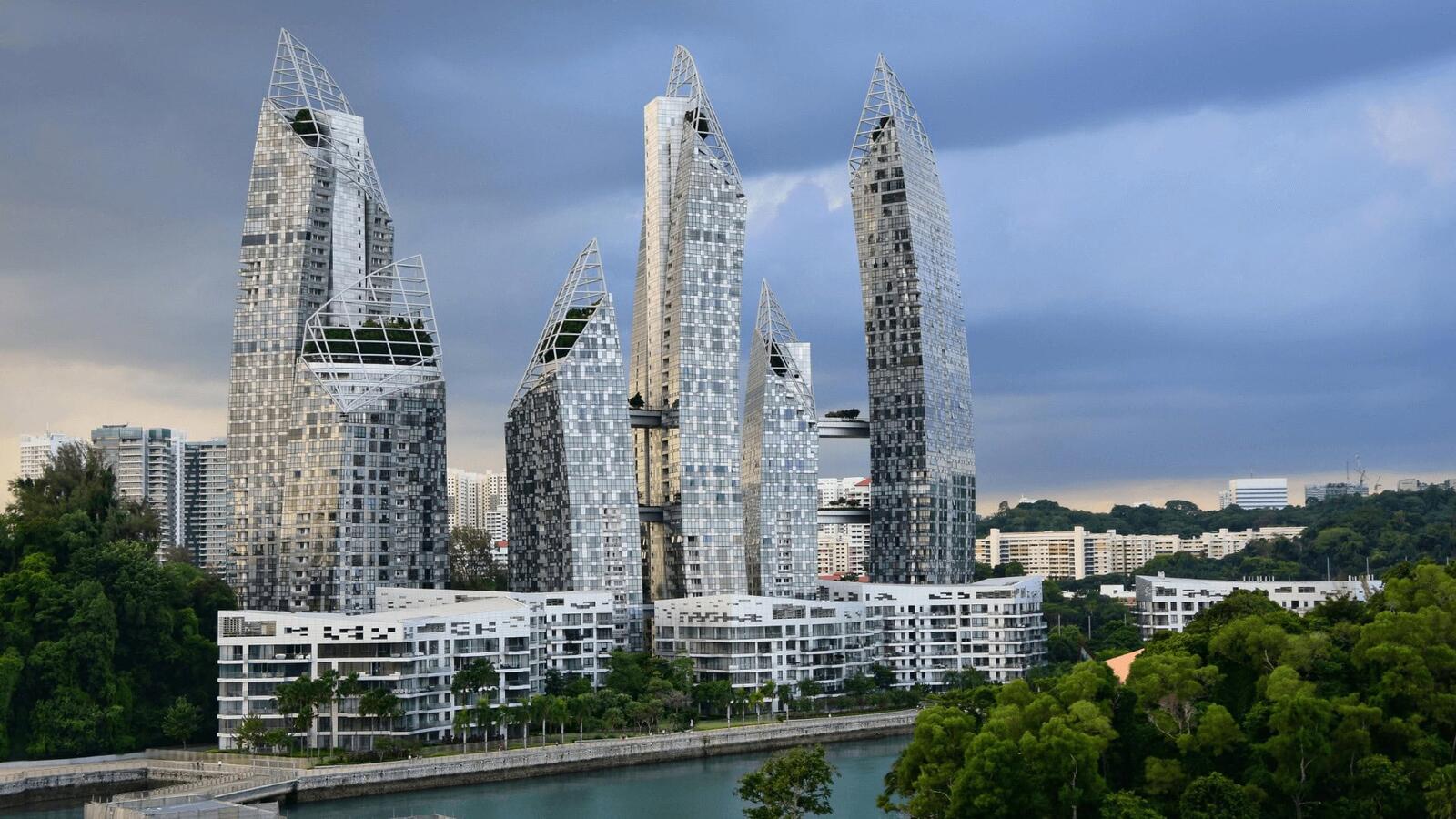
Singapore may be smaller than its Asian counterparts with limited natural resources, and yet it remains one of the top sustainability hubs in the region.
The country has a growing and healthy ecosystem of climate-tech startups and companies specialising in sustainable infrastructure to tackle global challenges from food security and waste to energy and carbon emissions.
And these startups are proving that aligning factors like entrepreneurship, technology and policy can make a significant difference in the transition to a more sustainable future.
The Sustainability Landscape In Singapore
Singapore is a dense island city and with limited land, water and energy resources, they have needed to prioritise how they go about managing consumption and waste.
The government have made their sustainability ambitions clear through their Singapore Green Plan 2030, an initiative targeting large reductions in carbon emissions and working to expand circular economy practices.
As a country, they have committed to achieving net-zero emissions by around 2050.
These policy frameworks have laid the foundation for innovation to take place. Backed by government agencies, venture capital funds and corporate accelerators, entrepreneurs have been able to successfully test and scale their sustainable solutions across Southeast Asia and beyond.
Top Sustainability Startups In Singapore
So who are the sustainability startups in Singapore striving to make real impact every single day? Let’s take a closer look at them and what they do.
1. CBE Eco-Solutions
CBE Eco-Solutions was founded by graduates from the National University of Singapore and is a deeptech startup which converts industrial carbon waste into valuable materials. The disposal methods of this carbon waste is a huge contributing factor to greenhouse gas emissions.
The company tackles this issue through a controlled chemical process which separates heavy materials and carbon from industrial waste streams.
This technology was the result of a multi-year research programme within the Sembcorp-NUS Corporate Laboratory which is a $60 million initiative focusing on environmental innovation.
2. AQUILA.IS

AQUILA.IS represents a different side of sustainability efforts, specifically the financing and verification of climate solutions. Their platform connects banks, borrowers and sustainability verifiers through real-time data systems which monitor environmental performance.
Climate solutions are often faced with the challenge of accessing funding. Verifying sustainability performance can be both difficult and costly, which is why traditional lenders sometimes hesitate. But AQUILA.IS’s systems create auditable ESG reports to give banks confidence that projects they invest in can deliver measurable impact.
At the beginning of 2025, the company deployed more than $10 million in sustainable project financing across Southeast Asia.
3. Octayne Green Fuels
Energy has always been one of the most difficult sectors to decarbonise, especially in regions that are developing rapidly. Octayne Green Fuels is tackling this challenge by converting agricultural waste into carbon-neutral fuels.
More specifically, they focus on transforming post-harvest crop residue into renewable biomass fuels which can replace coal in thermal power plants. This also allows power producers to reduce their emissions without needing to make major changes to their existing infrastructure.
In 2024, Octayne secured $525,000 in pre-seed funding from Wavemaker Impact. Since the startup was founded in the same year, it was a significant and celebratory milestone.
More from Startups
- 5 Startups Crowdfunding w/c 05.10.2026
- Founder Of The Week: Danny Jenkins
- Abacus AI Expands Its AI Platform With Smaug, AI Agent And More
- Top 10 Agritech Startups In South Africa To Watch In 2027
- Startup of the Week: Rainbow Crops
- 8 Startups Crowdfunding w/c 28.09.2026
- Top Aerospace Startups In Saudi Arabia
- The Top 7 Debt Recovery Startups To Keep An Eye On
4. Kaer

Cooling is one of the fastest-growing sources of global energy consumption, with air conditioning accounting for almost 20% of global electricity use. Kaer is addressing this through a business model called Cooling-as-a-Service (CaaS).
The company installs and runs high-efficiency cooling infrastructure and customers only need to pay for the cooling that they consume. This business model works particularly well in commercial buildings, shopping malls and educational institutions to reduce both their operating costs and carbon emissions.
Last year, global investors PATRIZIA and Mitsui agreed to up to $350 million through a sustainable infrastructure fund to expand Kaer’s CaaS system throughout Asia.
5. Insectta

Insectta initially started as an insect farming operation to produce alternative proteins for animal feed. Now, they have switched direction to focus on biomaterial extraction, which entails identifying valuable compounds that can be used in multiple industries.
One of their products is chitosan, a biodegradable and biocompatible material derived from insect shells. It’s useful in agriculture, food preservation and biomedical engineering.
The company successfully raised $1.4 million in a 2023 funding round led by Trendlines Group.
6. Vertical Oceans

Vertical Oceans is an agritech startup developing fully automated vertical aquaculture systems which can produce shrimp more efficiently and have minimal environmental impact.
They have developed a modular system called iHAB (Intelligent Habitat) which uses AI and advanced algorithms to watch and control the growth conditions of shrimp. Moana, their software platform, can automatically manage things like feeding schedules, water quality and growth optimisation.
The company has attracted backing from some notable investors, including SOSV and Khosla Ventures which are known to support breakthrough science startups.
7. Muuse

Founded in 2021, Muuse developed a smart reusable packaging system designed specifically for takeaway food and beverage companies. Customers are able to borrow reusable packaging to return at a later stage to designate collection points, rather than buying disposable containers.
Their system works through a digital platform. A QR code is embedded in each container to allow them to track usage and manage inventory.
In a trial programme, carbon emissions reduced by almost 80% as opposed to using disposable packaging.


