


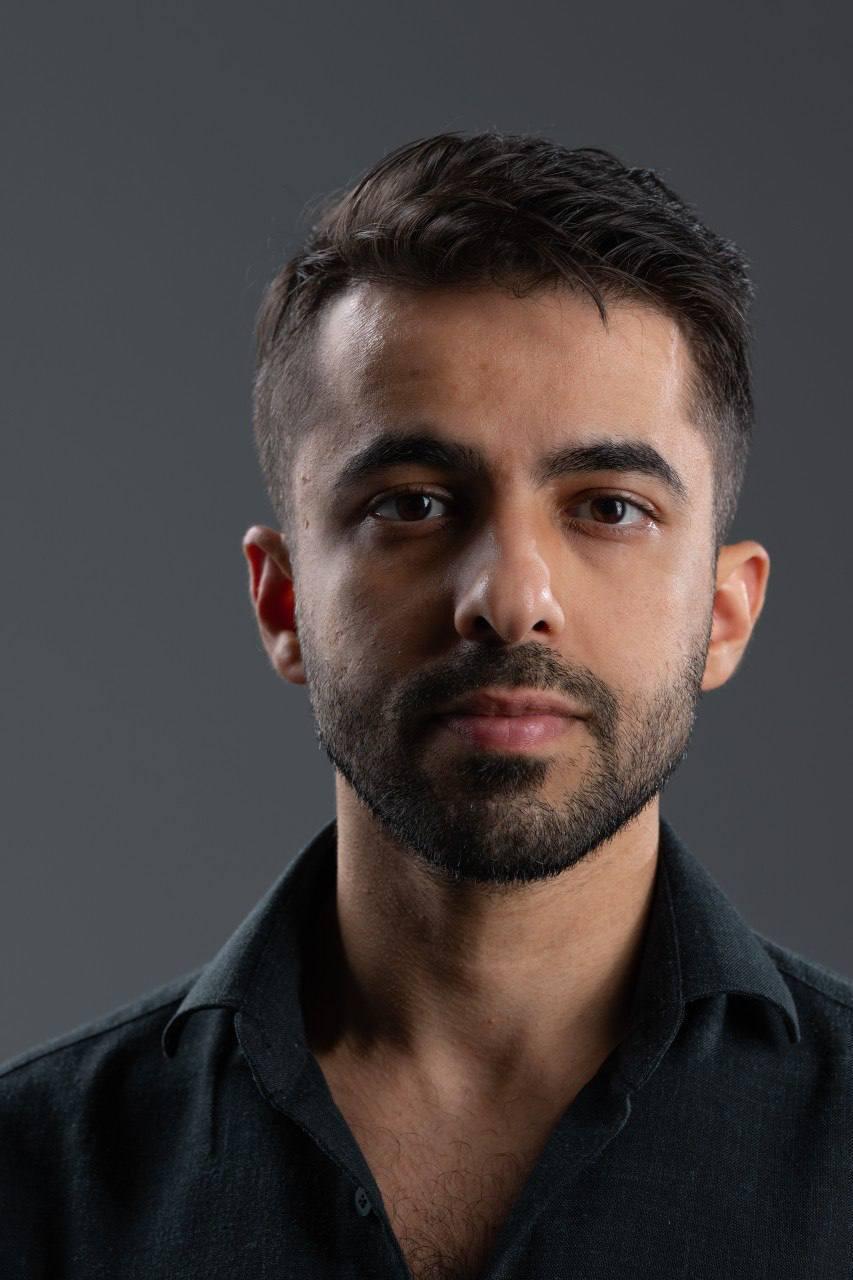
Hatu Sheikh is a Web3 entrepreneur and the founder of CoinTerminal, an open-access crypto launchpad designed to make early-stage investment opportunities more accessible to everyday users. He has been active in the blockchain industry since 2017, advising projects, investing in early-stage teams, and helping shape how decentralised fundraising works in practice.
Hatu Sheikh’s interest in internet capital markets started during his time at Stony Brook University, where he obtained a Bachelor’s in Mathematics, Economics and Business while researching crowdfunding models.
His early work focused on a simple but important question: how capital moves on the internet, and whether the people taking the earliest risks actually share in the upside created later. That question has guided much of his work since entering the Web3 industry.
Before launching CoinTerminal, Hatu Sheikh co-founded some of the most innovative and earliest crypto and web3 platforms focused on community-driven fundraising for blockchain projects. These platform introduced mechanisms such as the Strong Holder Offering, which aimed to reward long-term participation rather than favouring bots or insiders in token sales. Through his work across various projects and as an advisor to dozens of crypto projects, Hatu developed a reputation for focusing on tokenomics, growth strategy and fairer fundraising structures.
Today, Hatu leads CoinTerminal, a launchpad that removes many of the barriers traditionally associated with crypto fundraising. The platform allows users to participate in token sales without staking requirements or token-gating, and it has grown to more than 650,000 users globally. Based in Dubai, Hatu continues to build products and infrastructure aimed at making decentralised finance more accessible while supporting the next generation of Web3 founders.
What Started You On Your Journey In Web3?
My interest in Web3 really started before the technology itself. During university I spent a lot of time researching crowdfunding models and how capital moves on the internet. One example that stuck with me was the early backers of Oculus on Kickstarter.
Thousands of people helped fund the product when it was still an idea, taking on the earliest risk. When the company was later acquired by Facebook for billions, those contributors received none of the upside.
That highlighted a structural problem in how online capital formation worked. The people closest to the risk were often the most excluded from the rewards.
When I later discovered blockchain, it immediately stood out as a technology that could potentially fix that misalignment. Tokenized ownership and open financial networks made it possible for people anywhere to participate in early-stage innovation. That idea of creating fairer incentive structures is what ultimately pulled me into Web3 and has guided most of the products I’ve built since.
What Has Been The Biggest Challenge Of Operating In Such A Changeable Industry?
Operating in Web3 means building in an environment that moves much faster than most traditional industries. Sustainable business models take time to develop, but the technology, markets, and expectations around them can evolve almost overnight. In traditional finance, margins and fees are often hidden inside the end price of a product.
In Web3, everything happens on-chain and is highly transparent. That transparency is positive in many ways, but it also makes users far more sensitive to how platforms generate revenue.
As a result, many products in the space struggle to balance building something useful with creating a model that is both profitable and accepted by the community. At the same time, the market moves through very sharp cycles. When liquidity is high, almost anything can gain traction. When conditions tighten, only products that solve real problems tend to survive.
Operating in this environment requires focusing on long-term utility rather than short-term hype. The projects that endure are usually the ones building infrastructure people actually need, regardless of market conditions.
What Is The Best Thing About Web3 As An Industry?
The best thing about Web3 is how it changes the relationship people have with financial systems and digital platforms, while dramatically expanding access at the same time. Instead of relying on layers of intermediaries, users can interact directly with networks that are open, global, and programmable.
That creates a level of efficiency and transparency that simply didn’t exist before. Transactions can settle globally within minutes, assets can move freely across borders, and users maintain far greater control over their own funds and digital identity.
What makes this particularly powerful is that it gives builders the ability to design entirely new types of financial products and digital services. At the same time, users are no longer just passive participants in a platform, they can become active stakeholders in the systems they use.
There are still usability and security challenges to solve, but the core idea of open financial infrastructure is what makes Web3 such an important technological shift.
More from Startups
- Founder Of The Week: Ryta Zasiekina
- Top Industrial Tech Startups To Watch In 2027
- Startup of the Week: Kord
- How Do Startup Valuations Work When A Company Isn’t Profitable?
- These Aerospace Startups Are Out Of This World, But Made In Japan
- 5 Startups Crowdfunding w/c 05.10.2026
- Founder Of The Week: Danny Jenkins
- Abacus AI Expands Its AI Platform With Smaug, AI Agent And More
For Businesses In Web3 And Crypto, What Is Most Important For Success According To The Hatu Sheikh Approach?
For Web3 companies, success often comes down to how well the system they build works for everyone involved. The most important factor is aligning incentives between the platform, the projects building on it, and the users participating in it. In Web3 especially, users are very aware of how systems are designed because much of the activity happens openly on-chain. If the structure of a product feels unfair or overly extractive, people notice quickly and they move on.
For founders, that means thinking carefully about how their platform actually creates value for the people using it. The strongest projects tend to focus on building something genuinely useful rather than relying on short-term hype or speculation to drive growth.
Trust also plays a huge role. Because the industry is still relatively young, users are naturally cautious. Platforms that prioritise transparency, strong security practices, and fair participation models tend to build much stronger long-term communities.
Ultimately, the businesses that last are the ones that treat their users as participants in the ecosystem rather than just customers.
Why Are Crypto Launchpads Like CoinTerminal So Important?
Launchpads are important because early-stage fundraising in crypto has historically been very uneven. In many cases, the best opportunities were limited to venture funds, insiders, or people with privileged access to private sales. Retail investors often only entered once projects were already trading publicly, when a large part of the upside had already been captured.
Launchpads help bridge that gap by creating a structured environment where early-stage projects can raise capital while allowing a broader group of participants to access those opportunities.
Platforms like CoinTerminal push that idea further by removing barriers that traditionally limited participation. Instead of requiring users to stake tokens or meet complex entry requirements, the platform focuses on open access and investor protection mechanisms such as refundable sales.
The goal is to create a more balanced ecosystem where both startups and everyday investors can participate in early-stage Web3 innovation.
What Have Your Experiences Taught You Specifically About Finance In Web3?
One of the biggest lessons is how quickly capital can move in internet-native financial systems. In traditional finance, capital flows are often slow, intermediated, and restricted by geography or institutional processes. In Web3, those barriers are significantly reduced. Funds can move globally within minutes, and participation in financial markets is far more open.
That speed creates both opportunity and responsibility. Markets react much faster to information, and projects are expected to execute quickly once capital is raised. At the same time, the transparency of blockchain systems means that users can see how funds move and how decisions affect the ecosystem in real time.
It has reinforced the idea that financial infrastructure on the internet behaves very differently from traditional systems. The platforms that succeed in Web3 are the ones that understand how to design products for a market where capital is global and constantly in motion.
What Are The Main Challenges For Businesses In Web3?
Web3 companies are building in an industry that is still defining many of its basic structures. The technology moves quickly, but areas like regulation, user protection, and product standards are still evolving in many parts of the world.
For teams operating in this space, that often means thinking globally from the start. Rules can vary significantly between jurisdictions, and companies need to ensure their products are structured responsibly while still remaining accessible to users across different markets.
Another challenge is usability. While blockchain technology enables powerful new financial systems, interacting with those systems can still be complicated for new users. Improving that experience without compromising security is something the industry continues to work toward.
Long term, the platforms that succeed will likely be the ones that combine innovation with reliability, making Web3 tools simple and trustworthy enough for mainstream users.
When Launching A Project, What Do You Look For?
When evaluating a project, the first thing I look at is whether there is a real product and a clear reason for it to exist. In Web3, it’s easy for projects to build narratives around technology or token mechanics, but those things alone rarely create lasting demand. What matters much more is whether the product solves a meaningful problem and whether users would still want it even without speculation around the token.
The team is equally important. I tend to look for founders with strong technical or operational backgrounds who have already demonstrated the ability to build and ship products. A credible track record, whether in Web3 or other technology sectors, usually says a lot about how a project will execute once it has funding and a growing user base.
Finally, there needs to be a believable path to real usage. That can mean early traction, working infrastructure, or a clear revenue model. Projects that demonstrate real utility and strong execution tend to build much healthier ecosystems over time.
Where Do You See Web3 In 5 Years Time?
Over the next five years, I think Web3 will begin to move beyond being defined primarily by trading and speculation. The infrastructure is already maturing, and we’re starting to see more focus on real-world financial use cases rather than purely crypto-native activity.
Stablecoins are a good example of this shift. Their adoption has been growing rapidly because they solve a very practical problem: moving money globally in a fast and efficient way. As more businesses and platforms begin integrating stablecoins for payments and settlement, the amount of capital moving on-chain could increase significantly.
At the same time, the user experience of Web3 products will likely improve as the technology matures. Many of the tools today are still built primarily for early adopters. As infrastructure develops, interacting with blockchain-based systems should become much simpler and more accessible.
The industry will likely look less like a niche financial sector and more like a foundational layer for how digital value moves across the internet.
What’s Next For You?
As always, my focus is on continuing to expand the platforms and infrastructure we’re building around Web3 and financial innovation. However, a significant part of what I’m working on right now is also focused on building physical environments that support the next generation of startups and financial companies.
One of the major projects is the Dubai Fintech District, which I’m developing with the goal of making it one of the best places to work in the city for founders, builders, and early-stage companies. The idea is to create a space designed specifically for startups, with an environment that encourages collaboration, creativity, and fast-moving teams rather than traditional corporate office setups.
From a personal standpoint, I’m also expanding further into real estate development. We currently have a wellness and sports-oriented district under construction that is over 500,000 square feet and about halfway through development, with completion targeted for 2026. The broader plan is to continue expanding these projects and scale the footprint significantly. Today our developments cover just over one million square feet, and the goal is to double that to more than two million square feet by the end of 2026.
At the same time, on the Web3 side we’re working on several new products that move beyond the traditional trading, lending, and fundraising models of crypto. The focus is increasingly on consumer-facing infrastructure, particularly around the growing stablecoin economy. As stablecoin adoption continues to scale globally, there will be enormous demand for products that make them easier to use in everyday financial activity.


