

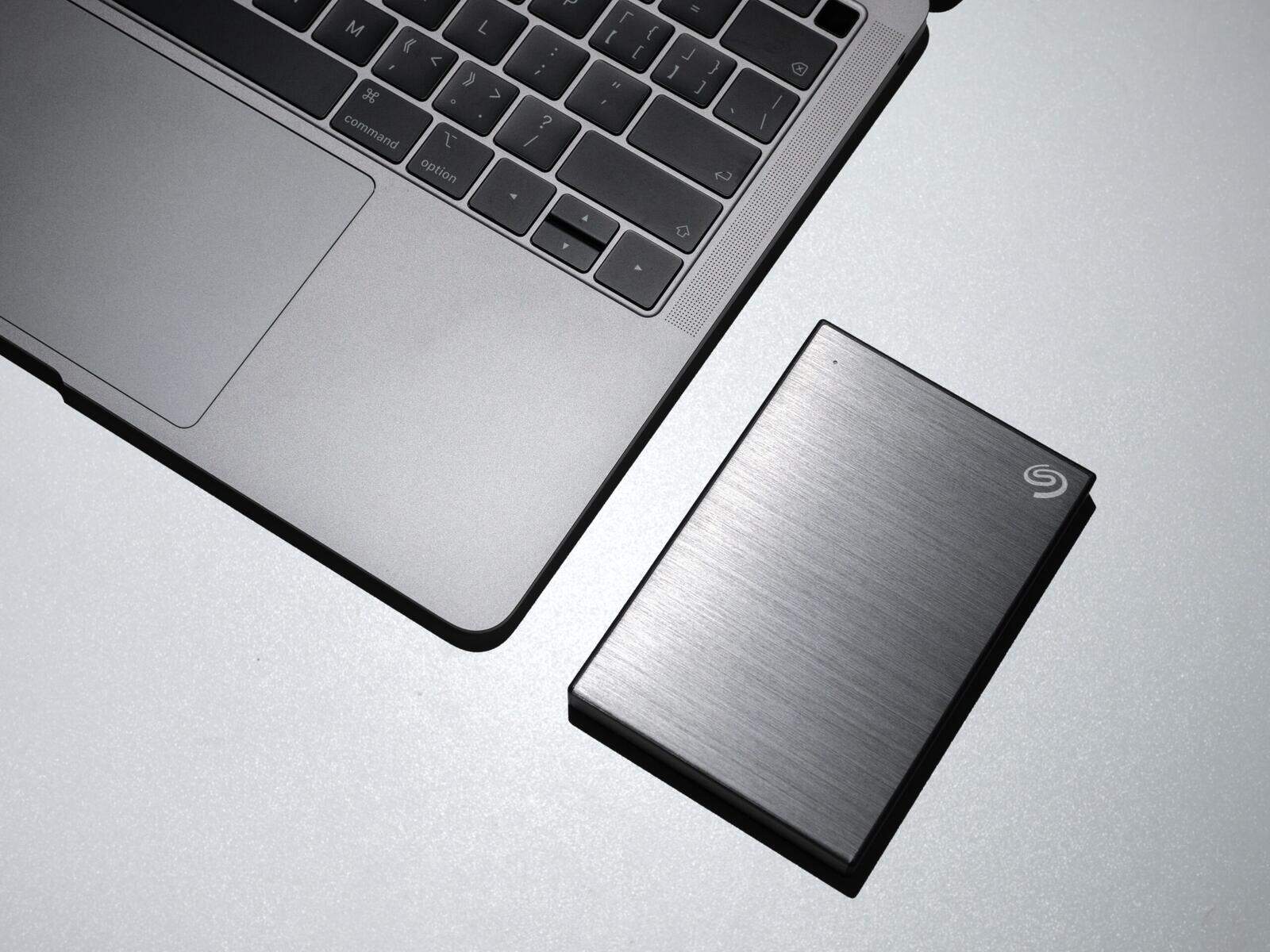
Data storage company Seagate has introduced a new generation of high-capacity hard drives built on its Mozaic 4+ platform. The drives can store up to 44TB of data on a single unit and are already being used by two hyperscale cloud providers. The company announced that these drives are now in production and shipping in volume to those clients.
The new products rely on heat-assisted magnetic recording, known as HAMR. This technology increases how much data can be written onto a disk. Higher density allows a single drive to hold far more information than earlier designs. Seagate said the Mozaic platform will eventually support up to 10TB per disk platter, which could lead to hard drives reaching 100TB capacity in the future.
The Mozaic 4+ platform also introduces a new suspension architecture and an upgraded system-on-a-chip. These components allow more precise data recording while keeping reliability at enterprise standards. Seagate said each generation of the platform raises capacity without forcing data centres to rebuild their infrastructure.
Dave Mosley, chair and chief executive officer of Seagate, said data storage sits at the base of modern computing systems. “Data has become one of the most valuable assets for enterprises, fuelling business insights, enhancing productivity, and enabling competitive advantage. As the foundation of modern data centre infrastructure, data storage solutions are essential to manage ever-increasing data volumes and maximise returns on investments in today’s AI driven-world,” Mosley said.
Why Do These Drives Have So Much Attention Right Now?
High-capacity storage has become a talking point because global data creation keeps going up. Cloud computing, video platforms, machine learning systems and digital archives generate massive information pools that must be stored somewhere.
Seagate’s new drives attract attention because they pack far more storage into a single device. A data centre that installs larger drives needs fewer racks of hardware to hold the same amount of data. That leads to lower electricity use and less physical space.
According to Seagate, a deployment reaching one exabyte of storage with the Mozaic 4+ drives improves infrastructure efficiency by about 47% compared with a standard 30TB configuration. The company said such a setup can shrink the required data centre footprint by about 100 square feet and lower annual energy use by roughly 0.8 million kilowatt hours.
More from News
- Japan’s SoftBank Takes On $40bn Debt To Back OpenAI – Is This Confidence Or Just A Risky Gamble?
- TikTok’s US Outages Expose The Real Cost Of Oracle’s Compliance-Driven Infrastructure
- Behind Nvidia’s $103 Million Investment Into A UK Self-Driving Car Future
- How Is ‘AI Slop’ Directly Funding The Rise Of Cyber Fraud?
- The UAE’s Startup Boom Was Built On Stability. Could Regional Conflict Now Test Founder Trust?
- Is Grammarly Crossing A Line By Using Deceased Scholars To Review Academic Papers?
- Scammers Are Using Fake Google Security Checks To Steal User Passwords, Reports Find
- How Is Modern Tech Leading To “Smart Ships”, And How Does It Affect Insurers?
How Does HAMR Technology Work?
HAMR stands for heat-assisted magnetic recording. The technology uses a tiny laser built into the read and write head of a hard drive. The laser briefly heats a microscopic spot on the disk surface when data is written.
This heating process lasts less than a billionth of a second. During that moment the magnetic material becomes easier to change, which allows data bits to be placed closer together on the disk. When the spot cools down, the information remains locked in place.
That process increases storage density without making the physical drive larger. The result is a device that holds far more digital information while keeping familiar hard-drive mechanics.
Seagate has spent years developing nanophotonic components for this system. The company manufactures its laser technology in house, which gives it control over production yield, reliability and supply chain stability as demand for high-capacity storage climbs.
Why Do 44TB Drives Matter For AI?
AI systems depend on huge data collections. Training LLMs, video generators and other AI tools requires enormous libraries of text, images and recorded activity.
These datasets do not stop going after training because companies often keep them for retraining, verification and auditing. They also store new information generated through AI systems, including large multimedia files.
Bob O’Donnell, president of TECHnalysis Research, said these data needs explain the interest in larger storage devices. “As AI models have evolved and GenAI-powered applications have expanded their capabilities and reach, it’s become abundantly clear that the need for massive amounts of data—both real and synthetically generated—are essential to keep AI advancements moving ahead,” he said.
O’Donnell added that storage density directly impacts how well these systems perform. “Whether for large-scale model training or sophisticated fine-tuning, companies who build and use these AI models have found that high-capacity hard drive innovations like HAMR have become critical to quality and speed of their outputs.”
Larger drives can store more information for data centres without adding racks of hardware. That cuts power use, physical space and infrastructure costs. Those savings become more noticeable when storage scales to exabytes of information.