


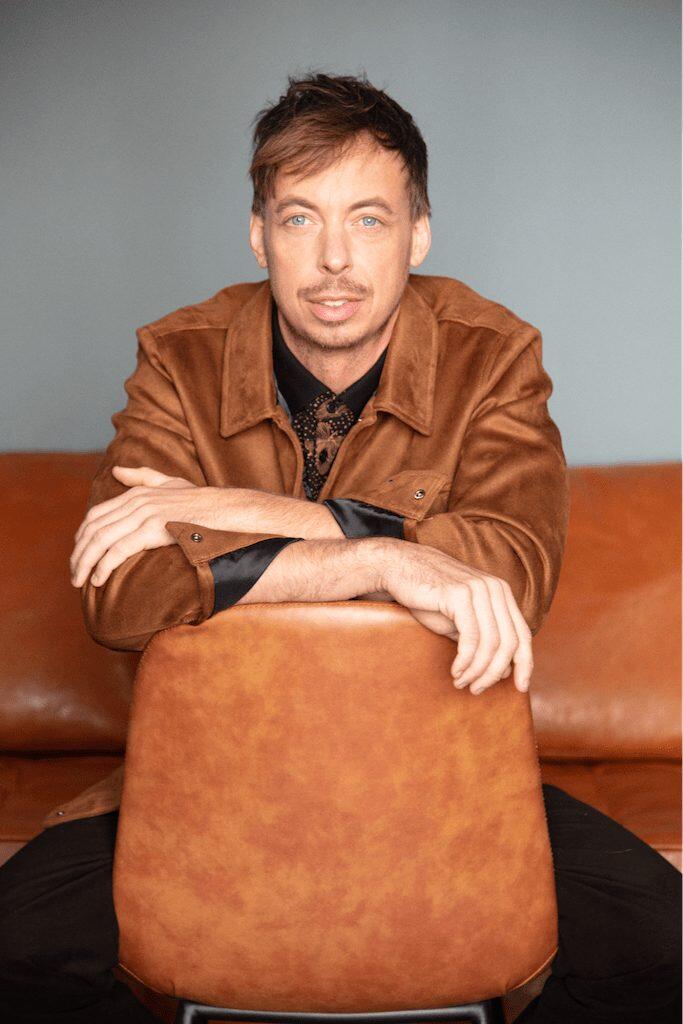
Tell us about NALA | The Art Matchmaker
NALA, the Networked Artistic Learning Algorithm, is a global data-science-powered art-matching platform that connects living artists directly with art lovers, collectors and interior designers.
At the product level, NALA combines personalized art feeds with tools like Echo, a reverse image search feature, and Voice Search, a natural language discovery tool, plus professional workflows for interior designers such as shortlists, budgets, and client-ready collections. The goal is simple: help people find art they genuinely connect with, and help artists reach the buyers most likely to support their work.
What inspired you to launch NALA and what gap in the art market were you looking to solve?
I launched NALA because I lived the problem from both sides, as a working painter trying to be discovered internationally, and as a technologist watching how broken and inefficient art discovery still is.
As an artist, I saw how much of your success can come down to gatekeepers, geography, and who happens to see your work at the right moment, often unrelated to the art’s quality or emotional power.
On the collector and designer side, the market is the opposite problem. It is overwhelming and fragmented. People want original art, but accessing artwork directly from artists is challenging at best. The market is filled with intermediaries acting as gatekeepers, driving up the opacity. Less than 2% of artists work with galleries, and yet the largest online art platforms work exclusively with galleries, keeping 98% of the Artistic talent pool out of the global marketplace. This means buyers are at best seeing a tiny sliver of the available art that they may love.
NALA was created to solve taste matching at scale. We created a platform that allows all artists to participate and use AI to understand what someone is drawn to visually and emotionally, then route them to the right artists globally. The goal is a fair, more efficient art ecosystem where artists can build sustainable visibility, and buyers can reliably discover work they genuinely love.
More from Interviews
- A Chat With Paul Beare, Founder Of Paul Beare Ltd On UK Companies Going International
- Get To Know Taiwo Akinropo, Founder And CEO At Heyfood And MENA40 Judge
- A Chat With Obinna Umeh, Co-Founder And CEO of Growwr And MENA40 2026 Judge
- We Spoke To Furkat Kasimov, Tech Entrepreneur, Venture Studio Founder And MENA40 2026 Judge About The Future Of Tech In The Middle East And North Africa
- Interview With Andrew Henderson, Chief Technology Officer At OneAdvanced On Embedding AI Into Workflows
- A Conversation With Nakul Kothari, Head of APAC And Middle East At Juspay On Payment Orchestration
- A Chat With Igor Kulatov, Co-Founder And CTO Of Aurora Borealis: Five Years Running Autonomous B2B Commerce In Production
- Interview with Ebenezer Ojo, Co-Founder At Taxmingo And MENA40 Judge
How does NALA’s AI actually work when it comes to matching collectors with artists, and what makes your approach different from traditional art discovery platforms?
At the core of NALA is our proprietary Art Recommender Engine. It learns an individual’s taste from real behaviour, what they click, save, share, and spend time with, then matches them to artworks using a blend of visual understanding and semantic understanding. The key difference is that we do not rely primarily on keywords or popularity signals. We optimize for taste alignment.
On top of recommendations, we built two discovery tools that let people search by intention, not art-world vocabulary.
Echo lets someone upload a reference image and discover visually related works based on palette, texture, composition, and overall aesthetic.
Voice Search lets people describe what they want in plain English, anything from a moody blue abstract with heavy texture to a surreal painting of an astronaut walking a pet jellyfish, and our system translates that intent into meaningful results if they exist in our catalog. Even if the exact painting doesn’t exist, NALA will return artwork that captures the intention of the Art lover.
Finally, NALA is built to be inclusive. Any artist can participate, giving collectors access to a much broader, more diverse talent pool. Traditional platforms tend to be gallery-led, trend-led and keyword-led, which limits discovery to a narrow slice of the market and often creates repetitive feeds. NALA is taste-led, and designed to balance personalization with exploration so discovery stays fresh and diverse.
Many people see AI as a threat to creativity. How do you respond to concerns that technology could overshadow human artists rather than support them?
The anxiety usually comes from conflating two very different uses of AI, generating content versus routing attention.
At NALA, we are not replacing artists. We are using AI, machine learning, and data science to build discovery and marketplace infrastructure that helps living artists get seen by the right collectors and helps collectors find work they genuinely connect with. The art remains human. The technology simply makes the connection faster, more global, and less dependent on gatekeepers.
We have seen this pattern before. Photography, digital tools, and the internet all triggered fears that something essential would be lost, yet artists adapted, new media emerged, and the desire to create only expanded. I expect AI will follow the same arc when used responsibly. It becomes another tool in the creative ecosystem, and artists decide how to integrate it.
The key is keeping creators central. Generative systems learn from human culture, but they lack lived experience, intention, or personal history. That depth and meaning are what give real artwork its weight, and they are something technology cannot authentically replicate. AI only exists because of thousands of years of human creativity. We need platforms that amplify human creativity, protect artist agency, and broaden opportunity rather than settling for imitation.
How is AI reshaping the relationship between artists and collectors?
NALA is reshaping the artist-collector relationship by compressing distance and removing friction from discovery and connection.
With NALA, an art lover can be anywhere in the world and discover work from artists worldwide based on genuine taste alignment, not proximity, social buzz, or gatekeepers. Instead of forcing collectors to sift through millions of images or rely on a handful of local galleries, our recommender system uses data science to learn what each person responds to and surfaces the works they are most likely to love first.
It also changes the language of buying art. Image-based discovery and natural language search let collectors express intent more clearly, even when they cannot describe a style in art world terms. On the artist side, platforms can create better feedback loops, showing what resonates, who is engaging, and what contexts signal serious purchase intent.
The result is a relationship that is more direct, more personal, and more global.
What have you learned about consumer behaviour through the data and insights generated by NALA’s platform?
Two major lessons stand out, and both came directly from how our technology evolved as our data improved.
First, taste is artwork-specific, not artist-generic. In the early days, we lacked the data density and labeling depth to model art at the individual artwork level. We had limited structured metadata, inconsistent tagging, and not enough interaction history per piece. Given those constraints, our first-generation recommender had to be artist-centric. We could reasonably represent an artist as a single style cluster and match artists to art lovers, then surface a representative work.
That approach worked as a proof of concept, but consumer behaviour quickly exposed the flaw. People do not uniformly like an artist. They like specific pieces for very specific reasons, such as palette, mood, subject matter, composition, and texture. When we matched someone to an artist and then showed a random piece, we saw it in the data immediately. Our like-to-dislike ratio was poor.
As we expanded the dataset and applied computer vision at the artwork level, we shifted from artist matching to artwork matching. That change was transformative. Today, with multiple models running in parallel and far richer visual understanding, we are seeing roughly a 3-to-1 like-to-dislike ratio. That is a strong signal that we are getting much closer to predicting what someone will genuinely connect with.
Second, users will not always use platforms the way we expect, especially when it comes to tags. Early NALA depended heavily on tags because that was the most available structure we had. I assumed that if we let artists upload work and tag it themselves, the new data would fit into our model nicely. The reality was more human. Tagging was inconsistent, emotional, and subjective.
That pushed us to build systems that understand art visually and semantically, and to support discovery through natural language search and image-based search so users do not need to know the right words to find the right work.
Do you see AI as a curator, a connector or something else entirely within the art ecosystem?
I see AI as a personal curator and a connector, but not a replacement for human judgement.
In practice, AI can translate an individual’s taste into discovery paths, then connect that intent directly to living artists through efficient professional workflows. It helps people navigate an overwhelming volume of work and find the most relevant pieces quickly.
What it does not do is decide what is valid art. Humans still set the context, make the final call, and attach meaning. NALA simply helps surface the right options, so discovery can be more personal, more global, and less dependent on gatekeeping.
How do you ensure that your AI enhances artistic diversity rather than reinforcing trends or biases?
Diversity is a product requirement at NALA, not an afterthought, and it is deeply personal for me as an artist.
One of my own collections includes more than thirty large-format paintings that are all forty-eight inches by seventy-two inches, with blue as the dominant color. Individually, the pieces are wildly diverse. Oils sit next to watercolors and acrylics, aerosol sits next to palette knife work, and realism sits next to impressionism. The collection works because it is unified by a single element, yet remains interesting because it is not trapped in a single style.
That is the experience I want NALA to create. We optimize for taste matching rather than trend chasing, and we intentionally balance personalization with exploration so users are not pushed into repetitive funnels. We also avoid turning discovery into a popularity contest, because that inevitably concentrates attention and narrows what people see.
The goal is to broaden an art lover’s exposure to exceptional work that fits their preferences, while still introducing variety across styles, mediums, and voices.
Tell us about your most recent exhibition in Mexico City.
CASA NALA in Mexico City, during art week, hosted a group exhibition featuring a mix of Latin American and international artists across a wide range of styles, media, and subject matter.
Pantá rheî koiná: Everything Flows in Common was curated to highlight both the differences and the merging storylines of artists from many backgrounds and career stages, similar to what our online platform enables. The residency became an energetic space for dialogue and community across generations and a colourful mix of attendees during Mexico City art week, creating exposure and sales opportunities for the artists.
What challenges have you faced as a founder building at the intersection of art and emerging technology?
Building at the intersection of art and emerging technology has been challenging at every layer.
First, the technical work is complex. In the early days, we had to solve the fundamentals, collecting and structuring enough high-quality data to build a credible proof of concept, then iterating through multiple versions of the product from rough recommendation prototypes to what we have now, a system that can deliver hyper-personalized, artwork-specific recommendations. Each step came with real engineering challenges around data quality, model performance, and turning research into something that feels seamless for consumers.
Second, once we proved the technology was feasible, we ran into the classic marketplace challenge, building a two-sided platform where artists and buyers need to show up at the same time. We had to earn trust from both sides, convince artists to upload and stay engaged, and make collectors feel confident discovering and purchasing on a new platform. That requires product, marketing, and operational execution simultaneously.
The biggest challenge overall is persistence through constant iteration. There is rarely a single obstacle. It is a continuous chain of technical, marketplace, and trust hurdles. What keeps us going is the conviction that expanding access and opportunity for artists while improving discovery for collectors is worth building.
Looking ahead, how do you see AI transforming the broader creative industries over the next five years?
AI is going to have profound impacts in creative industries over the coming years, and we are only just starting to glimpse the potential. Like any major technological breakthrough, there is always pushback on change. We saw this with the emergence of photography, computers, and the digitization of the arts. Through all these shifts, humanity never lost the capacity or desire to create. Artists adapt, and new tools get integrated into creative workflows.
I think one of the most interesting frontiers will be human-computer interaction. For a long time, we were restricted to keyboards and touchscreens to communicate our intentions to machines. As interfaces become more natural through voice, vision, and wearables, the opportunity to capture intent grows, unlocking countless new forms of human expression.
Across industries, AI will dramatically improve discovery, personalization, and distribution across music, visual art, design, publishing, and entertainment. The winners will be platforms that can translate human taste into strong recommendations while keeping creators central and compensated.


