


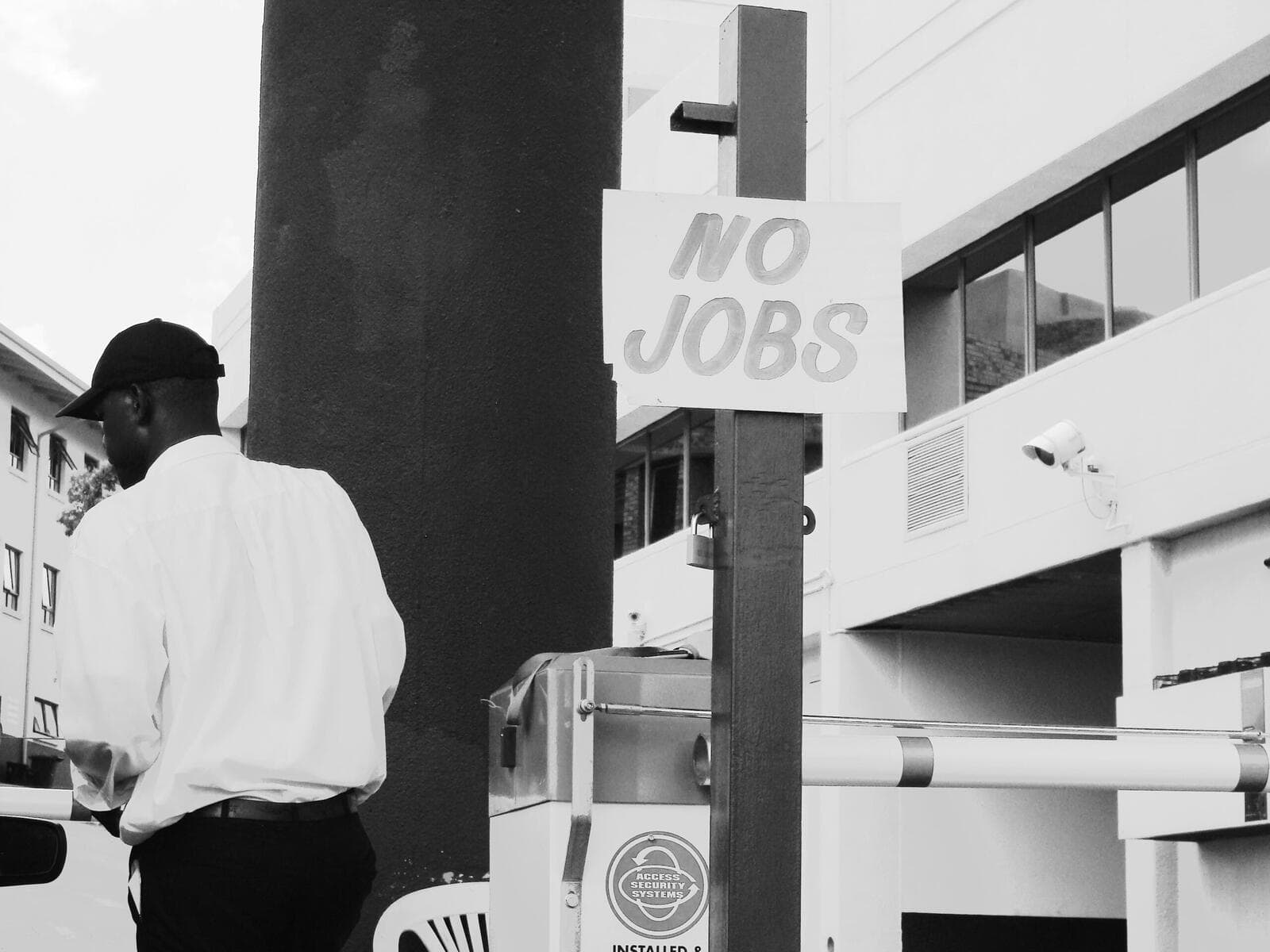
Oracle has made many people’s worst nightmares come true, announcing mass job cuts (assumed to be due to an increasing implementation of AI), sending shockwaves through the tech industry. And that’s not just because of the scale and sheer number of people made redundant in one go, but also because of what it might signal.
AI is redefining how companies operate, build and compete – and yes, it’s a phrase we’re all sick and tired of hearing, but it’s still the truth. But this isn’t a good reason for us to become complacent. In fact, the question we should be asking is whether this is a calculated reset for the AI age, or a reactive attempt to keep pace with faster-moving rivals?
The answer (surprise, surprise!), isn’t so straightforward.
A Reset Disguised as Restructuring?
At first glance, layoffs of this magnitude often point to cost-cutting – at least that’s the traditional perception. But, several experts suggest something more nuanced is happening beneath the surface; something potentially quite different to anything we’ve seen before.
Ali Gohar, Chief Human Resources Officer at Software Finder, frames the shift as a repositioning rather than a retreat:
“It doesn’t look like cost-cutting, but it looks like Oracle might be resetting its focus on AI and cloud-based technologies. This means they are moving budget towards areas like data infrastructure and AI engineering, which are high-skilled areas and areas Oracle might believe are more important to its future success.”
And this aligns with a broader industry pattern. As AI systems take over repetitive, process-driven tasks, companies are under pressure to rethink workforce composition. The result is often a leaner organisation, but one that’s more technically specialised.
Shubham Choudhary, co-founder and CTO at FirstWork, echoes this duality, as he asserts that, “it’s likely both. Big tech companies don’t cut at this scale unless they’re under pressure, but they also use moments like this to reset. AI is changing how work gets done, so roles tied to manual processes become harder to justify.”
In other words, Oracle may not simply be shrinking – it may be reshaping itself for a different kind of growth, and that’s something we are accutely interested in.
Speed Over Scale; Urgency Or Optimimisation?
The timing of these layoffs is critical. The AI race isn’t just about innovation anymore; it’s about speed, infrastructure and execution.
Gohar highlights the competitive pressure in saying that “Oracle is trying to stay competitive because right now, AI development speed is everything. Streamlining helps improve margins, but Oracle is losing out to Microsoft and Google in terms of overall ecosystem and talent.”
This is where the stakes become a little more clear. Competing with hyperscalers requires enormous capital investment in cloud infrastructure, GPUs and AI tooling. That kind of expansion doesn’t come cheap, and often, it requires reallocating resources from elsewhere.
Noah M. Kenney, founder and principal consultant of Digital 520, puts it bluntly: “Oracle’s layoffs look less like a strategic reset and more like a capital reallocation to stay competitive in the AI race.”
He adds that the company’s aggressive investment strategy suggests urgency rather than optimisation, raising questions about whether this is a long-term plan or a high-stakes gamble.
This Isn’t An Isolated Move
Oracle’s actions don’t exist in a vacuum – most things rarely do. Across the tech sector, companies are transitioning from growth-at-all-costs hiring to efficiency-driven operations.
Syed Asif Ali, founder and Digital Identity Architect at Point Media, describes this shift as a move toward clarity. He told TechRound that “layoffs are no longer just cost-cutting measures – they are becoming clarity decisions.”
This idea reframes workforce reductions as strategic alignment exercises. Companies are no longer asking how to do more with more. Rather, they’re asking how to do the right things with the right people.
Marina Davidova, co-founder and Managing Partner at DVC, also pushes back against the idea that AI alone is driving job losses. “In reality,” Marina asserts, “we’re seeing a structural shift in how work is organised, not a simple ‘AI replaces people’ dynamic.”
Instead, the transformation is more subtle than one may have expected. AI compresses certain roles – particularly at the entry level – while expanding demand for highly specialised talent. The result isn’t necessarily fewer jobs overall, but a very different distribution of them.
More from Artificial Intelligence
- Harvey Just Hit An $11 Billion Valuation Without Building A Single AI Model, Here Is What That Means For Startups
- AI Is Now Sitting In On Your Therapy Session, We Should Probably Talk About That
- Are Oral Exams The Solution To AI Cheating? Education Leaders Weigh In
- Google Just Made It Easy To Leave ChatGPT. The AI Wars Are No Longer About Who Has The Best Model
- No More Dirty Talk: ChatGPT’s “Adult Mode” Suspended “Indefinitely” Over OpenAI’s Age Prediction Inaccuracy
- Artists Will Now Have More Control Over What Appears On Their Spotify Profiles
- AI Has Already Changed How Coders Work – Now It Is Coming For The Rest Of Us
- How Is AI Helping University Graduates Find Jobs?
Capability Swap or Cost Cut?
Some experts argue that what looks like downsizing is actually a deeper architectural shift. Burkan Bur, Managing Director and Head of SEO at The Ad Firm, is unequivocal: “It is a capability swap, not a cost cut.”
From this perspective, Oracle isn’t simply reducing headcount – it’s dismantling parts of its legacy structure to make room for a new operating model centred around cloud and AI. Roles tied to older software licensing models are being phased out, while resources are redirected toward infrastructure and platform development.
Lacey Kaelani, CEO and Co-Founder of Metaintro, offers a slightly different take, suggesting the move is corrective rather than visionary, as she told us that in her opinion, “the Oracle layoffs are not a sign of a new direction, but rather a fix to prior misalignments.”
If that’s the case, Oracle may be playing catch-up, trying to retrofit itself for a future its competitors have been building toward for years.
We’re Starting To See the Human Cost of Efficiency
While the strategic logic may be clear, the human implications are harder to ignore. Large-scale layoffs inevitably create uncertainty, both internally and across the wider talent market. Gohar warns of the risks, saying that “whenever you have layoffs this size, it creates uncertainty. And that outcome can mean losing top talent with critical knowledge.”
Sid Vangala, Senior AI Engineer and Systems Architect at MasTec, reinforces this concern, noting that the biggest risk isn’t operational disruption. Rather, it’s the loss of institutional knowledge that can slow innovation in the long run.
There’s also a broader question about the future workforce. As Jason Mann, Co-Founder at STOCK, points out quite poignantly:“The threat isn’t AI, it’s being unprepared for it.”
The implication is clear here, in many ways: the winners in this transition won’t just be companies that adopt AI, but those that successfully retrain and reposition their people alongside it.
So, where does that leave Oracle?
On one hand, the company appears to be making a deliberate shift toward AI and cloud infrastructure, aligning itself with the direction of the industry. On the other, the scale and speed of the layoffs suggest a degree of urgency that raises questions about whether this is proactive strategy or reactive necessity. The truth likely sits somewhere in between.
Oracle isn’t alone in navigating this transition, but it may be doing so under more pressure than its competitors. Closing the gap with industry leaders will require more than cost-cutting – it will require sustained innovation, talent retention, and a clear long-term vision.
Whether this restructuring marks the beginning of a successful transformation or a risky bet on catching up in the AI race remains to be seen.
Indeed, in the age of AI, standing still is no longer an option, and shrinking, paradoxically, may actually be the only way to scale.
Our Experts
- Ali Gohar: Chief Human Resources Officer at Software Finder
- Syed Asif Ali: Founder and Digital Identity Architect at Point Media
- Marina Davidova: Co-Founder and Managing Partner at DVC
- Lacey Kaelani: CEO and Co-Founder, Metaintro
- Jason Mann: Co-Founder at STOCK
- Burkan Bur: MBA, Managing Director, Head of SEO at The Ad Firm
- Shubham Choudhary: Co-Founder, CTO at FirstWork
- Noah M. Kenney: Founder and Principal Consultant of Digital 520
- Sid Vangala: Senior AI Engineer, AI Systems Architect at MasTec
Ali Gohar, Chief Human Resources Officer at Software Finder

“1. Some roles, like manual compliance reviews and tier-one support, are being displaced by AI because it’s able to process information without as many errors. But human intervention still needs to be utilised. The problem is that some companies are using AI as a reason to reduce costs across the board due to market pressure. If you don’t see these companies rehiring for data or AI roles after that, it’s most likely about cutting costs.
“2. It doesn’t look like cost-cutting, but it looks like Oracle might be resetting its focus on AI and cloud-based technologies. This means they are moving budget towards areas like data infrastructure and AI engineering, which are high-skilled areas and areas Oracle might believe are more important to its future success. We’re seeing this trend in enterprise tech, where smaller, more specialised employees are driving a greater value.
“3. Oracle is trying to stay competitive because right now, AI development speed is everything. Streamlining helps improve margins, but Oracle is losing out to Microsoft and Google in terms of overall ecosystem and talent. The risk is cutting too deeply, which could slow down innovation. Efficiency has to be delivered without sacrificing overall capability.
“4. They’re moving from over-hiring and focusing more on output per employee. Areas that involve AI, engineering, and product teams are expanding. At the same time, automation is replacing repetitive tasks. It’s a shift toward a leaner, more technical workforce.
“5. Whenever you have layoffs this size, it creates uncertainty. And that outcome can mean losing top talent with critical knowledge. In Oracle’s case, if they reinvest effectively in areas like AI and cloud, it could improve their long-term performance. The outcome depends on how well they balance talent loss with future hiring.”
Syed Asif Ali, Founder and Digital Identity Architect at Point Media

“One pattern we’re seeing across major tech companies is that layoffs are no longer just cost-cutting measures — they are becoming clarity decisions.
“In fast-moving sectors like AI and cloud, companies are under pressure to reduce operational noise and focus on areas that directly contribute to future positioning. What may appear as reactive downsizing is often a shift toward tighter alignment between talent, product direction, and long-term strategy.
“In Oracle’s case, this likely reflects an effort to streamline internal complexity while reallocating resources toward high-growth areas like AI infrastructure and enterprise cloud services. The companies that benefit from these transitions are not necessarily the ones that cut the most, but the ones that emerge with clearer direction.
“More broadly, this signals a shift in the tech industry where efficiency is no longer about doing more with less, but about doing the right things with focus. Layoffs, in this context, become less about reduction and more about recalibration.”
Marina Davidova, Co-Founder and Managing Partner at DVC

“If you look at the actual data, AI-driven unemployment is still a tiny fraction of overall job losses. There’s a lot of noise in the media right now, but large corporations have been doing layoffs cyclically for decades — this isn’t new. What’s changed is that every workforce reduction is now being attributed to AI, whether that’s the real driver or not. In reality, we’re seeing a structural shift in how work is organised, not a simple ‘AI replaces people’ dynamic.
“Where agentic AI is actually being deployed, you don’t see mass layoffs — you see a redistribution of work. Low-value, repetitive tasks get automated, and people move toward higher-impact roles. The bigger issue is on the entry level: graduates are already struggling to find roles, because the kind of junior work that used to serve as a starting point is exactly what AI compresses first. So the real signal here isn’t that Oracle is cutting because of AI — it’s that companies are rethinking workforce structure under pressure to become AI-native, and those who don’t adapt fast enough will be outcompeted by those who do.”
Lacey Kaelani, CEO and Co-Founder, Metaintro

“The Oracle layoffs are not a sign of a new direction, but rather a fix to prior misalignments. Over the course of several years Oracle has increased their workforce by acquiring companies such as Cerner and bringing them into the fold, but hasn’t integrated those teams into a cohesive Cloud and AI initiative until now.
“In general, enterprise tech is dividing into two groups; corporations that are designed from the ground up to be cloud-native and legacy organisations trying to tack on cloud-native AI to existing systems while removing team members who provided technology support for previous systems. Cutting 30,000 jobs doesn’t narrow the gap between them and their competitors that have been building AI machines for years; it simply frees up capital to try.”
Jason Mann, Co-Founder at STOCK

“These layoffs are definitely concerning to hear about, especially at the scale of Oracle and also potentially Meta, but they aren’t entirely surprising. Companies have always restructured around new technology, and this isn’t something new. AI is just making that cycle faster and more visible than it has ever been in recent times.
“What’s happening at Oracle (and what’s likely also happening behind the scenes at Meta) is efficiency-seeking, something every business should be keeping top of mind, and these two aren’t any different. AI technology, whether it’s through GPT-style tools, AI agents, or custom models, are now capable enough to absorb a significant portion of the workload that used to require large teams, especially in roles that were already process-driven and repetitive. Quite simply, when a company can do the same volume of work with fewer people, that’s a financial decision they’re going to make, and frankly, most of them will.
“But that’s not the whole story. The roles most at risk are the ones AI genuinely does better such as high-volume data processing, routine customer support/service, templated content/workflows, and basic Q&A. The roles least at risk are the ones that require judgment, relationship building, accountability, and real contextual thinking. While AI can assist in those areas, it can’t own them; at least not yet, and arguably, not ever in the way a person can.
“For anyone reading this and is worried (and that worry is completely understandable) here’s what we’d say: the threat isn’t AI, it’s being unprepared for it.
“The workers who are most vulnerable right now are the ones who haven’t started learning how to work alongside these tools because after all, AI is just a tool. And the ones who have been learning, are becoming more valuable, not less. There’s going to be a time (and it’s coming sooner than we think) where the person who knows how to use these tools and comes prepared to use them, will be the one seen as more valuable to the company versus a person who doesn’t.
“We believe you should treat AI like how you would learn a new skill, the same way someone would’ve had to learn how to use spreadsheets, certain software, or new workflows. Because the companies that are cutting roles due to AI are also hiring people who know how to use it well, build with it, and how to actually make it work within the business.
“Disruption has always created new roles; it’s uncomfortable, but it’s not the end. The question has never been whether technology will change the job market, because it always has. The real question is whether you are willing to adapt when it does.”
Burkan Bur, MBA, Managing Director, Head of SEO at The Ad Firm

“I’ve seen organisations in Oracle’s shoes make the same exact calls when their legacy software models finally hit a wall. The technical and strategic context behind why they are slicing through their veteran product managers to make room for a different cost structure, regardless of the zero-performance labels they use to justify it.
“It is a capability swap, not a cost cut.
“Laying off 30,000 employees based on a zero performance basis is an architecture choice masqueraded as a financial one. Oracle is not streamlining overhead. It is cutting whole job families to support engineers, veteran product managers, on premise implementation experts that are constructed around a software licensing model that the industry has been shunning over at least ten years. The sudden communication informs you that the decision was made long before the people in question were informed about it and hat sense of urgency spills over into their communication and it nearly always indicates an investor driven rather than operationally planned timeline.
“Oci is the bet, and the org has to shrink around it.
“Oracle Cloud Infrastructure has been experiencing real traction in healthcare and financial services where the need to keep data locally complicates any migration to AWS or Azure on a political basis. Operating at that level of scale of a cloud platform necessitates a different cost structure in its operation than the perpetual software licensing sale. Some of the functions of legacy support that were previously generating a margin turn into overhead the second you switch your revenue model to consumption based pricing. The cuts virtually certainly are a mapping of those functions and what they are doing is clearing the org chart to accommodate the business it is actually operating now rather than the business it had constructed 15 years ago.
“The talent bleed is the risk that never shows in the quarter it occurs.
“The engineers and product people displaced in the middle of the restructure do not sit down and do nothing. They visit AWS, to Google Cloud, or to the startups who have the funds to pay this kind of profile. Oracle can reduce its cost base by 15 to 20 percent in the first year and in the second year it can utilise the remaining 36 months in attempting to recreate the institutional knowledge that it eliminated, and that failure mode appears in technology reorganisations of such scale more frequently than publicly acknowledged. The ones which escape it are slicing through a particular image of what we are constructing next, not against a number a board meeting has generated.”
Shubham Choudhary, Co-Founder, CTO at FirstWork

“1) Are these layoffs strategic or reactive?
It’s likely both. Big tech companies don’t cut at this scale unless they’re under pressure, but they also use moments like this to reset. AI is changing how work gets done, so roles tied to manual processes become harder to justify.
“2) How does this tie to AI and cloud?
AI and cloud reward efficiency. Companies need fewer people doing repetitive work and more people designing systems that run on their own. This kind of shift almost always shows up in the org chart first.
“3) What does it mean for competition?
The race isn’t just about who has the best AI. it’s about who can actually make it work inside large organisations. The companies that simplify and execute well tend to win, even if they’re quieter about it.
“4) Is this part of a bigger trend?
Yes. Tech over-hired when demand was uncertain. Now AI is absorbing parts of that workload, and companies are adjusting. This is less about a downturn and more about a reset in how productivity is defined.
“5) Long-term impact?
It depends on what they keep. If they lose people who understand how systems actually run, it slows them down. If they keep that core and cut around it, they can come out more focused.”
Noah M. Kenney, Founder and Principal Consultant of Digital 520

“Oracle’s layoffs look less like a strategic reset and more like a capital reallocation to stay competitive in the AI race. The company is making an aggressive and debt-fueled bet on AI infrastructure, having reportedly taken on tens of billions in new debt over the past two months, which suggests urgency and not optional optimisation. Their workflow reduction seems like a mechanism to free up cash flow and protect margins while scaling capital-intensive infrastructure and servicing the debt they took on to build it.
“The challenge is that Oracle is not operating on a level playing field. Hyperscalers like AWS, Azure and Google Cloud have multi-year leads in both infrastructure and ecosystem depth, which is a gap that is difficult to close through capital investment alone. What Oracle is attempting to do is buy its way into relevance in AI infrastructure by re-allocating billions of dollars of payroll. The long-term question is whether late-stage, debt-backed expansion can translate into a sustainable competitive advantage, or whether it simply compresses margins without closing the gap.”
Sid Vangala, Senior AI Engineer, AI Systems Architect at MasTec

“Large-scale layoffs like those reported at Oracle are rarely driven by a single factor. In most cases, they represent a strategic restructuring tied to long-term investment priorities rather than short-term performance issues. When companies pivot aggressively toward AI and cloud infrastructure, they often reallocate resources away from legacy functions and toward areas that support automation, data platforms, and AI-enabled services.
“From a technical perspective, AI adoption itself can reduce demand for certain repetitive or coordination-heavy roles while increasing demand for highly specialized engineering, cloud, and data talent. This creates an imbalance where workforce reductions in some areas occur alongside rapid hiring in others. In that sense, layoffs can signal a transition phase rather than a decline.
“Oracle’s position in the AI and cloud market is particularly sensitive to efficiency and infrastructure scale. Competing with hyperscale providers requires disciplined cost structures, strong cloud margins, and the ability to invest continuously in GPU infrastructure, AI tooling, and platform services. Workforce reductions may reflect efforts to streamline operations so capital can be redirected toward high-growth areas like AI services and cloud optimization.
“Across the broader tech industry, this pattern has become more common. Companies are shifting from expansion-focused hiring toward productivity-focused operations, where automation and AI systems are expected to improve output without proportional increases in headcount. The long-term impact will likely be a workforce that is smaller in routine roles but larger in specialized, high-impact technical positions.
“The biggest risk in aggressive restructuring is not operational disruption—it’s talent loss. If organizations move too quickly without preserving institutional knowledge and critical engineering expertise, innovation capacity can suffer in the short term even if financial efficiency improves.”