


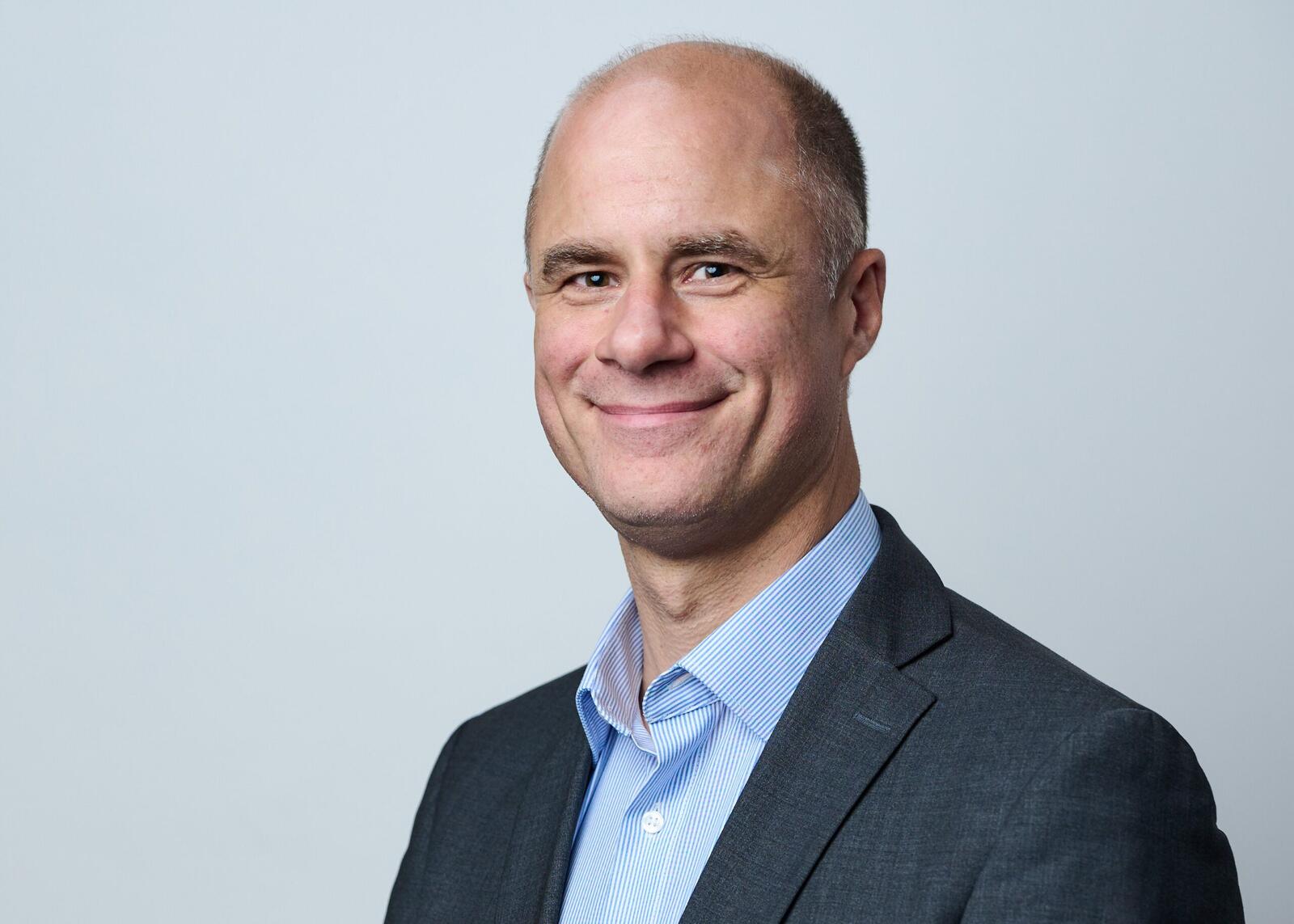
Tell Us About Yourself and Kyriba
As the SVP of Product Innovation at Kyriba, I lead the Strategic Innovation Lab. My team and I design, test and deliver innovative, high-impact solutions, such as deep-tier financing and payment route optimisation. I spearheaded the launch of Kyriba’s Trusted AI and Liquidity Analytics which uses cutting-edge LLMs, RAG and MCP technologies to deliver accurate, secure and context-aware insights for treasury users.
My professional experience includes deep expertise across data, analytics, agentic AI and digital currencies. I speak regularly at industry events, including Paris Blockchain Week and on Treasury Innovation Day with The French Association Of Corporate Treasurers.
For over 20 years, Kyriba has been a global leader in liquidity performance. Our software empowers CFOs, Treasurers and IT leaders to connect, protect, forecast and optimise their liquidity. Kyriba’s real-time data and AI-empowered tools empower 4,000 customers worldwide to quantify exposures, project cash and liquidity, and take action to protect balance sheets, income statements and cash flows. We manage more than 3.6 billion bank transactions and $51 trillion in payments annually.
Kyriba makes trust a competitive advantage, embedded in every workflow, interaction and outcome.
What Interests You Most About the FinTech Industry In 2026?
The convergence of agentic AI orchestration and tokenisation of financial assets. Agentic AI is becoming the operating system for autonomous finance – where specialised agents collaborate across systems to execute workflows that once took hours.
Simultaneously, tokenisation is rewriting liquidity rules: stablecoins enable 24/7 instant settlement, tokenised money market funds allow yield on idle cash anytime and blockchain-based payment guarantees unlock supply chain finance for deep-tier suppliers. These aren’t theoretical; the technology is available and needs entrepreneurial spirit to bring it to the scale of the global economy.
What Do You Hope To See From FinTech50 Entrants In 2026?
Entrants who lead with the problem, not the technology. Show deep understanding of the workflow being disrupted—not just the market opportunity.
With AI and blockchain in every pitch deck, I want to see serious treatment of trust and institutional readiness. For AI: Is it explainable, auditable and does it preserve human judgment? For blockchain: How do you handle regulatory compliance and integrate with existing enterprise systems?
The innovations that will define the next decade solve real operational pain at enterprise scale while maintaining the control, security, and auditability that mission-critical financial workflows demand.
What Advice Would You Give To Companies Entering the FinTech50 This Year?
This is truly a time of transformation for treasury leaders. The pressure to be fast, accurate and innovative has never been higher.
Change can be difficult – especially in highly regulated industries. However, the risk of delaying adoption of new technologies is the biggest threat to growth right now. It’s worth it to invest time in change management to make sure a new idea becomes a part of a company’s culture and daily operations.
What Do You Think Entrants Can Do To Stand Out from the Competition?
Entrants should show the ability to understand both the big picture vision as well as the operational details that can make or break a new solution. An idea has to be both powerful and feasible. Grand plans need a reality check to increase the chances of adoption. If a FinTech 50 competitor can show a solution has both those characteristics, that tells me they’ve done all the homework.
What Is Your Number One Piece of Advice To Aspiring Entrepreneurs?
Solve something you genuinely understand. The entrepreneurs who build lasting fintech companies are not the ones with the biggest ideas – they are the ones who understood a specific pain, that their solution felt inevitable to the people it was built for.


