


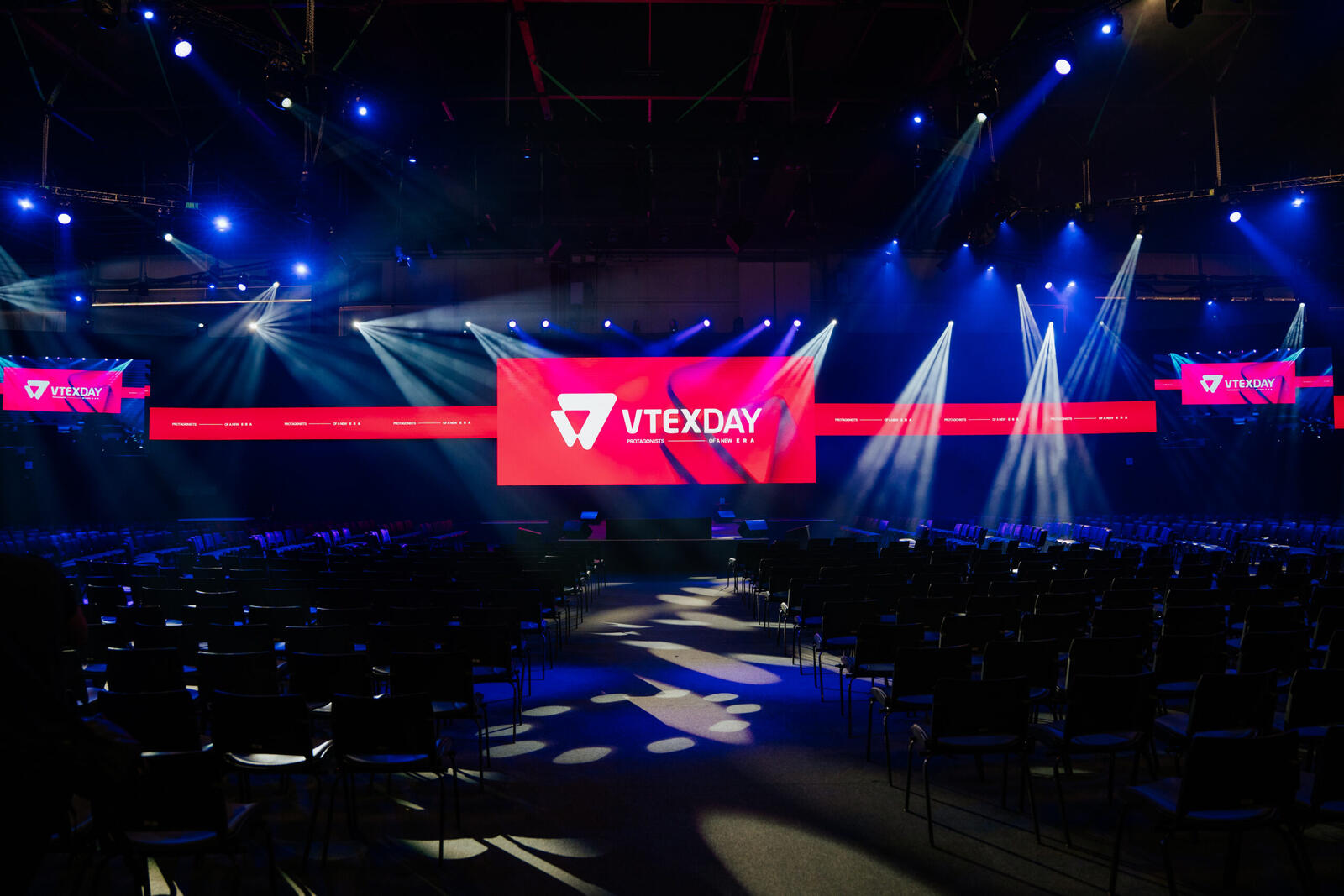
For more than a decade, VTEX has hosted its flagship event in São Paulo: VTEX Day. It’s marketed as the biggest digital commerce event in the world, and it’s hosted over two days, attracting more than 50,000 people.
Yes, 50,000 – that’s 25,000 people a day, with tickets on sale for about £250 a pop.
It certainly sounds impressive, and that was exactly my initial impression when I first came across the event. That is, it’s big, it’s popular and there’s definitely a decent amount of capital and investment in the mix. Mostly, though, my first question – and the one that ended up being a consistent theme throughout my time there – was, why Brazil? Don’t get me wrong, have nothing against the country as a business centre, nor am I naive enough to think that just because it’s outside of major hubs, it can’t be successful. It’s vibrant, full of culture and has a great deal of potential for future growth.
But, economically and in terms of global competition, it’s hardly anywhere near the level of primary tech markets in places like the US, the UK and the EU. So, why would Brazil be the location for the biggest and most popular digital commerce in the world?
Well, this was on my mind as I travelled to São Paulo and prepped for the event, and it didn’t fade away when I got there. If anything, my curiosity grew as I learnt more about the event, received insights about their big ambitions for 2026 and beyond and rocked up to the first day of the conference.
Big, Bright and Busy: It’s Showbiz, Baby!
Beyond what I’d been told and read about in anticipation of the trip, my first real impression of what the actual event would be like was formed when chatting to a VTEX employee. The morning of the first day of the conference, I casually mentioned in conversation that I was planning on quickly popping out to a nearby computer store to grab a replacement laptop charger once we reached the venue (don’t ask). I thought it would be quick and easy, but my nonchalant comment was shut down almost immediately. No way was I going to be able to just quickly “pop out”.
Not because it was unsafe (we were told this constantly during our time in the city), but because the event venue and its surroundings were expected to be absolutely chaotic – “crazy”, I think her words were. The event was expected to be so busy that there would be huge crowds, long queues and loads of traffic.
This wasn’t exactly what I expected from a tech conference in South America (perhaps I was naive), but her tone made it clear that she was serious and that I had perhaps underestimated the sheer scale of VTEX Day.
And that absolutely turned out to be the case.
VTEX Day was massive. The venue was enormous, the queues seemed endless and the atmosphere was electric – the kind of excitement I’ve experienced at music concerts, festivals and live sports, but never at a tech conference (needless to say, right?). There was singing, cheering and the distinct yet overwhelming sound of thunder sticks being banged together as attendees and staff passed through the doors to the venue. I felt like I was about to watch a rugby World Cup final (excuse my reference, I’m South African), see Beyonce live and meet Michelle Obama all at once.
And just like that, we were inside. The São Paulo Expo is easily the largest corporate event venue I’ve ever been to, and it was full of tech and startup stalls, food and coffee vendors. The crowd grew rapidly as attendees flooded inside, with speckles of luminous pink as far as the eye could see. Pink is the VTEX brand colour and employees, who were absolutely everywhere, were all wearing something that identified them as part of the team – from the classic VTEX T-shirt to fun accessories and other items, like alice bands, quirky socks and even full-on pant suits. It was quite something.
So, why am I going on and on about how big, bright and flashy the event was?
I think it’s important. I’d noticed and seen hints of it before I arrived, but once I’d really experienced the sheer scale of hype and grandeur, I realised it was about so much more than just strong brand image and captivating marketing. This approach is very much symbolic of VTEX’s broader, long-term strategy to stand out among the crowds (ie. a very competitive market), and it certainly was effective during the two-day tech conference extravaganza. But what about beyond that?
It was hard not to be distracted by the noise (both audibly and visually), but my initial question remained at the forefront of my professional curiosity: how is a digital marketing company from Latin America positioning itself in such a way that it could potentially compete on a global scale? What does this hype really mean?
More from News
- Anchor Launches Action Index, Cutting Computer-Use Agent Token Costs By 100X
- Anthropic Selects Build Circle As A UK Partner To Help Supercharge AI Realisation For Clients
- An OpenAI Engineer Is Charged Over A $14 Recording Device – What Does It Say About Security At AI Labs?
- Mhance Acquires CPS And City Dynamics To Strengthen Its Copilot, Modern Work And Business Solutions Capabilities
- What Can Startups Learn From HSBC’s AI-Driven Job Cuts?
- Moterra AI Achieves Select Partner Tier In Anthropic’s Claude Partner Network
- GoDaddy Launches Web App Hosting With API For AI Coding Tools
- 7 In 10 Consumers Have Never Investigated What’s Inside Their Smartphone
Global Ambitions In a Regional Mindset?
Before long, the word “VTEX” was crowding my mind, and it felt like all I could do was think in pink. We were invited to join a press conference at which co-CEOs, Geraldo Thomaz and Mariano Gomide de Faria, were set to speak, but not long before it started, we were informed that the conference was going to be conducted in Portuguese only.
Not a straightforward issue to respond to, for a few reasons. The event is held in Brazil and the primary language spoken is Portuguese (English isn’t as commonly spoken as perhaps some other parts of the world, at least in my experience), so sure, that’s absolutely their prerogative. But it felt like an odd choice for a few reasons.
- Initially, we were under the impression that most of the speaking would be in English. This was obviously fairly important since I speak English as my first language, I don’t speak Portuguese and I was being flown halfway across the globe to attend and report on the event.
- Our VTEX correspondent tried her best to request that at least part of the press conference would be in English, to no avail. We were told that we could ask questions in English, but with no understanding of the overall conversation and preceding questions, this wasn’t really plausible.
- The entire event and apparent theme that VTEX was promoting was growth, competition on a global level and partnerships with large, established businesses in places like the US and Europe (we heard about Whole Foods a lot). That is, a very intentional and aggressive push to compete in the global market. Yet, the choice was made not to speak in English to engage with the foreign journalists who had been invited to market the company to a global market. This felt like an odd choice and a contradiction in many ways, so it was a little confusing.
Fast forward to later in the day: after a full, long and loud 10-or-so hours of chatting to professionals, interviewing execs, looking at products, writing and listening to speakers, our VTEX contact informed us that she’d managed to arrange a 4:1 sit-down and interview with co-founder, Mariano.
This was obviously great news – a potentially better opportunity to engage with the CEO than in the press conference – but it made me even more curious than before. What exactly is the strategy? Is it as simple as linguistic and cultural loyalty (which, in many ways, I think could be fair and understandable) or is there confusion and misalignment on the company’s global competition ambitions?
Well, we spoke to Mariano, and while I wasn’t sure what to expect from him going into the interview – he came across as quite a stern man who commanded attention (as many CEOs do, I suppose) – he turned out to be both as I anticipated and perhaps a little warmer and more charismatic than I had initially thought. He spoke confidently and was very open to answering our questions, although he robustly fended off detailed queries that he most likely wasn’t able to speak to the press about (fair enough!).
VTEX Ambitions: Competing On An International Scale
Mariano was undoubtedly confident and assertive, both in himself and VTEX. His tone was direct and VTEX’s aspirations were framed as inevitable rather than aspirational in many ways. He spoke of the company’s growth, success and ability to compete in a global market. His words aligned with what you may expect from the most dominant players in the industry; those that already define the category rather than compete within it.
He explained that he sees the company becoming one of the industry’s big three in the coming years. A bold call, there’s no doubt about it, and an assertion that he supported by explaining the competitive advantage VTEX has as a Brazilian-based company rather than being in the US, EU or UK. That is, far greater cost efficiency, secure engineering, better cyber safety (less of a target than other regions) and more. Due to these factors, according to the co-CEO, VTEX is at an advantage compared to its industry counterparts.
It’s obviously hard to compare and measure these things in a bubble. Straight off the bat, I’d agree that some of these factors certainly are an advantage for Latin American-based companies that are outside of the main firing line of geopolitical tensions, among other things. But while traditionally successful markets (including the likes of Silicon Valley) certainly have some significant challenges to face), it’s pretty bold to assert that these things have the ability to offer a Latin American company a competitive advantage that would allow it to compete directly with US, UK and US-based giants. I’m not saying it isn’t possible, but it certainly isn’t enough.
And more than that, it hasn’t yet proven itself to be enough. I agree that there are many factors that make Latin America a great base for a business like this, but we haven’t quite seen this show up at scale just yet.
Of course, what I’ve neglected to mention up until this point is that a significant part of the event was the company’s announcement of three product launches and a shift in direction which, together, signal a clear evolution in the company’s strategy. And, perhaps the road map for how they expect to achieve this massive emergence on the global stage.
The emphasis is increasingly on AI-driven automation, operational efficiency and reducing complexity across commerce systems. The vision being presented is one where digital commerce becomes far more streamlined, with fewer manual processes and more intelligent orchestration happening in the background. As Mariano put it, teams will be able to get e-commerce services up and running in a matter of days rather than months, saving huge amounts of time and money.
Indeed, further to this, it was clear that VTEX is no longer positioning itself only as an operating layer for commerce – it’s something deeper, more embedded and more central to how businesses run.
That shift is significant because it moves the company further into territory occupied by some of the most established and dominant enterprise software ecosystems in the world. This is another demonstration of a clear intention to move into a global market and with that, a promising sign for potentially achieving some big goals.
A Hopeful Leap From Regional Power To Global Player
One of the recurring themes throughout the event was confidence. VTEX leadership appears fully convinced that the company is on a trajectory toward global relevance at the highest level of enterprise commerce.
At several points, the framing suggested a belief that the market itself is still being defined, and not only that, but the notion is that VTEX is actively helping define it.
But, of course, there’s a natural tension here that we can’t ignore. VTEX is undeniably strong in Latin America, where it has built significant scale and credibility. It’s well known, reputable and successful. The question, however, is whether that regional dominance can translate into meaningful global market share in a space that is already deeply consolidated at the top end.
It’s one thing to build a strong platform in a major region, but it’s another to displace or even meaningfully challenge incumbents that already control vast global ecosystems, deeply embedded enterprise relationships and decades of integration across industries.
But, just because it may be the underdog, doesn’t mean it can’t or won’t achieve it’s ambitions. In fact, to the contrary. Perhaps being the “underdog” is exactly what positions VTEX to be able to make big moves in an already established market.
So, will these big ambitions translate to global competition? Will VTEX be able to shift even further beyond its current collection of already notable international clients to an overwhelming pool of big names (and big bank accounts)?
We’ll just have to wait and see.
There’s no doubt that VTEX and its leadership have big plans and big ambitions. Their vision for the future of the company is immense and the leadership is nothing if not determined. Still, it’s a big feat in an industry that’s not only growing in size and revenue, but also in potential competition too, so becoming a leader in global digital commerce solutions will be a serious challenge.
But perhaps the company’s unique character, ambition and confidence (in addition to its location and everything that goes with that) will be what sets VTEX apart from its more traditional competitors in the future, and maybe its new products – centred on an AI revolution of sorts – will fuel this shift.
Either way, I’ll certainly be interested to see what the future holds for this unique company. Perhaps they’ll have a thing or two to teach the rest of the world!


