


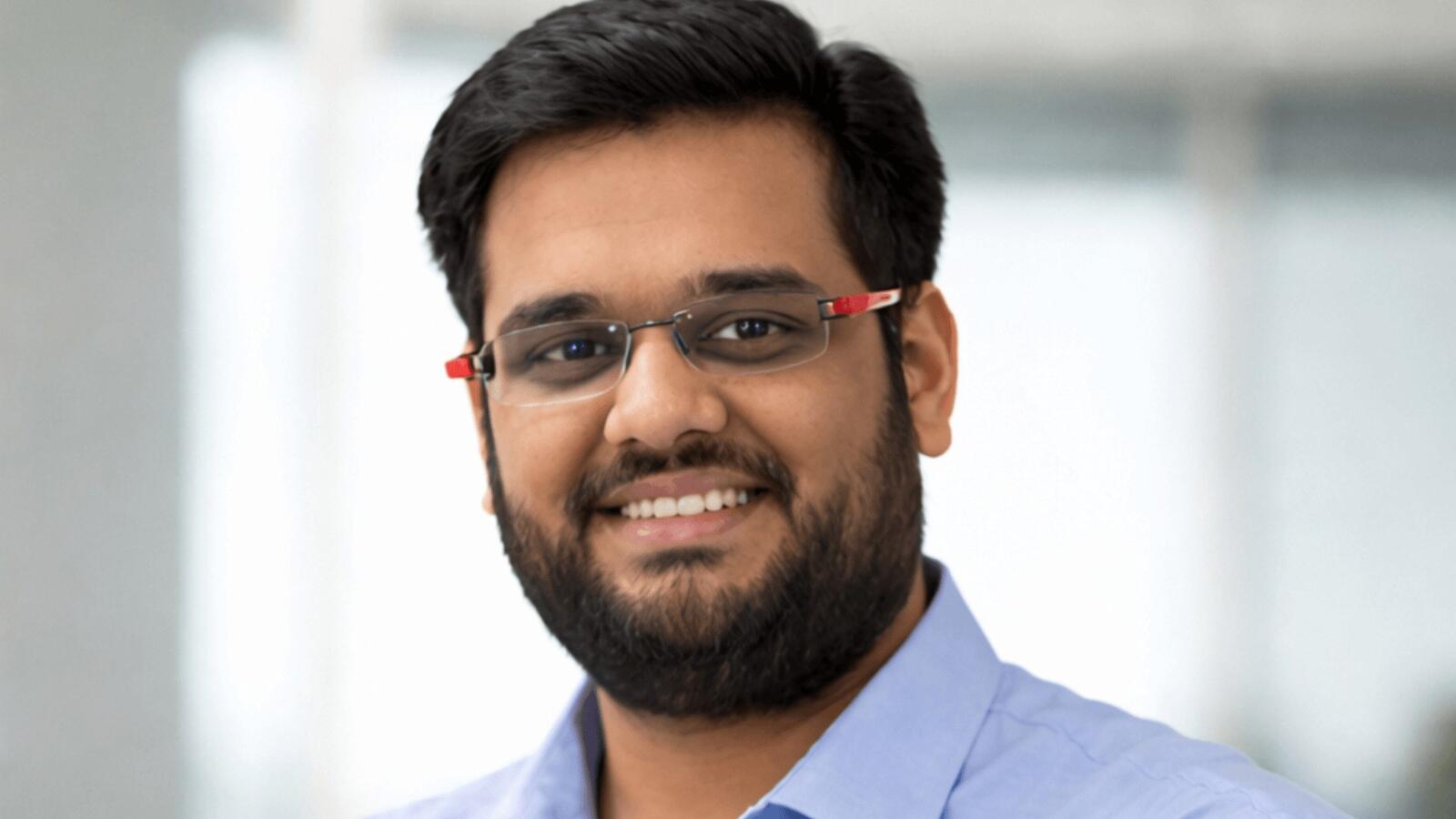
October 2025 carries its own electricity. Every year, Techtober pulls engineers, researchers, and builders into a shared reckoning with where technology is heading — and few people embody that restless urgency quite like Dr. Chetankumar Prajapati. A Senior Technical Programme Manager with more than twelve years shaping some of the most demanding digital platforms on earth, Prajapati works at the collision point where artificial intelligence, blockchain, and financial technology press against each other and spark something new.
His résumé reads like a map of modern tech’s most consequential terrain. He has held senior roles at BitGo, a global leader in digital asset custody and blockchain security, and at Uber and Deloitte, where large-scale cloud infrastructure and enterprise modernisation programmes demanded the kind of coordination that most organisations struggle to execute. But what separates Prajapati from a long list of credentialed programme managers is something harder to quantify: a doctoral mind working on production-grade problems.
Where Research Meets The Real World
Prajapati completed his Doctor of Philosophy in Business Administration with a focus on Project Management at the University of the Cumberlands in 2025, alongside an MBA and dual Master’s degrees in Computer Science and Information Technology. His doctoral dissertation — Decentralised Finance (DeFi) and Cryptocurrencies: The Latest Thinking of People Towards the Blockchain and FinTech Industry — was published through ProQuest Dissertations and Theses Global, reaching universities, policymakers, and research institutions worldwide.
That research did not sit quietly on library shelves. It mapped the real-world forces that slow or accelerate DeFi adoption: security vulnerabilities in smart contracts, scalability bottlenecks on blockchain networks, regulatory ambiguity, and the persistent educational gap that leaves potential users on the sidelines. His peer-reviewed publication ‘AI and Blockchain Integration in Finance’ (2025), indexed on Google Scholar and published in the International Journal of Innovative Science and Research Technology, examines how artificial intelligence can sharpen fraud detection, automate financial agreements through smart contracts, and improve the overall resilience of decentralised platforms.
What Prajapati identified through his research is something practitioners often feel but rarely articulate with academic precision: the biggest obstacle to DeFi’s growth is not technical — it is human. People need to trust what they cannot fully see. His follow-up publication, ‘Educational Impact on DeFi and Crypto Literacy’ (2026), traced how limited access to quality education keeps entire communities locked out of blockchain-based financial systems, particularly in emerging markets where the need for alternative financial access is sharpest.
More from Finance
- 5 Factors Affecting Commodity Price Volatility
- How Recurring Payments Are Enabling Subscription Based E Commerce
- Connecting Sales Compensation To Payroll: Avoiding Costly Breaks In The Chain
- Moody’s Issues A Warning That AI Vendor Concentration Could Trigger A Financial Crisis
- EXANTE Launches €1M Gecko Fund To Strengthen The Open-Source Infrastructure Powering Global Financial Markets
- What Is Revenue-Based Financing?
- What Is A Pig Butchering Scam? Behind The $10 Billion Fraud That Has Nothing To Do With Livestock
- The Age of Financial Illusion: Are We Underestimating Crypto Fraud?
Building Platforms That Can Carry The Weight
Prajapati’s work at BitGo brought his research convictions into direct contact with institutional stakes. BitGo safeguards billions of dollars in digital assets for institutional clients, and the infrastructure that holds those assets must operate without failure. Prajapati led cross-functional programmes focused on modernising the platform’s architecture — moving components away from legacy systems towards cloud-native, distributed service models capable of absorbing growing institutional demand.
The challenge was not just technical scale. Institutional crypto custody operates under exceptional scrutiny, and any modernisation effort must preserve security and compliance whilst accelerating performance. Prajapati’s methodology — which he developed through years of programme leadership — centres on structured dependency mapping, phased service decomposition, and cross-team architectural coordination. Rather than treating a platform upgrade as a purely engineering problem, he pulled together engineering, security, product, and operations into a shared execution model with clear governance and risk management embedded from the start.
Earlier work at Uber exposed him to a different order of complexity: the internal engineering infrastructure of a company operating at global scale. There, Prajapati contributed to initiatives that improved developer platforms, streamlined engineering workflows, and strengthened the operational backbone that large software organisations depend on. At Deloitte Consulting, enterprise cloud transformations and process automation programmes gave him a foundation in how legacy-heavy organisations absorb new technology — slowly, sceptically, and only when trust has been built brick by brick.
A Techtober Vision For What Comes Next
Techtober has a way of sharpening the question every technologist eventually faces: what gets built next, and who gets to use it? Prajapati’s answer lives at the intersection of AI and blockchain — two technologies that, when wired together correctly, can produce financial systems that are more transparent, more resilient, and more accessible than anything the traditional banking world currently offers.
His research points to a future where AI-powered fraud detection runs continuously across blockchain ledgers, where smart contracts execute complex financial agreements without human intervention, and where decentralised platforms finally break through the education and usability barriers that have kept mainstream adoption stubbornly out of reach. The technical scaffolding for that future is already being built — in cloud-native architectures, in layer-2 scaling solutions that reduce transaction costs, and in cross-chain protocols that let different blockchain networks communicate without a central authority standing in the way.
Prajapati is pursuing IEEE Senior Member status, a distinction reserved for engineers and technologists with demonstrated professional accomplishment. The recognition reflects a career built not on spectacle but on sustained, serious work — the kind that makes complex systems reliable enough to carry real money, real trust, and real futures. Techtober belongs to people building things that will still matter in ten years. Prajapati is one of them.


