


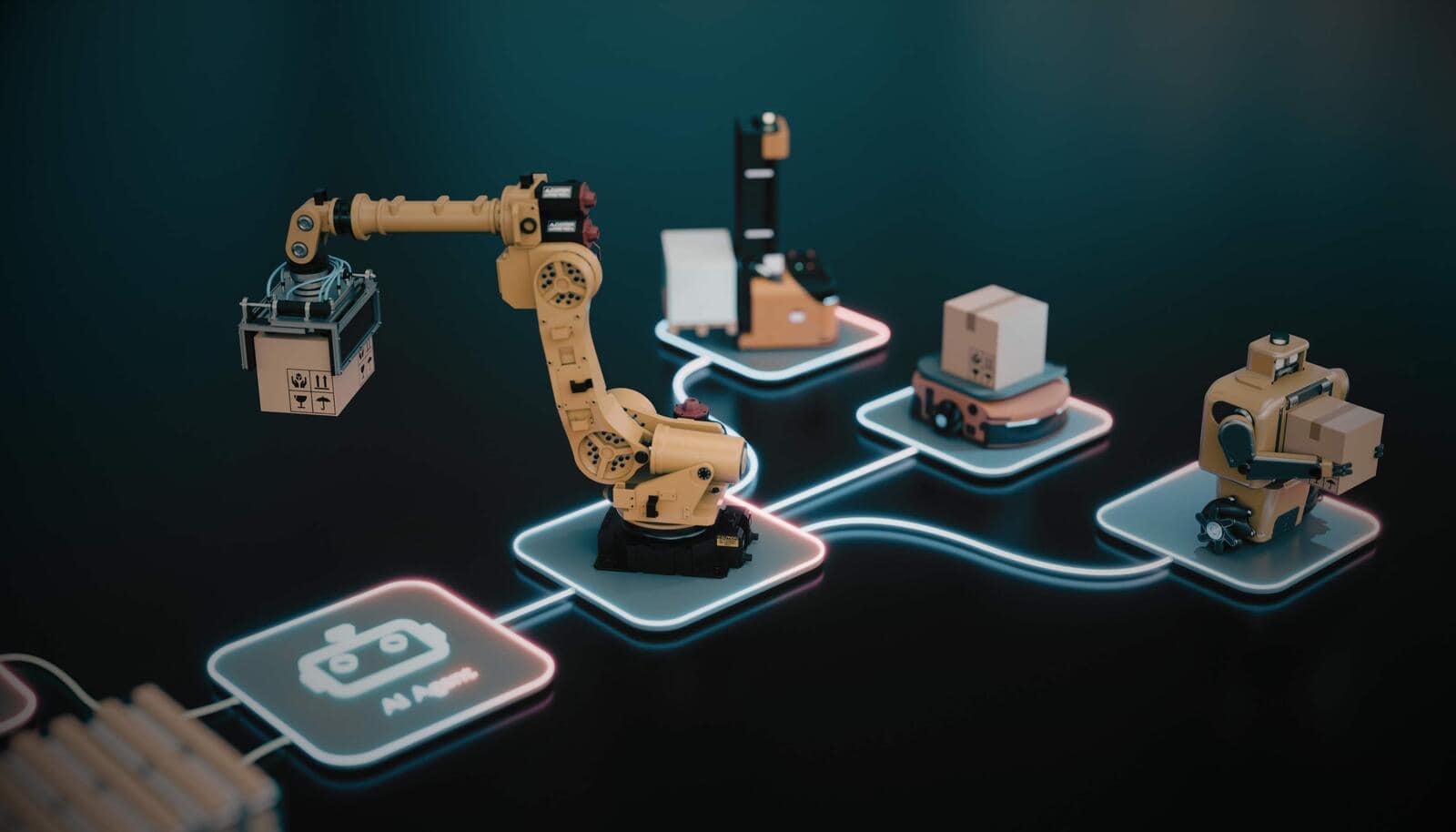
Physical AI moved from research demonstration to production reality at Computex this week. Nvidia released an open humanoid robot reference design and a physical AI model built for real-world use, confirming what those paying close attention already suspected: the tech stack for embodied AI is now available off the shelf. The focus is no longer on whether it can be built, but rather where it will be implemented first on a large scale.
The Gulf region provides a compelling response to that. Saudi Arabia, the UAE and Qatar are in the middle of some of the most ambitious infrastructure buildouts in the world – dense new city districts, automated port and logistics hubs, advanced manufacturing zones, AI-powered hospital networks and utility infrastructure designed from the ground up for intelligent automation. These are new projects built with AI at their core, avoiding the need to retrofit outdated systems. According to analysis of Gulf AI infrastructure investment, GCC states treat AI as a core strategic capability rather than a trial, which changes the procurement dynamics.
Sarah Rees, CEO of Signwl, which tracks GPU cloud pricing and AI infrastructure capacity globally, points to an unusual indicator in the current data. “MENA is the tightest major GPU region we track in terms of capacity,” she says. “H200 spot pricing is currently trading 5% above on-demand price, which suggests material utilisation relative to supply – a highly unusual occurrence.
MENA tech founders also have local access to frontier silicon including Nvidia’s Blackwell GB200, which vision-language-action models and robotics depend on.” She also notes a concentration risk: 85% of GPU SKUs available across MENA cloud regions are Nvidia, compared to 62% in the US and 65% in Europe, which she says founders should build around now to maintain silicon flexibility.
Which Sectors Feel It First
Logistics and ports offer the most immediate potential for development.
The Gulf has been automating container terminals for years and the arrival of production-ready physical AI tools gives operators what they’ve been waiting for: the ability to close the distance between ambition and execution. Elmer Morales, a two-time founder and former big tech engineering leader currently building AI-native software infrastructure, is direct about this. “Jebel Ali is an obvious candidate. So is NEOM’s logistics backbone,” he says. “These are environments with controlled variables, high transaction volume, and clear ROI on automation. The infrastructure appetite is already there.”
Healthcare is the sector Morales describes as the “sleeper.” The Gulf has invested heavily in hospital infrastructure but faces a persistent shortage of skilled labour in diagnostic and operational roles. “Physical AI agents that assist in triage, inventory, and patient flow are not science fiction at this point,” he says. “They are procurement decisions.” Rees adds a data sovereignty dimension: locally-run agents are particularly relevant for healthcare given the low energy prices in the region and the sensitivity of medical data, with low latency and data localisation both practical operational advantages rather than theoretical ones.
Smart-city operations are another early fit, where physical AI can layer onto existing sensor networks, asset management systems and automation stacks already being built across Gulf projects. This blend of greenfield environment and state-backed procurement appetite is rare globally – most markets require physical AI to prove itself against existing infrastructure. In much of the Gulf, the infrastructure is being designed with these systems in mind.
More from Artificial Intelligence
- Is Quantum Computing The Next Wave After AI? Experts Share Their Insights
- MENA Is Building AI Universities – Is A Homegrown Talent Pipeline Finally Here?
- Intelligent Apps That Build Themselves Are Here – Traditional Software Engineering Is In Crisis
- Building Trustworthy AI Systems For Regulated Healthcare Environments
- Regulated SaaS Businesses Have 10 Weeks To Get Clarity On AI – Scail’s Risk and Value Scorecard Fixes That
- How AI Expansion Is Increasing Silver Demand
- AI Gave Everyone A Lawyer – Now The Courts Are Drowning
- Behind The Anthropic And Vatican Partnership: How An AI Startup Is Pushing For Ethics
The Future-Focused Playbook for Founders and Operators
Morales challenges the dominant belief that physical AI is strictly a hardware phenomenon. “What founders and operators need to think about now is integration, not innovation,” he says. “The technology stack is now largely commoditised. The competitive advantage in the next 24 months will belong to whoever figures out how to deploy these tools inside existing operational structures without requiring a full rebuild. That means deep partnerships with regional operators, not just pitching to government programmes.”
The winners in this field will likely be companies that can localise hardware support, data pipelines, safety systems, maintenance and operator training for regional conditions – the heat, dust and fast-changing infrastructure that characterise Gulf deployment environments. Proving ROI in narrow, high-frequency use cases first, rather than pitching all-encompassing robotic solutions, is the approach most consistent with how large Gulf operators actually make procurement decisions.
Morales puts the broader opportunity straightforwardly: “The Gulf is not just a deployment zone. It’s one of the few places on earth where the capital, the political will, and the infrastructure ambition exist at the same time. That window is open now.” The Gulf may not invent every robot first. But right now, it’s building the environments where those robots will learn to operate at scale – and that might matter more.