


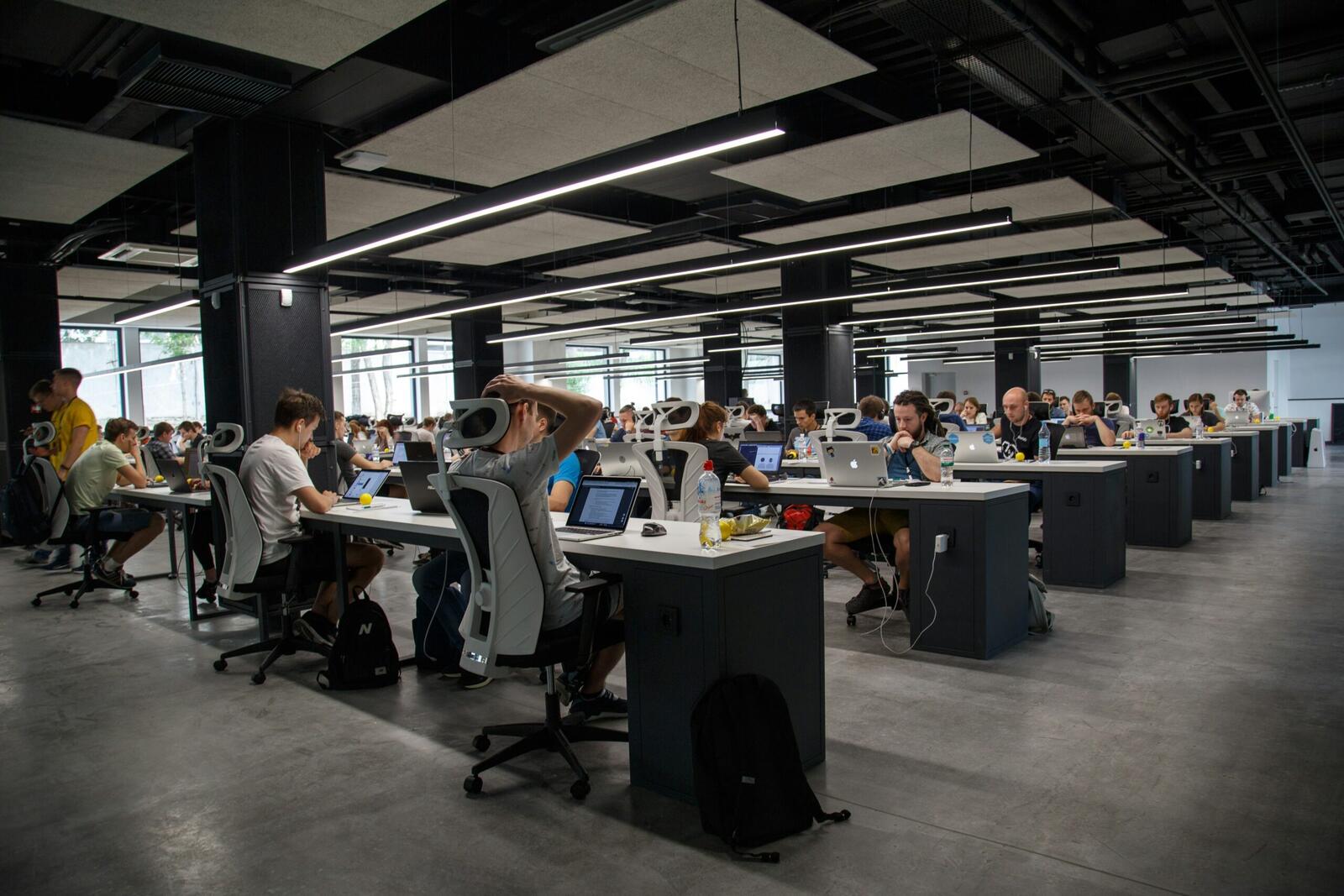
Each year, more and more tech companies pop up, each with the hope of shaking up the market with their new service or product. One thing that many of these tech businesses learn over time is that being able to meet up in a professional space is a big part of productivity.
That’s just one of the reasons more and more tech teams are returning to shared physical workspaces.
Because There are Flexible Office Spaces Available
For many tech companies, office space is a short-term work area, usually in an office building, where startup businesses and freelancers can rent the space without any long-term agreements. There may be short-term leases, such as a three-month or six-month agreement. This means that businesses do not have to tie themselves down to an office for many years.
This offers a solution to tech teams who want the benefit of a physical space without being tied down to a rental agreement. It’s a low-risk, adaptable environment that can cater to anyone who comes into work that day. There doesn’t need to be any fixed, one-person desks. Instead, it’s an area that everyone can use when they need to.
Plus, many of the best flexible office spaces are also well-designed enough to encourage more workers to come into the office space, especially if there are great amenities like access to a gym or a rooftop terrace with a view.
For Better Collaboration
Let’s be real: there is no better way of collaborating with a group than doing it in real life. While there are excellent online tools that help people work on a project together, even from opposite sides of the world, nothing beats being seated in front of one another.
It helps with momentum, sharing ideas, and generally reading the room. A lot can be said with simple body language, for example. Tech teams are now getting this; they are finding that their ideas blossom further when they meet in real life, so they are finding workspaces that accommodate that.
The Chance To Build Company Culture
Company culture is a big deal. It helps employees feel like they are part of something bigger, which in turn motivates them to do the best work they can. It becomes a collaborative effort to help the brand shine.
It’s much easier to build a company culture if there’s a physical space where everyone can meet. There, people can share one another’s values and even help build one another up. If someone is struggling, a physical space means that it’s simpler to access a mentor.
If an employee does particularly well one month, it’s easier for management to notice when working together in real life, which means they are more likely to be rewarded. In turn, the employee feels valued and like they belong, further strengthening company culture.
More from Business
- Five Themes To Watch At Singapore FinTech Festival 2026
- How Is The UAE Attracting More Businesses?
- Why Are Brands Turning To Pop-Up Stores Instead of Permanent Shops?
- How AI Video Indexing Is Reshaping Influencer Marketing And Creator Content Strategy
- What Is The UK Doing To Attract More Entrepreneurs?
- Is Singapore’s Small Market Actually Its Biggest Strategic Advantage?
- What Is The US Doing To Attract Entrepreneurs?
- How Have SHEIN And Temu Gamified Online Shopping?
More Networking Opportunities
It’s no surprise that tech teams want better access to spaces where there are networking opportunities, and that’s part of what physical workspaces provide.
Even if you choose a private office just for your team, there are often other hybrid spaces within the building, perhaps where you can get a coffee or set up a laptop to be in a more bustling environment. In these areas, you can make amazing connections with other innovative freelancers and other businesses who may end up helping your own team grow. You just never know who you might meet, and a lot of the time, it’s about being in the right place.
The Chance To Work In The Best UK Cities
Tech teams are now making moves towards physical spaces to attract more talent and create more networking opportunities, and part of doing that means setting up a workspace in one of the best UK cities. Some of the most popular cities for tech teams include:
- Manchester: Many people call Manchester the best city for tech outside of London. The city has seen major growth over the past few decades, and the tech industry there is now worth billions
- Edinburgh: Edinburgh is particularly popular for tech startups. There’s a lot of innovation there, including a focus on data science and the use of AI
- London: You can’t mention the best cities for tech companies without mentioning London. While the capital is obviously more expensive than any other city listed here, it’s still the absolute best when it comes to tech development and networking opportunities. There is never-ending growth
Working remotely simply doesn’t have the same feel as working directly in one of the cities mentioned above, or any of the other great cities in the UK. It’s a different work experience that can open new doors.
More Stability
Tech businesses are often considered more fragile compared to others because of rapid developments in the tech industry, which is partly what has made hiring remote workers more appealing. The unexpected is always right around the corner, which means they need to be more resilient and adaptable.
At the same time, having a physical space equals a feeling of stability, and many tech companies understand that, to last for the long haul, they need that. Plus, if they experience sudden growth, they can move on to a larger space, perhaps in a bigger city. At the same time, if the business can suddenly not afford to keep up with office space costs, there’s a chance of downsizing.
More Attractive to Talent
Any tech company will know how hard it is to find the very best talent. With so many tech businesses around, there’s a high chance that the person who would be perfect for your project has already been swept up by another company or is in the process of being hired.
As such, it’s crucial for tech companies to be as appealing to talent as possible, and a large part of that means providing a great workspace. With a physical office, tech teams have a comfortable, adaptable space that genuinely appeals to talent. It makes a fantastic first impression, especially if interviews are conducted there.
The Returning Rise Of Physical Office Spaces
Hopefully, it is now crystal clear why more and more tech teams are choosing office spaces over working from home. While the pandemic that started in 2020 saw a push towards remote work, in more recent years, tech companies have realised the true benefits of a physical office space. It helps with networking, collaboration, and talent appeal.


