


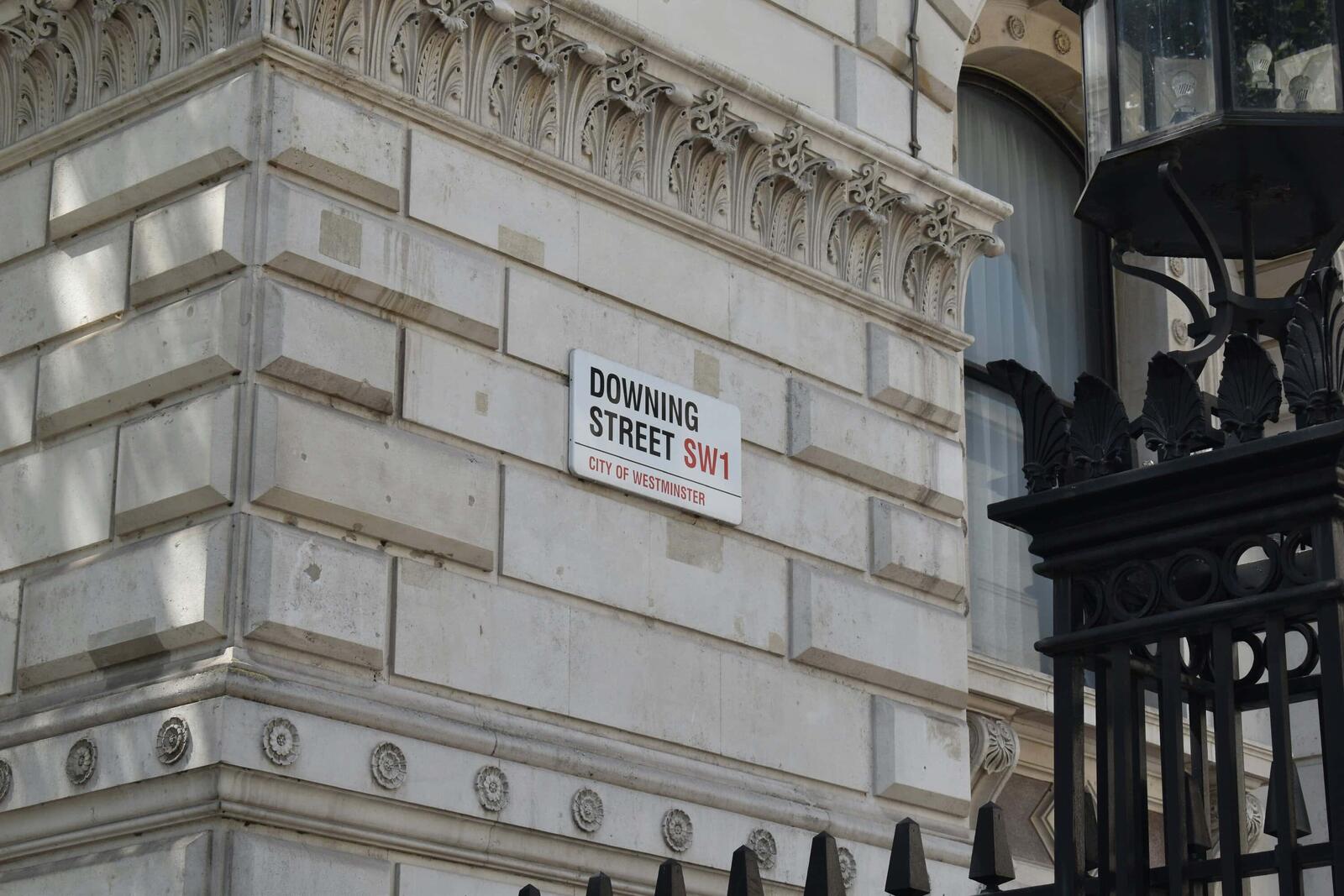
Following Sir Keir Starmer’s resignation on the 22nd of June, and with Andy Burnham widely expected to take over as Prime Minister in the coming weeks, attention is already turning to what the change in leadership could mean for Britain’s startup ecosystem.
For founders, however, the question isn’t just who ends up in Number 10. It’s what happens after that.
Of course, startups don’t operate on political timelines. Rather, they make decisions about hiring, fundraising, expansion and product development months or even years in advance. Whether it’s a two-person agency in Belfast, a fintech in London or an AI startup in Cambridge, businesses need confidence that the environment around them will support growth rather than create additional uncertainty. Because without that, things are significantly more challenging.
And if there is one message emerging from entrepreneurs and business leaders across the UK, it’s that startups aren’t asking for grand promises. They’re really just asking for stability, simplicity and a government that makes it easier to build. Is that so hard?
Stability Over Strategy Documents
One of the biggest frustrations founders often express is the constant cycle of policy announcements, regulatory changes and new initiatives. Governments frequently promise to support entrepreneurs, but startups can struggle when the rules seem to change every few months. For small businesses, it can feel impossible to keep up.
That desire for consistency appears to be a recurring theme among business leaders.
Jenson Brook, Founder of Britain’s Got Startups, says: “Founders don’t want handouts. They want a funding environment that rewards risk, innovation grant infrastructure that works equitably, an R&D tax relief system that actually works without months of HMRC delays and access to growth capital that doesn’t require moving to the US.”
Similarly, Sabby Gill, CEO of Dext, believes businesses are craving certainty more than another round of reforms.
“Startups will welcome any serious plan to reform business rates, back entrepreneurs and spread growth beyond Westminster. But from the conversations I have every day with accountants and business owners, what they are looking for most right now is not another wave of change, but stability, predictability and less friction.”
And the desire for simplicity extends beyond the technology sector. While much of the startup conversation tends to focus on venture capital and AI, plenty of founders are dealing with a more fundamental challenge. That is, bureaucracy.
Juliana Germinio, Founder and Creative Director of Yellow Zest, argues that too much time is spent navigating tax rules, business rates and administrative hurdles rather than growing businesses. As she puts it, “we don’t need grand promises. We need less friction, clearer rules, and a government that makes it easier to build, not harder.”
Her comments highlight an often-overlooked reality. Britain’s startup ecosystem isn’t made up solely of venture-backed tech companies; also includes thousands of creative businesses, agencies and consultancies that face many of the same challenges around growth, hiring and compliance.
Growth, Talent And Making Britain Competitive
Beyond stability, founders appear united on another issue that goes beyond themselves – making the UK a more attractive place to start and scale a company.
The UK is home to world-class universities, exceptional talent and one of Europe’s strongest startup ecosystems. but, while all this is true, competition for investment and skilled workers is becoming increasingly global. Countries across Europe, the Middle East and Asia are actively competing to attract ambitious founders and fast-growing businesses.
Graeme Donnelly, CEO and Founder of 1st Formations, believes the next Prime Minister’s focus should be on rebuilding confidence. “The next Prime Minister’s priority should be rebuilding confidence among the entrepreneurs and investors who are deciding whether Britain is the best place to start and scale a company.”
Several experts also highlighted practical issues like startup visas, access to capital, stock option reform and the cost of hiring. For many founders, growth isn’t being held back by a lack of ambition, it’s being held back by the increasing cost and complexity of building a company.
So, if Britain wants to continue to be competitive, it needs to make entrepreneurship feel like an opportunity rather than an obstacle course.
We Can’t Ignore the AI Question
Of course, no discussion about Britain’s economic future would be complete without addressing artificial intelligence.
While taxation and regulation remain key concerns, many business leaders believe the UK’s long-term competitiveness will depend on how effectively it embraces emerging technologies.
Carolyn Dawson, CEO of Founders Forum Group and Tech Nation, warns that policymakers cannot afford to move slowly. “The development of AI frontier models won’t wait for the next Prime Minister to settle in.”
Others argue that the UK needs to strike a careful balance between encouraging innovation and avoiding overregulation. At a time when countries around the world are racing to attract AI investment, some founders worry that excessive restrictions could simply push talent and capital elsewhere.
At the same time, there is growing recognition that innovation alone is not enough. The UK has earned a reputation for producing cutting-edge research and technology, but many founders feel the country has been less successful at helping those innovations scale domestically. And that’s kind of important in the long run.
The next Prime Minister will, undoubtedly, face increasing pressure not only to support AI development but also to ensure Britain remains a place where innovative companies can grow into global leaders.
What Startups Really Want
Despite the wide range of opinions, a surprisingly consistent picture seems to be emerging.
Most founders aren’t asking for subsidies, special treatment or an easy way out. They’re really just asking for a government that removes unnecessary barriers and creates the conditions for long-term growth.
That means stable policymaking, simpler regulation, better access to capital, support for hiring and skills development and a serious commitment to innovation. Whether the incoming PM ultimately delivers on those priorities remains to be seen, but startups are likely to judge the next Prime Minister less on political rhetoric and more on whether Britain becomes a better place to start, grow and scale a business.
We know that the UK’s entrepreneurial ambition is already there. The challenge, however, for Starmer’s successor will be making sure it has every opportunity to thrive.
Expert Perspectives
- Graeme Donnelly: CEO and founder of 1st Formations
- Liam Houghton: Founder and CEO of Popsa
- Juliana Germinio: Founder and Creative Director of Yellow Zest
- Todd Davison: MD of Purbeck Personal Guarantee Insurance
- Sabby Gill: CEO of Dext
- Dimple Patel: CEO of NatureMetrics
- Calum Chace: Co-Founder of Conscium
- Simon George: Co-Founder of Business Buzz
- Carolyn Dawson: CEO, Founders Forum Group and Tech Nation
- Jose Lopez: Head of AI at bunny.net
- Paul Jenkinson: CEO and Co-Founder of Whitespace
- Eduard Panteleev: Co-Founder and Co-CEO, ANNA Money
- Jenson Brook: Founder of Britain’s Got Startups
- Rory Blundell: CEO at Gravitee
- Paul Beare: Founder and MD of Paul Beare Limited
- Mark Sait: CEO and Co-Founder of SaveMoneyCutCarbon
- James Bannon: Co-Founder and Operations Manager at BM Technologies
Graeme Donnelly, CEO and Founder of 1st Formations

“UK startups want to see a government that understands a fundamental truth: sustainable prosperity comes from the businesses that take risks, create jobs, and invest in the future. The next Prime Minister’s priority should be rebuilding confidence among the entrepreneurs and investors who are deciding whether Britain is the best place to start and scale a company.
“For too long, governments of all colours have talked about growth while creating an environment that makes growth harder. Businesses are dealing with higher taxes, rising costs, increasing regulation, and public services that often move too slowly for the pace at which companies operate. Founders don’t need more promises or another strategy document. They need a government that removes barriers and lets businesses get on with building.
“That means a serious pro-growth agenda: a competitive tax system that encourages investment, meaningful reform of regulation, faster and more effective public services, better access to capital, and an immigration system that attracts the talent and entrepreneurs Britain needs.
“The UK should be competing with countries that actively seek investment, by considering the lowering of Corporation Tax, dividend rates, and capital gains on shares. They shouldn’t be creating reasons for ambitious businesses and high-net-worth individuals to look elsewhere. We have world-class universities, exceptional talent, and a strong history of innovation, but reputation matters. Once confidence is lost, it’s difficult to rebuild.
“The next government also needs to think beyond short-term political cycles. Businesses make decisions over years and decades, not the length of a parliamentary term. Infrastructure, energy security, skills, and technology investment all require long-term thinking.
“Startups are not asking for handouts. They’re asking for a country where ambition is rewarded, where building a business is encouraged, and where success is seen as something that benefits everyone. The next Prime Minister has an opportunity to make Britain one of the easiest places in the world to start and grow a company. The question is whether they have the ambition to do it.”
Liam Houghton, Founder and CEO of Popsa

“Successive governments have made it harder for founders to take risks, scale companies and keep them here. The next Prime Minister has an opportunity to reverse that by making Britain the best place to start and scale a business. That means attracting global talent through better startup visas, modernising stock options, rewarding job creation, and unlocking capital to invest in British innovation.
“If we want the next generation of global tech champions to be built in Britain, we need policies that back founders, not hold them back.”
Juliana Germinio, Founder and Creative Director of Yellow Zest

“As a small creative agency, the biggest thing I want from the next Prime Minister is simplicity. Right now, so much of my time goes into navigating tax thresholds, business rates and constantly shifting rules, time I’d rather spend on clients and growing the team. I didn’t move into business to become an accountant, but that’s what running a startup often demands.
“I’d love to see a government that treats small creative businesses as seriously as tech startups with real, accessible funding and support that doesn’t require a law degree to understand. Belfast and Northern Ireland are full of ambitious, creative founders like me, building genuinely international brands from small studios. We don’t need grand promises. We need less friction, clearer rules, and a government that makes it easier to build, not harder.”
For any questions, comments or features, please contact us directly.

Todd Davison, MD of Purbeck Personal Guarantee Insurance

“First, reverse the employer National Insurance increase — or at a minimum, raise the threshold significantly. It’s one of the most direct barriers to startup growth we’ve seen in years, penalising exactly the businesses that need to hire to scale.
“Second, meaningfully improve access to finance. Too many viable startups are turned away by high street lenders, which is precisely why the personal guarantee market — which we work in every day — exists at all: directors are having to put their own homes and savings on the line simply to secure the funding their business needs. Government should be working with lenders to get more capital flowing to early-stage businesses, not leaving founders to shoulder that risk alone.
“Startups need a leader who removes the barriers already in front of them.”
Sabby Gill, CEO of Dext

“Startups will welcome any serious plan to reform business rates, back entrepreneurs and spread growth beyond Westminster. But from the conversations I have every day with accountants and business owners, what they are looking for most right now is not another wave of change, but stability, predictability and less friction.
“Andy Burnham will become the seventh Prime Minister in a decade, with his Chancellor the eighth, so it’s no surprise businesses are craving stability.
“For many startups, the biggest barrier to growth is time. They are trying to manage rising costs, late payments, tax changes and compliance demands without the finance teams larger companies rely on. Devolution may bring decisions closer to businesses, but only if it simplifies the environment they operate in. If it creates more fragmented rules, more uncertainty or new administrative burdens, it risks making life harder for the very firms it is meant to support.
“The priority should be to finish what has already been started. Making Tax Digital is a good example. Done properly, it should not just be another compliance requirement. Government should focus on helping businesses complete that journey, including incentivising investment in trusted digital tools that make adoption easier for smaller firms. That would help businesses get their financial data in order, understand cash flow earlier, plan with more confidence and make better decisions before problems become crises.
“That matters for AI too. Startups will not get the productivity gains being promised from AI if their underlying data is still manual, fragmented or out of date. If the Government wants small firms to grow, it should help them digitise, reduce the time they spend on admin and give them the confidence to focus on customers, margins and growth.”
Dimple Patel, CEO of NatureMetrics

“The UK leads the way in world class innovation and technological development, especially across DeepTech, climate and quantum. But we then watch other markets scale it first, and that’s the real risk to growth. Our tech infrastructure funds cutting-edge R&D but offers no clear path to adoption, which means startups spend years validating tools that corporates, regulators and Government bodies may never actually use, and that’s a courage problem rather than a funding one.
“The next Prime Minister needs to back British innovation by making regulators active partners in scaling proven technology instead of gatekeepers defending outdated methods. We need programmes that derisk early adoption of cutting edge technology at scale, so our companies can prove out application to raise further funding and drive scale. If we want to keep our best startups and their technology in the UK rather than losing them to the US, growth-focused adoption has to be the starting point, not an afterthought.”
For any questions, comments or features, please contact us directly.
Calum Chace, Co-Founder of Conscium
“Starmer’s likely successor, Andy Burnham, is far better at vibe politics, though the bar is low. But it remains to be seen whether his policies can fix Britain’s serious problems.
“Burnham is something of a weather vane, pegged as both Blairite and soft left. He is said to have little interest in artificial intelligence, and if true, that is a serious shortcoming. The US economy is now a one-way bet that AI will transform every organisation, and the UK and Europe ignore this at their peril. The UK should aim at AI Sovereignty, but can only achieve that in collaboration with the rest of Europe.
“Competing with Big AI on frontier models is implausible, but Europe and the UK should at least undertake enormous infrastructure investments, especially in data centres. With ASML in chips and Mistral in open-source LLMs, generating tokens at scale would give the continent a seat at the global AI table.”
Simon George, Co-Founder of Business Buzz

“I think all businesses would welcome a reversal of the additional National Insurance burden which in my opinion has hindered growth among businesses.
“Also making the administrative burden on employment much less, especially for smaller businesses who at the moment have very little incentive to take on new staff. The risk is very high at a time where there is no stability in the economy.
“Giving some stability to business with some early announcements would be very helpful.
“Engaging in dialogue with business groups, especially those that represent the micro business community which makes up such a large proportion of the economy. Small business owners feel that political leaders have little to no understanding of what is involved in running a small business.
“The recent fair payment code announcement is welcome but does not go far enough, sixty days payment is still far too long to be paid for small businesses.”
Carolyn Dawson, CEO, Founders Forum Group and Tech Nation

“The development of AI frontier models won’t wait for the next Prime Minister to settle in.
“Whoever it is that takes the keys to Number 10 will need to hit the ground running on chip procurement, compute funding, AI skills and the myriad other policy questions that will define Britain’s ability to keep pace in the AI world.
“Our hope is that the next Prime Minister appoints a team that immediately recognises the importance of getting this right. The technology won’t wait, and nor will our competitors.”
For any questions, comments or features, please contact us directly.
Jose Lopez, Head of AI at bunny.net

“Stricter rules would likely be even more counterproductive. The priority should be to work closely with the companies, researchers and security experts building technologies like AI, so the new government can make decisions that protect people without cutting off the opportunity to build a real industry around it.
“Treating AI as one thing is what makes you miss in both directions at once – overreacting on harmless uses, underreacting on dangerous ones. A smarter approach is to recognise that different tools come with different levels of risk. That makes it possible for any new regulations to focus on the outcomes that matter, like creators’ rights, safety, privacy and cybersecurity, while also safeguarding the data people put into these systems.
“On the upside, AI is also becoming the layer that much of white-collar work and decision-making will run through, so the regions that build the industry will capture the productivity gains, high-value jobs, investment, and control of their own infrastructure. If the UK over-regulates, then it risks handing that industry over to faster-moving competitors, leaving us as permanent consumers of technology we do not control.
“The UK led the Industrial Revolution and benefited from that leadership for generations. A similar choice is on the table now, and I’d like to see Starmer’s successor focus on getting that balance right.”
Paul Jenkinson, CEO and Co-Founder of Whitespace

“The UK and every country needs to be thinking about sovereignty and this should not be about isolationism as that creates a whole range of additional problems. This should be about resilience: what if the US has to switch things off, or undersea cables are cut – do we grind to a halt?
“The UK needs to create a more resilient economy and part of that involves supporting homegrown UK businesses that will not be fair weather friends or become disconnected. I hope the next Prime Minister will continue to drive forward the UK’s AI strategy but the key is whether they actually talk to the right people and listen.
“Government is always impressed by logos on CVs and often overlooks the smartest people in the UK – those operating at the frontline, delivering amazing capabilities regardless of who’s in charge.”
Eduard Panteleev, Co-Founder and Co-CEO, ANNA Money

“If Andy Burnham, or any future Prime Minister, is serious about putting economic growth at the centre of government, small business creation has to become a national priority. Too often, growth policy focuses on big companies, infrastructure and inward investment, but every major business starts small.
“The UK needs a genuine “small business first” approach: smarter, simpler and more proportionate regulation, less administrative friction, and a culture that treats entrepreneurs as partners in national renewal rather than just sources of tax or compliance risk.”
For any questions, comments or features, please contact us directly.
Jenson Brook, Founder of Britain’s Got Startups

“What startups need from the next Prime Minister is pretty simple – consistency. The last few years have been a revolving door of policy announcements, U-turns and half-baked incentives that look good in a press release but don’t land where they’re needed. Founders don’t want handouts. They want a funding environment that rewards risk, innovation grant infrastructure that works equitably, an R&D tax relief system that actually works without months of HMRC delays and access to growth capital that doesn’t require moving to the US.
“We work with hundreds of founders every year through Britain’s Got Startups and the message is always the same – just let us get on with it. Stop changing the rules every 12 months. Make it easier to hire, easier to raise and easier to export. The UK has incredible talent and genuine innovation happening outside London. The next PM needs to back it properly, not just talk about it.”
Rory Blundell, CEO at Gravitee

“The Prime Minister needs to get specific on Agentic AI. There are already over 700,000 AI agents deployed across UK businesses, and most firms can’t see what they’re doing, control what they touch, or prove who’s accountable when they act.
“The next Prime Minister must set clear, stable rules of the road and back open standards, so the UK becomes the trusted place to build and deploy agentic AI.
“Done right, governance is an accelerator, not a brake, and the country that gets it right will own the next 150 years. We’ve heard enough analysis; the next Prime Minister’s job is to turn it into action.”
Paul Beare, Founder and MD of Paul Beare Limited

“As the head of an accounting firm that works extensively in New Zealand with clients looking to set up in the UK, I see many parallels here. Keir Starmer’s departure is synonymous with Jacinda Ardern, the former Prime Minister to New Zealand, who was also coincidentally head of the Labor Party at the time.
“Put simply, rather than fall any further his sword and extend the agony by trying to muster support, like Ardern, Starmer has listened to the party, listened to the people, stepped aside and let someone else take the reins. For that he should be commended.
“In terms of his achievements, Starmer’s time at No 10 has seen a significant reduction in net migration (48% down in the previous year) which does suggest some real progress on tackling the cross channel migrant trade. So that is in his favour. However, sensible immigration policy isn’t just about migrant hotels and border enforcement.
“As a firm we help and advise companies arriving in the UK to organise the correct visa arrangements. One key reform which we’d like to see the next PM address is the danger that, under the current visa regime, immigrants that are already here and contributing to society on sponsor licenses or other such appropriate visas are subject to a ten year wait before they become citizens or receive definite leave to remain.
“The current residency rule is ten years, but if it reverts back to five, then it continues to be fair on those that have already been working here.. In my view, there should be some kind of dispensation issued to allow those that are already working here to obtain their indefinite leave to remain at the five-year period. And once the law has changed – if it changes – then those newly arriving on the appropriate visas that should be subject to the 10-year rule.
“While this might represent a rethink, there’s no doubt that Starmer’s time has seen far too many few instances of the government taking a very hard U-turn approach. Whether that was in welfare policy, immigration or taxation, announcing a policy only to backtrack and back down in the face of pressure and opposition is a terrible look for the residents of the country, let alone the rest of the world that used to view us as a beacon of political stability and common sense.
“Sadly, if Andy Burnham is Prime Minister, his far left views don’t pave the way for a better working environment under such a socialist government. But I am an optimist, so if I had a wish list then I’d like to see the new administration tackling a couple of frustrations. The first is VAT registrations.
“We’re constantly hearing that the UK is open for business, but practical key business functions such as the ease of VAT registration should be reviewed to make it easier for business to comply without going through draconian hoops. That also applies to the compliance checks around opening a business bank account, which should be reassessed to make it easier for those foreign direct investment businesses to set up and operate in the UK marketplace.
“Finally, while this hasn’t received much attention, it has recently emerged that many of the benefits providers in this country are no longer supporting those non-UK registered entities that have a UK based payroll scheme in providing benefits for their employees. I don’t quite grasp why newly arrived firms need to establish an entity as a vehicle in order to provide competitive benefits for their UK-based employees. This is bad for UK business and likely to disappoint those businesses looking to offer benefits to employees right from the start.”
For any questions, comments or features, please contact us directly.
Mark Sait, CEO and Co-Founder of SaveMoneyCutCarbon

“Startups do not need another round of slogans; they need conditions that make it easier to plan and invest. The next Prime Minister should treat energy and carbon reduction as economic policy, not a separate environmental agenda. For growing businesses, volatile utility costs are now a direct drag on hiring, pricing and expansion, because many simply cannot forecast with confidence. The priority should be practical support that helps SMEs reduce demand, improve buildings and access finance for projects that generate savings from day one.
“The best way to support startups is to make resilience easier to buy. That means simpler tax incentives, faster access to green finance, public procurement that gives innovative SMEs a fair route into Government supply chains, and a grid strategy that removes blockers to electrification and onsite generation. Net zero and growth are not competing priorities; done properly, they are the same conversation.”
James Bannon, Co-Founder and Operations Manager at BM Technologies

“My message to the next Prime Minister is simple: make it cheaper to employ people, not harder. The rise in employer National Insurance hit small businesses like ours directly, and every increase in the cost of a job is money we cannot put into creating one. I want to see meaningful tax breaks for small businesses, whether that’s a significantly expanded Employment Allowance, NI relief for firms taking on new staff, or proper incentives for apprenticeships and first-time hires.
“We’re a growing managed IT and cyber security provider in Rochdale, and we want to recruit locally, train young people, and build careers in our community. Give SMEs the headroom to do that and we will do the heavy lifting on employment ourselves. The next PM doesn’t need to create jobs. They need to stop taxing the businesses that do.”
For any questions, comments or features, please contact us directly.


