


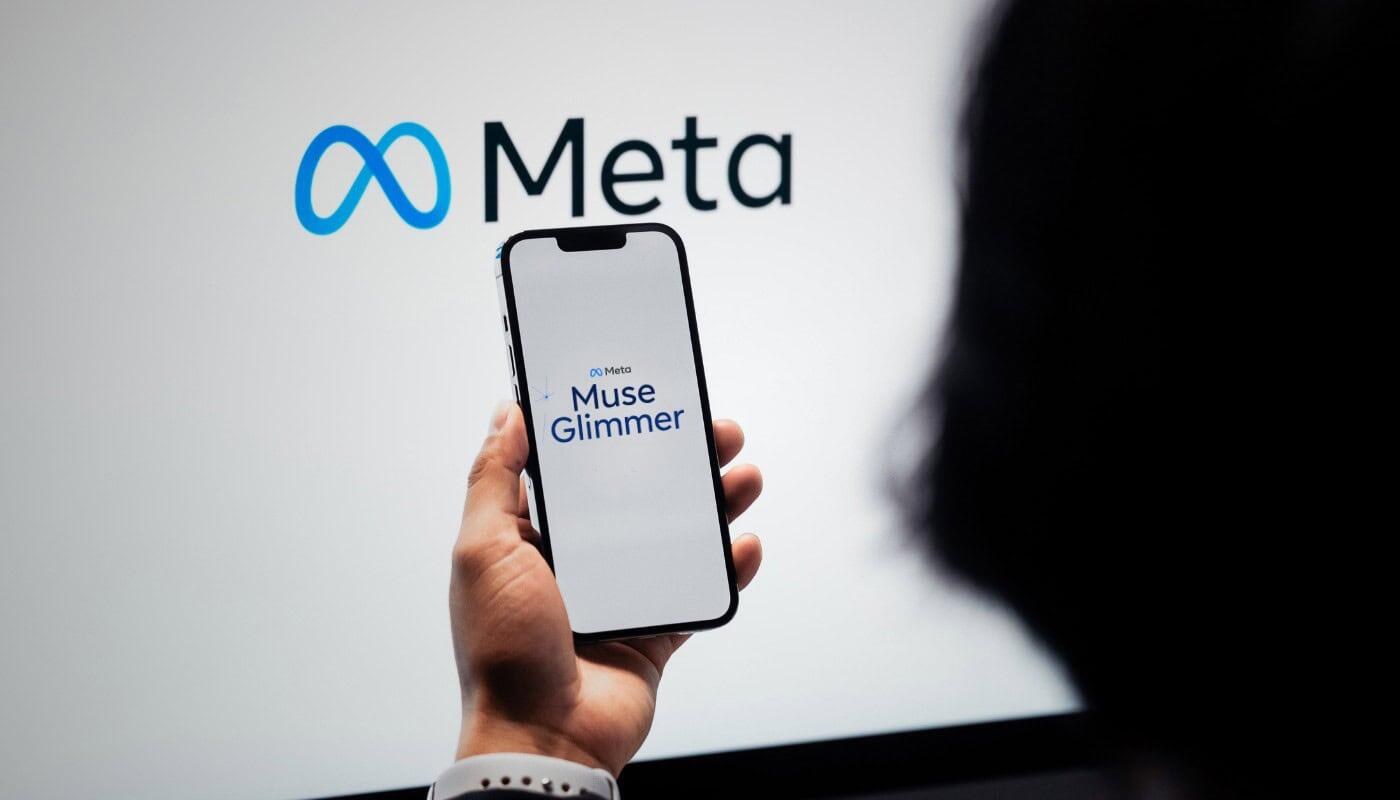
If you were expecting Meta to drop its most powerful AI model into the wild, you’ll need to be patient. What arrived on 10 August was Muse Glimmer – a 30-billion-parameter open-weight model, available on Hugging Face under Apache 2.0, built to run on a laptop with a single consumer GPU. Agentic workflows, coding, tool use, multimodal input, all within a 24 or 32 GB memory envelope. Zuckerberg called it a direct counter to Chinese AI dominance and confirmed Muse Spark 1.2, Meta’s most advanced model, follows.
Meta says the weights will be published soon, but no date, licence type or hardware requirements have been confirmed. That distinction is worth keeping because the story around this week’s announcement is partly about what has happened and partly about what Meta is signalling is coming.
Inside Meta’s Two-Pronged AI Strategy
When Meta launched Muse Spark in April, it made the model available only to selected partners through an API. This week’s Glimmer release reverses that direction. Meta is now putting model weights directly into developers’ hands under a permissive licence and saying its frontier model will follow.
The competitive logic runs in two stages. Glimmer targets deployment by optimising for consumer hardware. Meta expects significant AI traffic to move off centralised APIs and onto local devices. On-device execution slashes inference costs, supports offline work and keeps proprietary data strictly within developer infrastructure.
If Meta launches Spark 1.2 with truly permissive access, it takes on the model-access layer next, giving businesses a genuine non-Chinese alternative to closed APIs.
More from Artificial Intelligence
- AI Models Are Mentioning Your Brand, But Is Your Website Being Cited?
- AI Could Move From The Cloud To The Phone – What Does That Mean For App Developers?
- What Happens When A Startup’s Entire Codebase Is Written By AI?
- The Most Important AI Design Decision Is Where The Model Stops
- OpenAI’s Astra Could Change How Startups Are Built, Says OpenAI’s Tricia Troth
- AI Influencers Vs. Real Humans: What Actually Works In Marketing?
- The Rise Of AI-Powered Start-Ups
- Trump’s Calling It “Superintelligence” Now – But The AI Industry Might Have Bigger Problems Than Its Name
Turning AI Models Into A Commodity
There is an ideological version of Meta’s open-weight push and a commercial one. Publicly, Zuckerberg focused on the ideological vision, arguing for broad distribution of advanced AI instead of concentrated control by a few firms. He called out the belief that centralised AI power ensures safety as a fundamental mistake. The commercial drive behind the decision is where things get interesting.
Model subscriptions don’t drive Meta’s core success. Its edge comes from billions of users across Facebook, Instagram, WhatsApp and Messenger, backed by direct access through consumer hardware, AI assistants and smart glasses. It backs that reach with massive behavioural and social-context data. It can also absorb AI costs into a platform business that monetises through advertising rather than API fees. Making the model layer freely available helps Meta commoditise exactly the thing that OpenAI and Anthropic are trying to sell. If the intelligence layer becomes a commodity, competition shifts to distribution, user context, devices and applications and on those dimensions Meta has an advantage.
The two strategies align neatly. Meta can push open-weight models at the base level while maintaining full proprietary ownership of user data, personalisation tools, recommendation engines and consumer interfaces. Releasing open models is a strategic trade. The underlying platform is non-negotiable.
What Will the Spark 1.2 Release Actually Show Us?
Muse Glimmer offers a real open-weight release, though an open-weight model differs from true open-source software. Releasing model weights under a permissive licence isn’t the same as sharing training data, training scripts, evaluation frameworks or the full research stack. Glimmer’s weights fall under Apache 2.0, while Meta keeps the rest locked away.
Spark 1.2 is the real test. The questions that will determine how significant this push actually is: will the weights be fully downloadable or restricted through an API? Will the licence permit commercial use, fine-tuning and redistribution without restrictions? Will the model be competitive at the frontier, or primarily open relative to its size? Will enterprises be able to deploy it without routing data through Meta infrastructure?
Glimmer creates real pricing pressure on routine tasks for OpenAI and Anthropic, boosts developer leverage in API negotiations and hands enterprises a trustworthy backup option. These proprietary leaders still command major edges in frontier research, system stability, safety tooling and dedicated enterprise offerings. A downloadable model also shifts operational burdens, hardware costs, monitoring, security and misuse responsibility, to the deployer. The more immediate challenge from Glimmer is that it expands the category of workloads for which a closed API is simply unnecessary.
What Meta has released this week is a strategic opening position. What it does with Spark 1.2 is the actual argument.


