


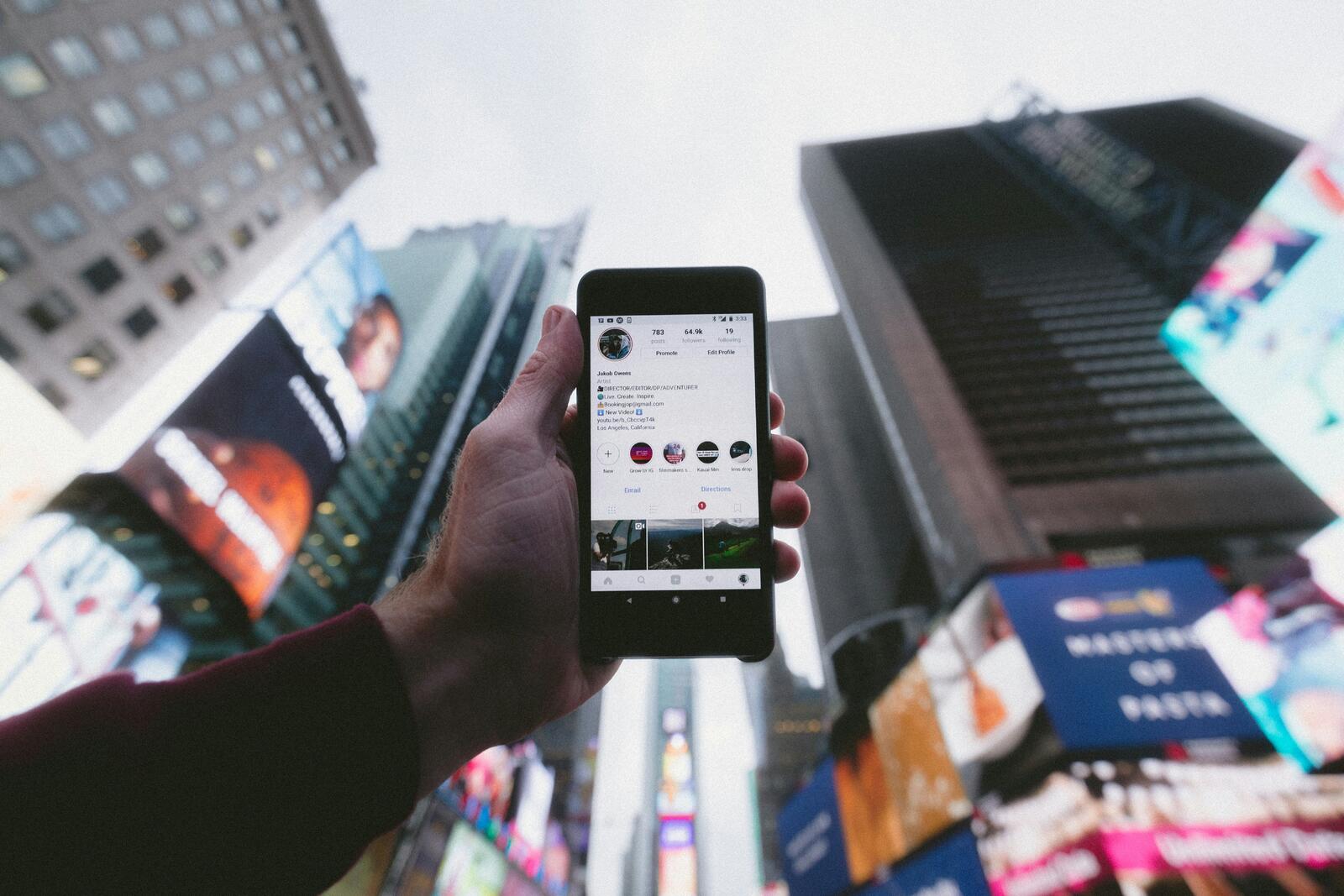
Social media platforms have been focused on giving people what they want. That is, giving people what they want even when they don’t know what that is. Indeed, it’s been about trying to solve what they see as a problem: how do you show people more content than just the posts from the accounts they follow?
The answer, of course, was “the algorithm”. Of course, not so much “the algorithm” (which makes it sound like a mystical beast) and rather general algorithms in the technical sense. Whether you’re scrolling through TikTok, Instagram, Facebook, X or YouTube, algorithms now decide much of what you see. They analyse your behaviour, predict what might keep you engaged and serve up content accordingly. And whether you love them or hate them, they’ve become the engine that powers modern social media.
But what if you don’t want that? Turns out, many people are saying exactly that, with an overwhelming number of people on socials calling for algorithm-free social media and the return of MySpace.
This week, Bluesky introduced a new “algorithmic opt-out” feature that allows users to stop their posts from appearing in the platform’s main Discover feed. The company says the feature exists because “not everyone wants to go viral” and that sometimes people simply want to post for their followers rather than being exposed to larger audiences.
It’s an interesting update, but not because it will necessarily transform social media overnight, but because it forces us to confront the issue of whether we actually can escape “the algorithm”, and even if we could, would we really want to?
How Does Bluesky’s New Feature Work?
The feature is fairly straightforward, and it’s simple by design. Users can enable a setting within Bluesky’s Privacy and Security menu that asks apps to hide their posts from algorithmic recommendations. Once the feature’s been activated, the user’s posts will no longer appear in Bluesky’s Discover feed to people who don’t already follow them. The setting applies at account level, and it can even travel with the user across other apps built on the AT Protocol, although those apps aren’t required to respect it (it’s more of a technical possibility).
But this doesn’t make posts private. People, strangers, can still visit a profile, see public posts and share them. The difference that this feature introduces is that it reduces the chances of content being surfaced by recommendation systems to strangers.
Basically, the idea here is that Bluesky is offering something that used to be the main goal behind most social media platforms: a way to communicate directly with your own followers without accidentally capturing the attention of a potential audience.
More from News
- What Can Startups Learn From HSBC’s AI-Driven Job Cuts?
- Moterra AI Achieves Select Partner Tier In Anthropic’s Claude Partner Network
- GoDaddy Launches Web App Hosting With API For AI Coding Tools
- 7 In 10 Consumers Have Never Investigated What’s Inside Their Smartphone
- Tango Turns Live Communities Into a Force For Breast Cancer Research
- Two Thirds of Brits Are Telling AI Chatbots Their Secrets But Don’t Trust The Companies Behind Them
- Video Game Companies Are Abandoning “Buy Our Console To Play This” – Here’s Why
- UK Gambling Operators Face New Deposit Limit Rules From 30 September
The Return Of The Pre-Algorithm Internet?
Given the current social and cultural climate, I’ll be bold and say that this update is almost definitely a direct response to the growing desire (or perceived desire) to be free from “the algorithm”, essentially tapping into a nostalgia for an earlier version of social media.
Back in the MySpace era, most people saw posts from friends, family and the communities they had actively chosen to join. You weren’t constantly being shown content from strangers and celebrities because an algorithm had determined that it might keep you scrolling for an extra three minutes. It was all about seeing what your friends were up to and telling them what you wanted them to know about you were up to (and obviously jazzing up your profile in the most obscene, 2000s way possible).
And I’ve touched on this before, not so long ago, actually, when the “bring MySpace back” sentiment really reached a peak. Whenever people talk about wanting a return to MySpace or a world without algorithms, they’re often imagining a simpler internet where social media felt more social and less performative.
And returning to that is a lovely idea and a refreshing prospect, but it comes with issues. Firstly, that memory tends to be selective.
The internet of the mid-2000s wasn’t necessarily better, it was simply smaller and simpler. You could follow everyone you cared about because there were fewer accounts, fewer posts and less content competing for attention. And we loved it, because we didn’t know any better.
But today, social media platforms operate at a completely different scale, and the one thing nobody really wants to hear is that that’s not just because these giant corporations are dictating what we should use or even want. They certainly play a significant role in the process, but in many ways, they’re also just reacting to what consumers want.
Can Social Media Even Function Without Algorithms?
This is where the conversation gets interesting, because, not to be patronising, but I think when people say they want to go back to a time before algorithms, they’re fundamentally misunderstanding what algorithms are and big of a role they play in our lives (and have for a long time). And so, when people say they want “algorithm-free” social media, they often don’t mean they want no algorithms at all; what they usually mean is that they don’t want recommendation algorithms deciding what deserves attention.
Because the reality is that algorithms are everywhere. Chronological feeds use algorithms, spam filters use algorithms, search functions use algorithms and even deciding which posts load first when thousands are published simultaneously involves some form of computational sorting.
The issue isn’t really algorithms, because algorithms aren’t intrinsically bad. The issue people are highlighting is recommendation systems.
The reason TikTok became one of the most successful social media platforms in history wasn’t that people wanted more control, it was because its algorithm became exceptionally good at finding content users didn’t know they wanted to watch. Instagram, YouTube and X followed similar paths because recommendation engines work – they keep people engaged, help creators find audiences and allow new accounts to grow.
Without them, many creators would struggle to reach anyone beyond their existing followers. So in many ways, these recommendation algorithms were created to meet a growing need of users.
The Appeal Of Not “Going Viral”
At the same time, it’s easy to understand why some users would welcome Bluesky’s feature. Going viral sounds fun in theory, but in practice, it can be exhausting. A joke shared with a few hundred followers can suddenly be viewed by millions: comments arrive from strangers, context disappears, screenshots circulate and people who were never part of the original conversation start arguing about it. Next thing you know, you’re that guy. What began as a casual post can quickly become something much bigger than intended.
So in this context, Bluesky appears to be recognising that not everyone wants social media to function as a broadcasting platform. Some people simply want to communicate with the communities they’ve already built. In that sense, the feature isn’t really about privacy; it’s more about control.
But Can We Really Escape The Algorithm?
I don’t think it’s possible to completely escape “the algorithm”, whether in its most simple form or the more complex recommendation algorithms we see today. And to go one step further, I don’t actually think that’s what most people really want.
Even if Bluesky removes your posts from its Discover feed, other users can still share them. And the wider internet has a habit of amplifying interesting content regardless of what settings are selected.
More broadly though, modern social media platforms are built around discovery. Users expect to find new people, new ideas and new content every time they open an app, and recommendation systems are what make that possible – something I think many people tend to forget.
And so I think that what Bluesky is really offering isn’t an escape from algorithms, it’s an escape from one particular type of algorithmic visibility. Further to this, I also think it’s most probably going to be a temporary escape – it’s what people want right now, or at least what they think they want, but I don’t think it’ll last. Because the truth is, it’s not 2005 anymore and we know way more than we did back then; we’ve been exposed to more. And in that sense, I’m not sure we really can go back.
In many ways, it’s plausible to think that what Bluesky has done here is almost made itself a martyr. After all, we haven’t seen any of the mainstream platforms go in this direction, nor do I think we will. This move by Bluesky will most likely give people the opportunity to scratch a metaphorical itch and then get back to the status quo.
Although it does also acknowledge an important point that certainly goes along with this. That is, for more than a decade, platforms have treated virality as the ultimate goal of being on social media. More impressions, more engagement and more visibility were assumed to be universally desirable.
But Bluesky’s new feature suggests that assumption may no longer hold – I’m not sure that they’re totally right in a more general sense, but it will certainly be relatable to at least a group of users, and that’s an important acknowledgement at the very least, even if this isn’t a long-term change.
It’s also worth acknowledging that the way in which Bluesky approached this issue may actually have been back to front. They have given users the ability to decide where their own content ends up and whether or not it’s discoverable by the masses, but perhaps they should be giving users the ability to choose what they’re viewing? Of course, a lot of this is already possible by means of choosing who you follow, but there’s still the issue of suggested pages, never mind scrolling through reels. But perhaps that’s a question for another day.


