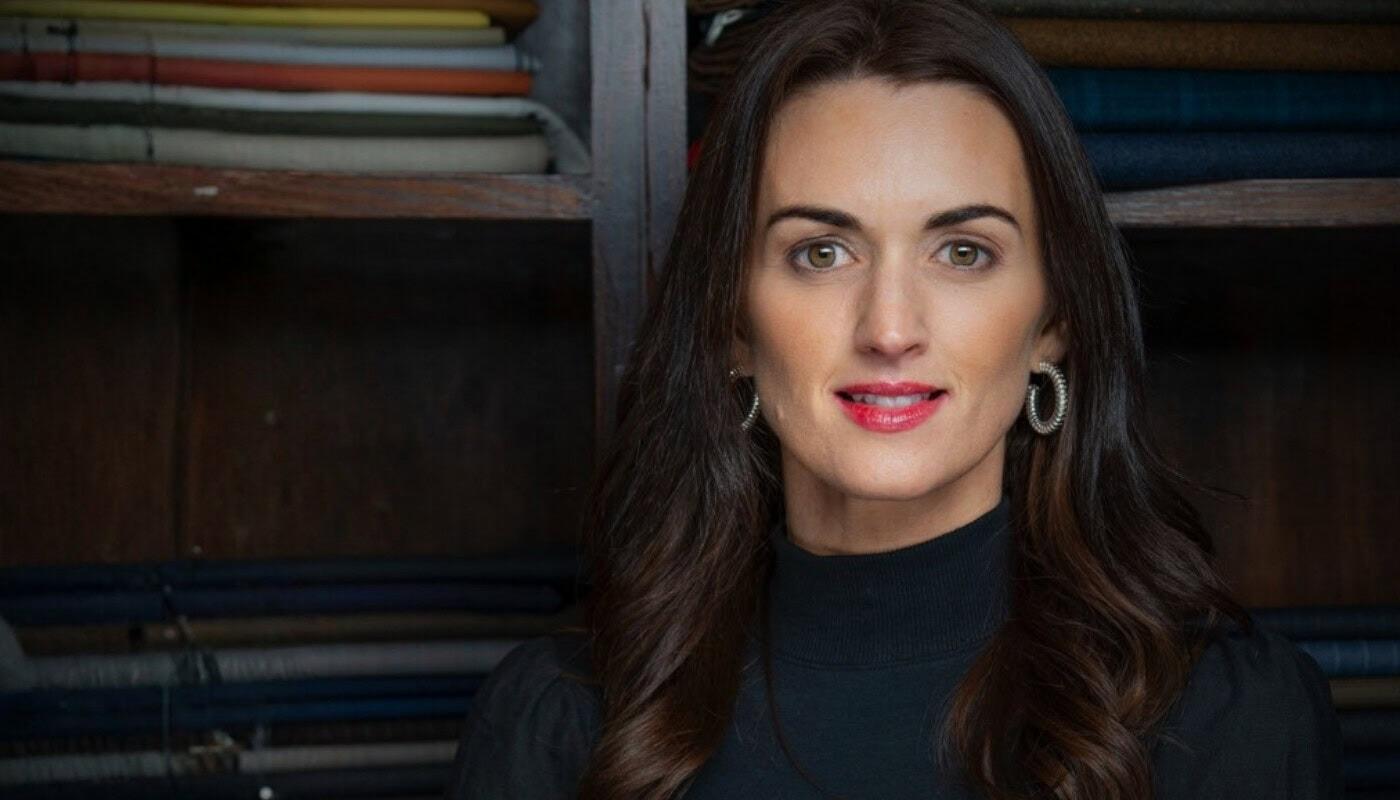
Dearbhail Ormond built frendo six years ago after experiencing endometriosis symptoms from her teens and waiting more than 18 years for a diagnosis of stage four disease. What she created was a way to understand what was happening across her whole body, identify patterns and communicate the real impact of her symptoms with doctors and the people around her.
Today, frendo is building the data, support and care infrastructure for endometriosis and complex chronic pain.
Its free app helps people track symptoms, understand patterns, measure changes in their quality of life and communicate their experience more clearly. frendo@work helps employers better support people living with endometriosis and chronic conditions. frendo Connect is building a trusted network of clinicians and specialists to help people find appropriate care. And frendo Intelligence uses structured, longitudinal patient-reported data to contribute to the research and evidence base that endometriosis has historically lacked.
Together, these tools are creating a more continuous connection between patients, clinicians, researchers, employers and healthcare systems.
1. What prompted you to make frendo completely free, and why did now feel like the right time to remove the subscription fee?
The honest answer isn’t that frendo has suddenly become a unicorn and no longer needs revenue. frendo is a commercial business, not a charity, and it must have a sustainable model to continue growing and supporting people.
But every commercial decision must ultimately come back to what patients need, and this was my wish from the start. frendo was built from my lived experience and has since been shaped by the thousands of lived experiences shared with us. We know how much people with endo already pay, through private appointments, medication, treatments, lost income and years spent fighting to access appropriate care. Digital real-time support shouldn’t become another cost.
Our commercial model is increasingly focused on creating value through credible partnerships with employers, healthcare systems, researchers and other organisations, rather than placing the cost on the individual patient. Making frendo free allows us to remain true to why it was created while building a more scalable and sustainable business around it.
2. You’ve spoken about the financial, professional and personal costs of endometriosis. How much of a barrier do you think the cost of healthcare and support still is for people living with the condition?
It remains an enormous barrier. The cost isn’t only limited to medical appointments or treatment. It can include medication, travel, childcare, complementary therapies, fertility treatment and mental health support, as well as lost income from taking time off, reducing working hours or having to leave employment altogether.
The consequences extend far beyond healthcare costs. Endometriosis can disrupt education and career progression, affect fertility and family-planning decisions, place significant strain on mental health and relationships and erode someone’s long-term financial security and quality of life.
Many people feel forced into private care, often at great expense, because they can’t wait indefinitely on waitlists for answers, but that option isn’t available to everyone. It creates a deeply unequal system in which the speed and quality of care someone receives can depend on what they can afford.
Making frendo free won’t solve those inequalities, but it removes one unnecessary barrier to information, tracking and support.
3. You founded frendo after your own experience of living with endometriosis and struggling to be heard. How has that personal experience continued to shape the platform six years on?
My lived experience gives me the lens through which I lead frendo, but the platform has been shaped by the thousands of people who have shared their experiences with us.
I have lived through almost every stage of the endometriosis journey: the loneliness and confusion of an 18-year wait for answers, diagnosis and multiple surgeries, the fear of being told I would never have children and the reality that life doesn’t suddenly return to normal after diagnosis. Eventually, my quality of life became so poor that I needed a hysterectomy to mitigate the adenomyosis and endometriosis. During severe flares, I couldn’t properly care for the young baby that I’d been so lucky to have, and the choice of whether to try for another child was effectively taken out of our hands. I’m now navigating the impact of endo alongside menopause.
That continuing journey has shaped how frendo has evolved. Diagnosis isn’t the finish line for an endometriosis patient. People need support before diagnosis, through treatment and surgery, and throughout the years that follow. That’s why frendo looks beyond periods or individual pain episodes to the whole person – their symptoms, quality of life, fertility, mental health, relationships, work and changing needs over time.
4. You’ve expanded frendo beyond period tracking to include ovulation, ovarian pain, bowel and bladder symptoms and quality of life. Why was it important to take this broader approach?
Endometriosis isn’t a “bad period” condition, and a period tracker alone can’t represent the experience of living with it.
Pain can occur during ovulation or at any point in the month. Symptoms can involve the bowel, bladder, lower back, legs, digestive system, energy levels, sleep and mental health. Some people don’t menstruate because of hormonal treatment, surgery, menopause or other circumstances, but they can still live with significant symptoms.
Taking this approach allows people to build a more accurate picture of what’s happening across their whole body and life, rather than viewing each symptom in isolation.
5. Endometriosis can affect almost every part of someone’s life, not just their menstrual cycle. What do you think is still misunderstood about the condition and its wider impact?
The biggest misunderstanding is that endo is confined to menstruation and fertility. Those are important aspects of the condition, but they’re not the whole story.
Endometriosis can affect someone’s digestive and urinary health, mobility, sleep, mental health, relationships, education and career. Persistent pain can also change the way the nervous system processes pain, meaning the impact may continue even after surgery or hormonal treatment.
We also underestimate the cumulative effect of repeatedly not being believed. When someone spends years being told that severe pain is normal, they can begin to doubt their own body. Endometriosis isn’t only a reproductive health issue; it’s a chronic, whole-person condition with significant social and economic consequences.
6. What can tracking symptoms and quality of life over time actually help someone understand or communicate when they’re seeking medical care?
Tracking can turn a series of seemingly isolated and invisible incidents into a visible pattern. It may help someone recognise whether pain appears around ovulation, whether bowel or bladder symptoms worsen at particular times, or whether fatigue, sleep and mood change alongside physical symptoms.
It also gives people something more structured to bring into an appointment. Instead of trying to recall months of symptoms under pressure, they can show their frequency, severity and impact over time.
Tracking can’t diagnose endometriosis and should never replace clinical care, but it can help patients describe their experience more clearly, ask better informed questions and advocate for the most appropriate investigation and support.
7. What have you learned from frendo’s users over the past six years about what people with endometriosis actually need from digital health tools?
We’ve learned that people don’t want to spend their lives recording every detail of being unwell, and they shouldn’t be left to navigate the system or advocate for appropriate care alone. A digital health tool must be simple, flexible and genuinely useful.
People want help understanding what their information means, not just graphs or diaries. They want to prepare for appointments and communicate the impact their symptoms are having on their day-to-day life, without having to start from the beginning every time they encounter a new clinician.
Above all, they want to feel believed. Technology should reduce the burden placed on the patient, rather than creating another task or asking them to continually prove their pain.
8. Your existing subscribers are becoming Lifelong Ambassadors and will receive free access for life. Why was it important to recognise your early users in this way?
Our users, early and current, have always been and will remain the driving force behind frendo. Our early subscribers supported us while the platform was still developing and made it possible for us to reach this point. They were never simply customers; their feedback, trust and lived experiences helped shape what frendo has become.
Making frendo free shouldn’t mean overlooking the people who supported us from the beginning. Our Lifelong Ambassadors will be recognised as founding members of the frendo community and included in the next stage of our growth, with continued access to new patient-facing tools, services and opportunities as frendo evolves.
It’s our way of saying thank you and ensuring they remain part of what we build next.
9. Now that frendo is free, what does the next phase of the business look like, and how do you plan to reach more people living with or investigating endometriosis?
Making frendo free allows us to reach more people, including those who have suspected symptoms of endo and may still be years away from receiving a diagnosis. It also enables us to build a broader, more representative picture of how endometriosis affects people over time.
Our next phase is focused on growing the wider frendo ecosystem. Through frendo@work, we’ll continue helping employers provide better workplace support. Through frendo Connect, we’re building a trusted network that can help people find clinicians and specialists with genuine expertise in endometriosis. At this stage, we’d specifically like to hear from endometriosis-focused clinicians and clinics, as well as other specialists working across endometriosis care, who would like to join our network.
Through frendo Intelligence, our growing global longitudinal dataset can help answer important research questions that snapshots and one-off surveys can’t. By following symptoms, treatment experiences and quality of life over time, we can contribute real-world evidence to the research, service design and clinical innovation that endometriosis has been missing for too long.
The longer-term ambition is to create a continuous data and care layer between patients and the wider system, so that what happens in someone’s life between appointments is no longer invisible.
10. If you could change one thing about the way endometriosis is diagnosed, understood or treated today, what would it be and why?
I would change where endometriosis sits within healthcare. It’s still treated predominantly as a gynaecological or reproductive condition, when it can affect the whole body and needs multidisciplinary care.
I can’t emphasise this enough: endometriosis doesn’t begin and end with periods or fertility. It’s a chronic inflammatory condition that can involve multiple organs and affect the digestive and urinary systems, nerves, immune function and the way pain is processed. Its impact can continue after surgery, hysterectomy or menopause.
As long as we continue to view it only through a reproductive lens, disease will be missed or left untreated, organs may be damaged, fertility compromised and persistent pain poorly understood. Clinicians also need to keep pace with credible advances in diagnosis and treatment, including specialist ultrasound, improved MRI protocols and validated emerging imaging technologies. Innovation can’t improve diagnosis if it never reaches everyday clinical practice.