


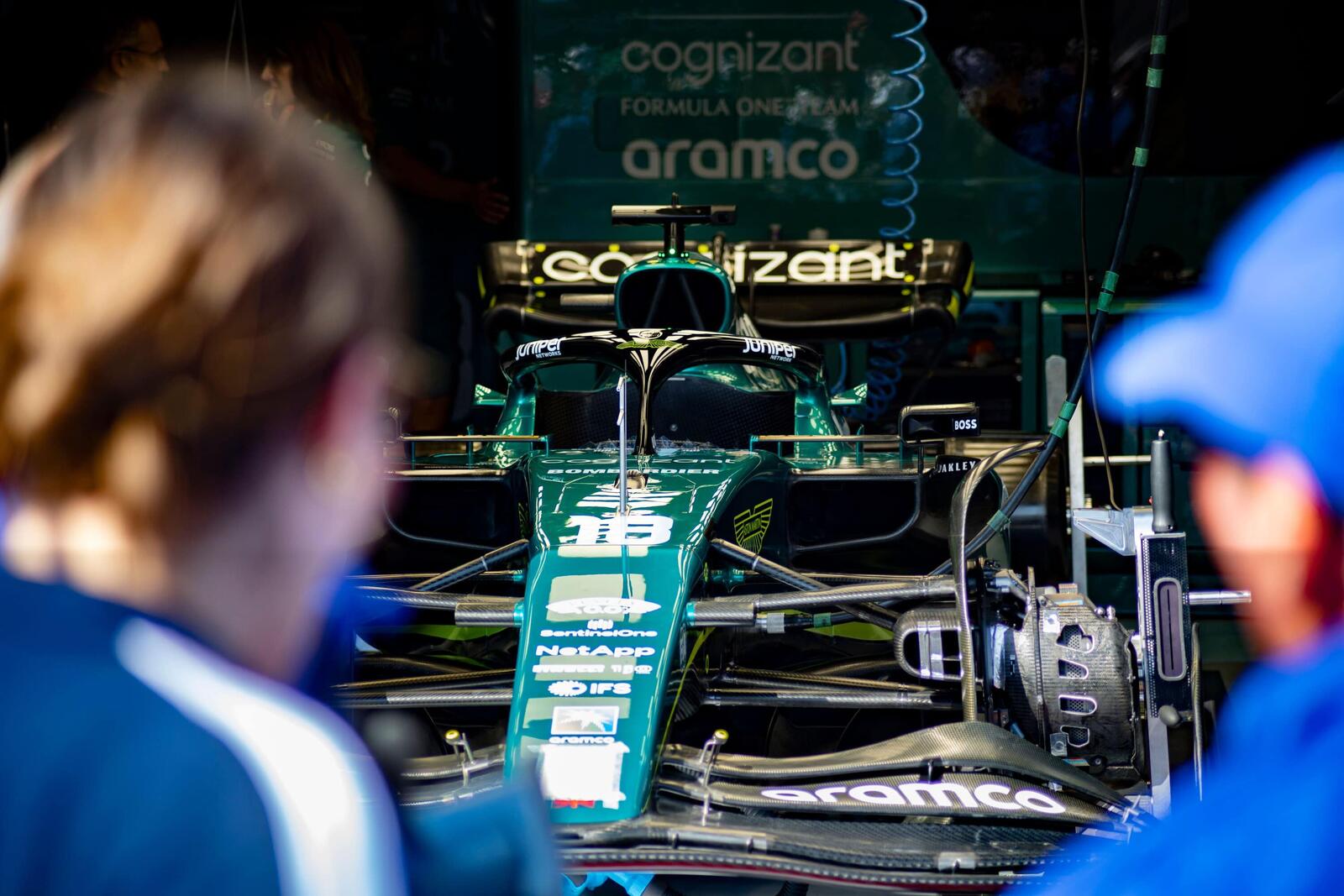
Monaco asks for grip in streets so tight that overtaking is more of a rumour than a plan, Silverstone throws in some of the fastest corners on the calendar, and Monza mostly wants the car to go in a straight line as quickly as possible, which is the one thing Monaco never lets anyone do.
The same car turns up at all three, because nobody is building a new one for each race (the cost cap would definitely have a few words to say about that). What changes is the wing configuration, suspension, brake settings and software, so the hardware stays largely the same while the car behaves very differently from one circuit to the next.
Why Every Track Needs A Different Setup
Circuits differ in more than their shape; slow corners need mechanical grip and traction, long fast corners need aerodynamic grip, and long straights punish anything that adds drag. Bumps and kerbs affect how low the car can run, while air and track temperature change how the tyres and brakes behave.
All of that feeds into the setup engineers choose, and the gaps can be big. Formula 1 has previously reported that Monza’s tiny rear wings produce around 60% of the downforce of the larger wings used at conventional circuits. The engine hasn’t suddenly become faster at Monza – the car is just set up to give away some cornering grip in exchange for less drag down the straights.
Wings: Maximum Grip or Maximum Speed?
The front and rear wings control how much downforce and drag the car carries, and in 2026 they can actually change position during a lap. Active Aero lets the wings switch between a higher-downforce Corner Mode and a lower-drag Straight Mode, so the car can have more grip when it needs to turn and less resistance when it needs to accelerate.
At Monaco, the lack of long straights means engineers can run plenty of downforce without giving away as much lap time and in Monza, that changes completely, with its long straights making low drag much more valuable. In fact, Active Aero was switched off entirely at Monaco in 2026 for safety reasons, leaving the cars in their maximum-downforce configuration.
The front and rear wings also have to work together. If engineers take downforce off the rear wing for a low-drag circuit, they can’t leave the front of the car set up as though the rear still had loads of grip. The balance would be off, so the front wing has to be configured to match.
Ride height gets involved too; the closer the floor is to the track, the more aerodynamic grip it can generate, so changing the suspension height can change how much downforce the car produces. That’s why engineers can’t treat the wings and suspension as completely separate jobs.
When The Brakes Get A Different Job
Drivers can shift brake bias, changing how much of the braking force goes towards the front compared with the rear. That setting becomes really important because the rear axle is dealing with both conventional braking and energy recovery through the MGU-K.
The 2026 cars recover a much larger amount of energy through the MGU-K than the previous generation, with the system capable of producing up to 350kW of electrical power. The FIA has also adjusted the energy-management limits during the season, including reducing the maximum permitted recharge in qualifying from 8MJ to 7MJ.
Brake cooling also has to be matched to the circuit. Brake ducts need to provide enough airflow to control temperatures without creating unnecessary aerodynamic drag. Aston Martin says its 2026 brakes can reach temperatures above 1,000°C and deal with deceleration forces of up to 6G, so a circuit with repeated heavy braking zones puts a very different demand on them from one with long stretches between major stops.
More from Tech
- From Alton Towers To Thorpe Park: The Technology Bringing Theme Parks To Life
- Women In Tech: Top 10 Women In EdTech In 2026
- Why Is It So Hard To Put Tech Down? The Design Choices Behind Our Attention
- Can A Trading App Truly Be Risk-Free When Real Financial Habits Are On The Line?
- The Tech F1 Teams Use To Prepare For Unfamiliar Tracks
- Beauty Tech Explained: The Cosmetic Treatments Changing Aesthetic Medicine
- Could An App Help Families Manage Allergies More Confidently? ACE Launches Allergy Assist
- Wi-Fi 8 Is Arriving – What Does It Actually Change For Your Home?
Suspension Decides How The Car Copes With The Ground
The aero package still has to work with the springs, dampers and anti-roll bars underneath it. Driver61 describes the challenge as finding a setup that can deal with bumps while keeping the car stable enough for all the aerodynamic load being thrown at it.
A bumpy street circuit with aggressive kerbs requires something completely different from a smooth track full of fast corners. The car needs to stay controlled when it hits a kerb, but engineers also have to consider what happens to the aerodynamics when the ride height changes.
That’s why suspension and aerodynamics can’t really be treated as separate jobs. A setup that works beautifully when the floor stays in its preferred position can behave very differently once the car starts moving around more than expected.
Software Changes How The Car Responds
A lot of the car’s behaviour can be changed without even touching a tool. Drivers can adjust settings from the steering wheel, including the differential and brake balance, while the 2026 regulations have also introduced new ways of managing electrical energy around a lap.
Boost Mode is the driver’s energy deployment tool, giving maximum available power from the engine and battery at the push of a button. Overtake Mode is different: it gives a car that is within one second of the car ahead an extra electrical power allowance for the following lap, replacing the old DRS system (DRS wannabe).
Finding The Right Setup
Nobody turns up and starts twiddling dials randomly. Before a race weekend, teams use computer models and driver-in-the-loop simulators to test possible setups and work out what they want to try during practice. Mercedes says every practice lap can generate between 60 and 100MB of data depending on the number of sensors on the car.
Once the car is on track, engineers monitor tyre temperatures, wear and pressures alongside the telemetry being sent back to the garage and factory. The driver then adds something the data can’t provide on its own: how the car actually feels. Engineers compare that feedback with the telemetry and adjust the setup accordingly.
One F1 Car, Completely Different Personality
The car lining up in Monaco hasn’t become a Monaco-specific machine – it’s still the same underlying car with its aerodynamic, mechanical and electronic configuration that has been changed to suit the circuit in front of it.
This is a process that’s constantly happening throughout the season. A low-drag Monza setup is swapped for a high-downforce configuration elsewhere, suspension settings move with the surface and kerbs, and energy management changes with the demands of each lap. The technology gives teams the ability to keep adapting the same machine without needing to start again from scratch.


