


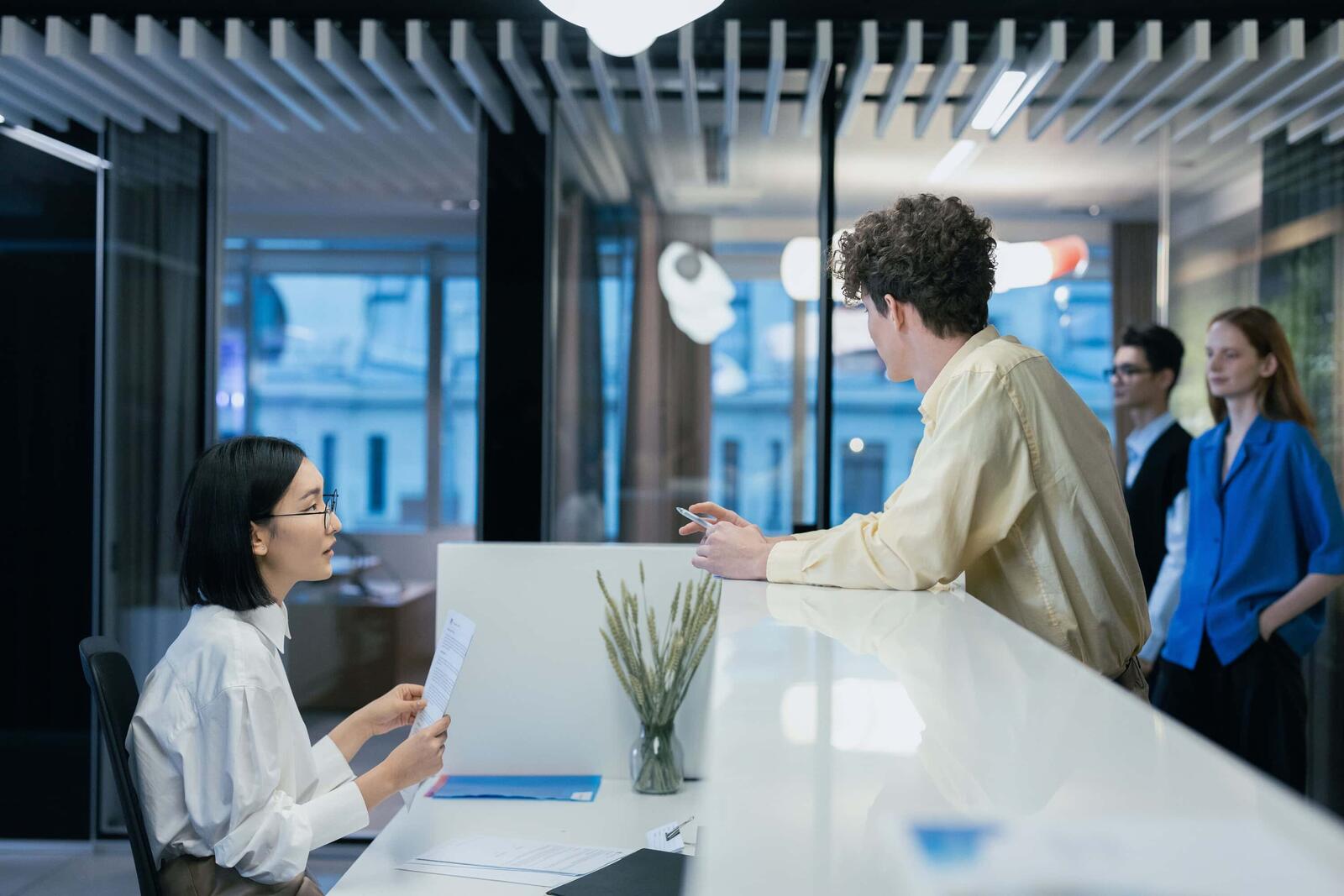
For decades, the first step in a visitor’s journey into an office building was a familiar ritual: a kind nod to a receptionist behind a big wooden desk, a handwritten sign-in form on a leather-bound clipboard and a hushed phone call announcing their arrival. It was a classic, human-centric touchpoint that established the tone for the company culture.
That classic picture is changing dramatically now. The physical welcome desk is quickly becoming a dynamic, interactive digital experience. Globally, organisations are reassessing the front lobby, driven by post-pandemic hybrid work arrangements, rising security demands and a widespread corporate desire for frictionless efficiency.
The Evolution Of Workplace Dynamics
To know why the reception desk is going digital, we need to see how the modern-day workplace has evolved. Hybrid schedules, flexible workplaces and co-working facilities have largely supplanted the rigid five-day office grind.
Building lobbies get randomly swamped with folks. A corporation may have dozens of clients, candidates, delivery drivers and remote staff coming to headquarters for a collaborative session on a Tuesday morning. By Thursday, that same office may be half-empty.
This instability cannot be met with a static manual reception mechanism. The burden of answering phone calls, signing in unexpected guests, tracking package deliveries and verifying badge access falls on one receptionist, creating severe operational bottlenecks. The digital reception desk acts as an elastic buffer, absorbing peak-time traffic and freeing up staff to focus on high-value interactions.
First Impressions In The Digital Age
They believe you never get a second opportunity at a first impression. In business, the lobby reflects a brand’s ethos. When a client arrives in a high-tech welcome area, creativity, agility and attention to detail come through.
Modern digital reception technologies such as interactive self-service check-in kiosks, chic tablet interfaces and ambient digital signage give a smooth, seamless entry. No fumbling with pens for visitors, no waiting in queue as a receptionist finishes a phone call. Instead, they can check in within seconds, automatically notifying their host via Slack, Microsoft Teams or SMS.
You can also personalise these digital touchpoints to match your brand personality. Dynamic welcome screens including the visitor’s name, location-based language choices and customised check-in flows extend the company’s digital environment into the lobby, even before the meeting starts.
Improving Security And Compliance In The Workplace
Security is frequently the key reason for digitising the front desk, but aesthetics and convenience also matter. Paper logbooks are a liability in an age of increased corporate security standards, data privacy legislation (GDPR, for example) and physical safety concerns.
- A paper sign-in sheet is inherently insecure: names, phone numbers and companies of prior visitors can be easily read by anyone walking past the counter. Digital visitor management systems (VMS) help close this risk by providing:
- Encrypted Data Storage: Visitor logs are safely maintained in the cloud, adhering to privacy standards and are accessible only to authorised people.
- Instant Host Notifications: Hosts are instantly notified when your guest arrives, reducing unsupervised roaming in corporate hallways.
- Digital NDAs: Visitors can legally examine and sign confidentiality waivers on a screen before getting a badge.
- Emergency Muster Reports: Security staff can immediately receive a real-time digital headcount of everyone inside the facility in the event of an evacuation.
By turning the welcome desk into a secure digital gateway, organisations can safeguard their intellectual property, physical assets and, most crucially, their people.
More from Business
- Why Do Economic Downturns Sometimes Create Startup Booms?
- Big Businesses Are Losing Track Of Billions In Contract Value, So What’s Going Wrong?
- Thinking Outside The Box: How Unusual Packaging Can Become A Marketing Tool
- What Is Germany Doing To Attract More Businesses?
- Padel Is Turning Empty Spaces Into Businesses, Here’s How
- Top Luxury-Tech And Commerce Startups In France To Watch In 2027
- What Is The Netherlands Doing To Attract More Entrepreneurs?
- Quite Contrary: Most GEO Advice Is Just Repackaged SEO, According To Harpal Singh
Operational Efficiency And The Smart Office
Today’s workplace is more interconnected than ever, with IoT (Internet of Things) devices, smart lighting, automated climate management and integrated calendar systems. That digital welcome desk is a key element in this smart ecosystem.
The greeting system integrates with workplace management software to communicate directly with conference room schedulers, hot desking platforms and badge-printing devices. For example, after a guest checks in, the system can automatically unlock turnstiles, call the lift or notify facilities management if a VIP needs special accommodations.
Behind the scenes, analytics dashboards give facilities managers vital data. Organisations can track busy visitor periods, average wait times, most popular departments and general lobby traffic trends. This data-driven insight helps firms optimise staffing levels, cut operating expenses and design better office layouts.
The Human Element: Redefining, Not Replacing
One common misconception about the digital reception desk is that it eliminates human jobs. In reality, it’s the opposite. Technology is good at repetitive, transactional things, like putting names into forms, handing out visitor badges and dialling internal lines. Digital tools free receptionists from administrative stress by automating these tasks.
Receptionists are transitioning from glorified gatekeepers to Workplace Experience Managers. Now they may walk out and welcome clients in person, provide hospitality services, solve unique requests and be true ambassadors for the corporate culture, freed from the confines of the front desk counter. The software does the logistics; the human does the hospitality.
The Future Of The Lobby
In the future, the digital receiving experience will go further through a combination of artificial intelligence, biometric authentication and augmented reality. Example: You enter a corporate headquarters and are recognised by facial recognition or a secure mobile pass. Your arrival automatically adjusts the temperature in the office to your liking, your host is notified and you’re guided to your meeting room with an augmented reality app – all in one fluid motion.
The welcome desk is no longer simply a piece of furniture with humans sitting behind it, but rather a smart, responsive digital experience. Companies that make the shift will not only protect their premises and simplify operations, but also create a compelling story that resonates with every guest who walks through the door.


