


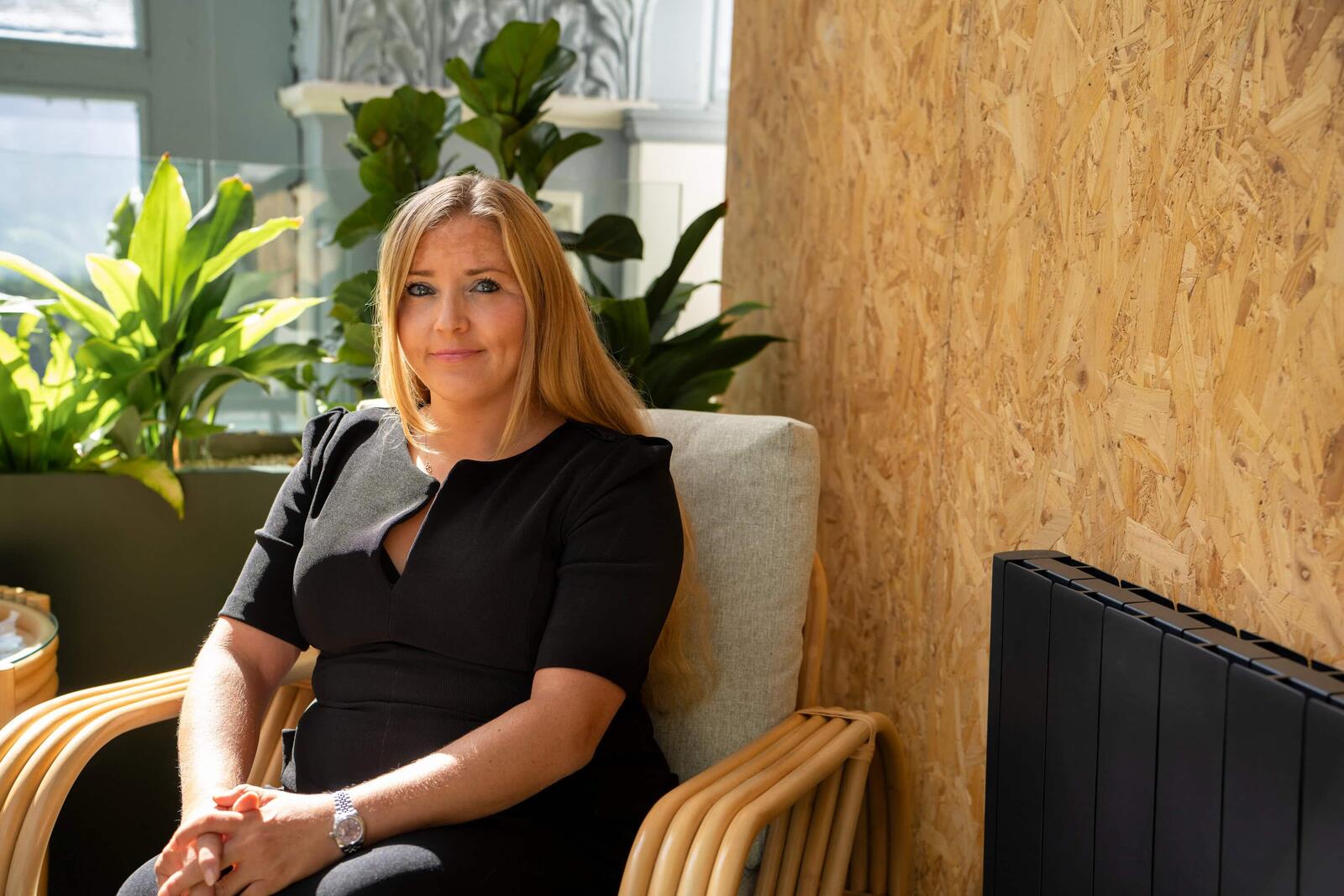
Laura Harrison has dedicated more than 19 years to the education sector, always finding her primary motivation in watching targeted support strengthen a young person’s confidence and progress. This background inspired her to launch Education Lifeguards, an online tutoring platform that pairs families with experienced teachers while managing the operational logistics around them.
Operating from Campfield in Manchester as part of the Campfield Exchange founder programme, she works alongside a community of early-stage entrepreneurs receiving expert guidance and strategic connections. Her current focus centres on scaling a model that balances accessibility for families with a sustainable, flexible way for teachers to use their expertise.
For World Mental Health Day, Laura shared with us why administrative burdens drive teacher burnout, how she maintains personal wellbeing as a startup founder, and her vision for the future of Education Lifeguards.
You spent nearly two decades working in education before launching the company. What first inspired you to start Education Lifeguards?
The idea really came from seeing how much of teachers’ time gets swallowed up by admin and box-ticking, when what they actually want to be doing is teaching and supporting students. I wanted to create something that gave teachers more freedom to work as tutors on their own terms, while giving them the structure and support they need around things like cancellations, contracts, invoicing, payroll and marketing.
I’d already been running Education Lifeguards as a sole trader for more than six years, so I’d seen first-hand the frustrations on every side. Teachers want more flexibility and a better work-life balance, parents want to know their child is safe and being taught by someone who genuinely understands their needs, and students need support that’s tailored to them rather than restricted by a one-size-fits-all approach.
That was the gap I wanted Education Lifeguards to fill. We could give teachers the independence of tutoring without expecting them to build an entire business infrastructure around themselves at the same time, while giving parents more confidence in the quality, accountability and specialist support their child is receiving.
You’ve said that many teachers aren’t burning out because of teaching itself, but because of everything surrounding it. What changes have you seen in the profession over the past 19 years?
I’ve definitely seen the role of the teacher become much broader and more demanding outside the classroom over my time in education. Teaching has always involved far more than standing in front of a class, but the amount of administration, accountability and additional responsibility surrounding the job has grown significantly.
There are now more processes to manage, more evidence to provide and more competing expectations to respond to, all while teachers are still expected to deliver high-quality lessons, support young people and deal with everything that naturally comes with working in a school.
The real difficulty is the cumulative effect of all of that. It’s rarely one form, one policy or one extra responsibility that pushes somebody to the limit, but the way those demands build up over time on top of a job that was already intensive.
That’s why I think we sometimes talk about teacher burnout in the wrong way. For a lot of teachers, teaching itself isn’t the problem. It’s everything that has built up around the job over time, taking time and energy away from the classroom and from the reason many of them became teachers in the first place.
I’ve also seen experienced teachers feel that their professional judgement increasingly has to be justified and documented. Accountability is important, but unnecessary levels of bureaucracy risk making highly trained people feel that their expertise isn’t being trusted.
For me, the real question is what genuinely needs to sit with a teacher, what adds value for students and families, and what could be done differently so that we aren’t losing good people because of work that has very little to do with why they became teachers in the first place.
What are some of the biggest challenges teachers face today that people outside the education sector may not fully appreciate?
I think one of the biggest things people don’t always see is how much of a teacher’s workload is invisible. People naturally think about the hours spent in front of a class, but teaching is only one part of the job.
There’s lesson planning, marking, reports, meetings, parents’ evenings, training, safeguarding, revision sessions, intervention work and constant communication with families. A lot of that happens before or after the school day, and it all adds up.
There’s also an emotional responsibility that’s difficult to explain unless you’ve worked in education yourself. You’re supporting young people through really important stages of their lives, and good teachers carry that responsibility very seriously.
When you combine that emotional weight with the practical demands of the job, it can become exhausting in a way that isn’t always obvious from outside the profession.
How does Education Lifeguards help reduce the administrative burden on teachers and tutors, and allow them to focus more on teaching?
What Education Lifeguards does is take care of a lot of the practical work that independent tutors would otherwise have to manage themselves. We connect teachers with families, handle bookings and payments, manage things like cancellations and no-shows, and provide the online learning environment.
That means teachers can spend less time coordinating diaries, chasing payments or dealing with admin, and more time actually planning lessons and supporting students.
At the same time, making the process easier can’t come at the expense of quality. We still have clear expectations around safeguarding, standards and accountability, because parents need to feel confident about who is teaching their child and the support they’re receiving.
Ultimately, we’re trying to remove as much friction as possible from tutoring. If a teacher has chosen to tutor because they want more flexibility and more time working directly with students, they shouldn’t have to build an entire business infrastructure around themselves just to make that work.
World Mental Health Day is an important moment to discuss wellbeing in education. Do you think enough is being done to support teachers’ mental health?
It’s definitely a positive that teacher wellbeing is being talked about more openly, but I think we have to be careful not to separate mental health from the way the job itself is structured.
There’s only so much a wellbeing initiative can do if teachers are still dealing with excessive workloads and constant administrative pressure. Telling people to be more resilient only gets you so far if the things making the job difficult haven’t changed.
I’d like to see much more focus on prevention. That means looking at what is creating unnecessary stress in the first place, where processes can be simplified, how much autonomy teachers are given and whether their time is being used in the right way.
It’s also really important that teachers feel able to say when things are becoming too much without worrying that it will be seen as a personal failing. Support matters, but so does being willing to change the conditions that are causing the problem.
For me, supporting teachers’ mental health has to start with making the profession more sustainable in the first place.
You have an interesting perspective on burnout as both an educator and a founder. How does founder burnout differ from teacher burnout, and what lessons have you learned from experiencing both worlds?
Founder life can be incredibly intense. There are long hours, constant decisions and a feeling that the business is never completely switched off. When it’s your own company, everything feels personal because the decisions, the problems and the progress all come back to you.
The biggest difference I’ve noticed is control. If I’m working late on Education Lifeguards, I understand why I’m doing it and I have a say in where I put my time and energy. That doesn’t remove the pressure, but it changes how that pressure feels because I’m working towards something I genuinely believe can make life better for teachers, students and families.
In education, a lot of the pressure can feel much more imposed on you. You can be working incredibly hard while still spending huge amounts of time responding to processes, expectations or priorities you haven’t chosen yourself, and that lack of control can be really draining.
Experiencing both has made me realise that burnout is more complicated than simply working too many hours. You can be extremely busy and still feel motivated if you have a sense of purpose and agency. At the same time, founders aren’t immune to burnout either. If anything, having complete ownership can make it harder to know when to stop because there is always another decision to make or problem to solve.
For me, sustainable work comes down to having some control over your workload, understanding why you’re doing it and recognising when the pressure has stopped being productive.
Building a startup often involves long hours and significant pressure. How do you personally manage your workload and protect your own wellbeing?
I’m definitely still learning, and I don’t think there’s a perfect formula for protecting your wellbeing when you’re building an early-stage business.
One of the biggest things for me has been learning to separate what feels urgent from what is actually important. When you care deeply about the business, every email, idea or opportunity can feel like it needs dealing with immediately, and that can become overwhelming very quickly.
I try to keep coming back to the things that will genuinely move the business forward and accept that I can’t do everything at once. There will always be another task on the list, so I’ve had to get better at deciding where my time is most valuable rather than judging a productive day by how much I managed to cram into it.
I’ve also learned that you can’t keep making good decisions if you’re exhausted. If you’re building something for the long term, you have to find a pace you can actually sustain rather than treating every week like an emergency.
For me, that means having some clear boundaries. I don’t work with clients at weekends, and my phone responds for me out of hours, because otherwise I know I would never properly switch off. I have young children too, and protecting that time with them is really important to me.
At the same time, I’m incredibly grateful for the work I’ve built up over the years because that experience is what has given me the understanding to create Education Lifeguards in the first place. I’ve seen the problems teachers, parents, students and business owners face first-hand, and that’s what keeps me motivated. I want to build something that genuinely gives people more confidence, more support and a better chance of succeeding.
How has being part of Campfield Exchange and Manchester’s growing technology and creative ecosystem helped you develop the business?
One of the things I’ve found really valuable about being at Campfield is that you’re not sitting on your own trying to figure everything out from scratch.
At the moment, I’m thinking about things like how we reach more families, how the platform develops, where technology can improve the experience and how we grow without losing the standards that really matter to us. Through the Exchange programme, I’ve got other founders around me, as well as people with experience in areas I’m still learning about, so I can actually talk those questions through rather than trying to solve everything on my own.
Sometimes you can get completely stuck in your own head with a problem, and then one conversation with someone building a totally different business makes you see it differently. I’ve found that really useful.
Campfield also brings together people working across technology, media and creative industries, so you’re constantly hearing different ideas and approaches. It gives me a much wider view of what’s happening in Manchester and has helped me feel more confident about the decisions I’m making and where Education Lifeguards goes next.
Looking ahead, what are your ambitions for Education Lifeguards, and what changes would you most like to see in the education sector over the next few years?
For Education Lifeguards, the next stage is really about reaching more families and giving experienced teachers another credible way to use their skills outside the traditional classroom.
More broadly, I think we need to get much smarter about how we use teachers’ expertise. Technology and better systems should make their working lives easier and remove unnecessary friction, rather than creating another layer of admin or complexity.
I’d also love to see experienced teachers given more trust and more freedom in how they work. If we want talented people to stay in education for the long term, we have to create careers that feel sustainable and give them a genuine reason to stay.


