


—TechRound does not recommend or endorse any financial, investment, business, regulatory or other advice, practices, companies or operators. All articles are purely informational—
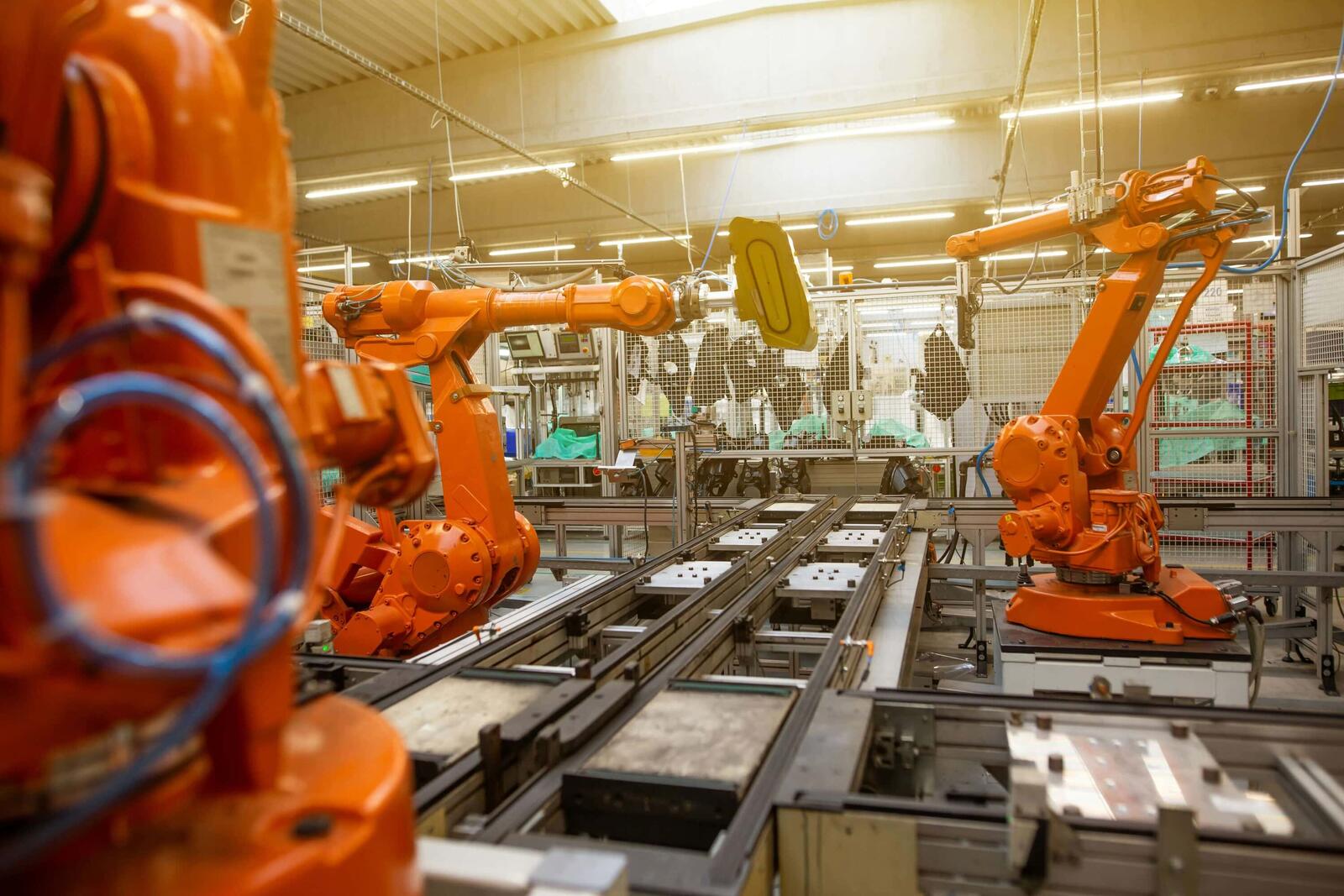
A collaborative robot can work beside a person; no cage around it, no isolation which makes machine safety a matter for the configuration just as much as the hardware. Teams reviewing their sites can explore here how safety products tend to be grouped by industry.
When Guards Give Way To Configuration
Consider the collaborative robot. HSE’s RR1214 report (Review of key machinery safety standards and guidance) finds that with cobots, the operator safety “is no longer ensured by physical separation using guards” but by instead, actually, by how the software was configured.
It works through the standards behind the recent trends, from BS EN ISO 12100:2010 on risk reduction to PD ISO/TS 15066:2016 on collaborative robots.
The guard has not gone away entirely of course (ISO 10218-2 still covers guards, interlocking devices and safety distances for ancillary components) though the first line of defence is now very much in a settings menu.
The law splits the job in two. The Supply of Machinery (Safety) Regulations 2008 cover supply, requiring machinery placed on the GB market to meet essential health and safety requirements. The Provision and Use of Work Equipment Regulations 1998 cover use. Under PUWER regulation 11, an employer ought to prevent access to a dangerous part, or stop its movement entirely before anyone reaches the danger zone, in a fixed order:
- Fixed guards where practicable
- Then other guards or protection devices
- Then protection appliances (jigs and push-sticks, the humblest kit on any shop floor)
- All backed by information, instruction, training, supervision.
Guards shouldn’t be easy to bypass or disable. They must not add risk. They must also be kept in efficient working order. Regulation 11 does not name a sign as a substitute for a guard, however large the lettering.
Trade tends to just cover the hardware. An overview of high-inertia machinery points out guards, impact-resistant barriers, emergency stops, light curtains and enclosures, yet says nothing about warning signs.
What Signage Does Where The Standards Have Not Caught Up
When RR1214 was written, no EU or UK standard covered autonomous mobile robots. Surprising, given it’s not even two years old. The only one actually reviewed was the American ANSI/RIA 15.08-1:2020.
ISO 3691-4 is often used for AMRs in the UK but to be clear, the report does not treat it as an AMR standard.
On AI the report is much blunter, still. No standard addressed AI controlling machinery where safety could be affected, which it calls “a critical gap”. BS EN 61508-3:2010 states that AI “is not recommended for use in safety-critical and/or safety-related systems,” the report reads as a demand for stern justification rather than a ban.
The paperwork is certainly catching up, albeit slowly:
- PD ISO/BS EN IEC TR 5469:2024 has been published
- ISO/TS 22440 is in development
- A third edition of BS EN IEC 61508 is expected around 2027.
Remember that RR1214 notes that AI vision systems may be used for both control and safeguarding. It suggests inadequate guarding and wiring to all still create hazards.
Until those standards really land, the site remains the burden-bearer. HSE’s signs guidance (L64) asks for signs where a significant risk remains (despite other measures) but warns that too many signs may cause confusion. In the end, a line running, say, mobile robots with AI-assisted controls, may want fewer signs it’s just that each should be placed carefully where the risk assessment says a significant risk remains, not just one on every spare post.
—TechRound does not recommend or endorse any financial, investment, business, regulatory or other advice, practices, companies or operators. All articles are purely informational—


