


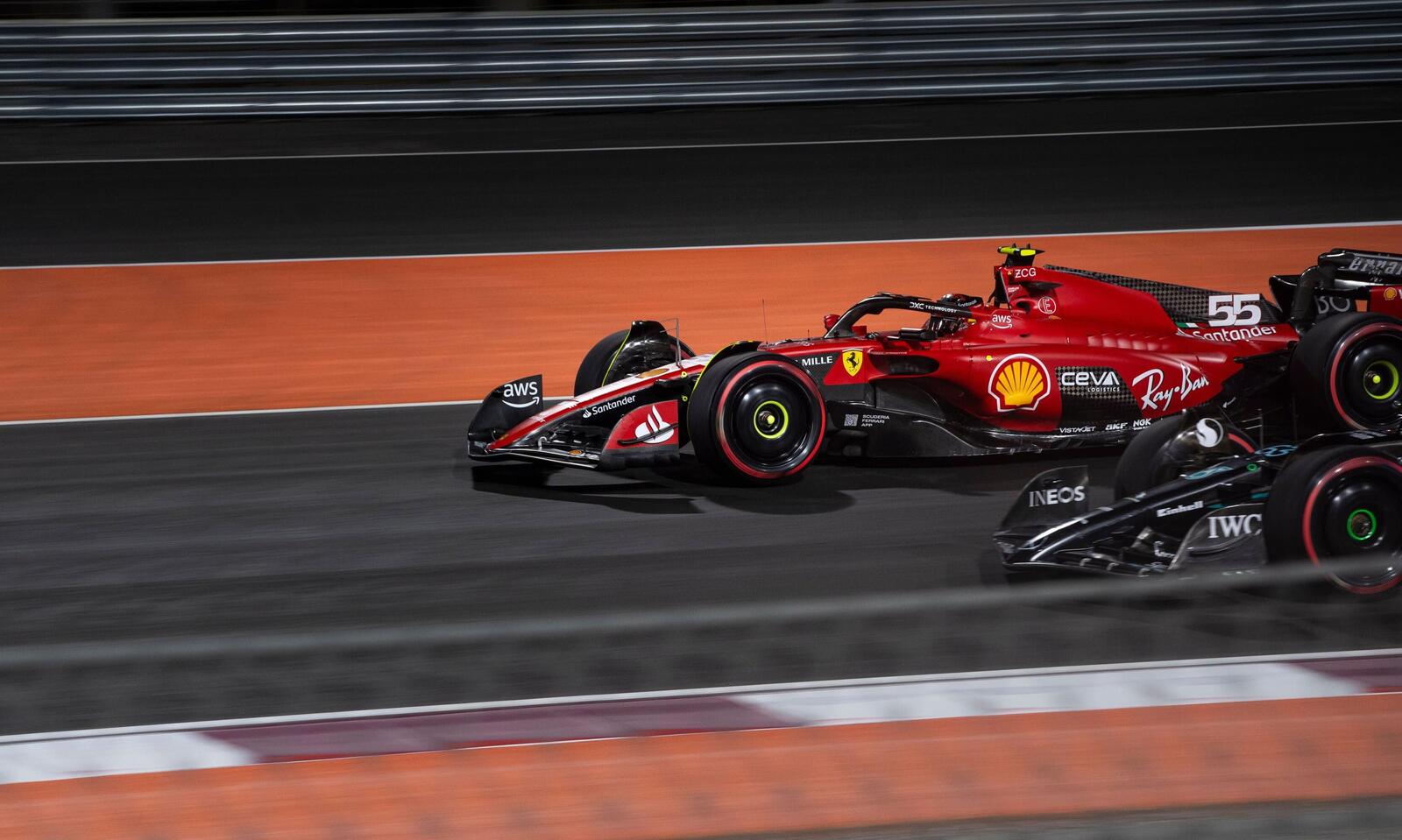
F1 training can involve navigating virtual circuits, completing computer-based concentration tests and studying how drivers process information at high speed. It might sound a little like an elaborate arcade game, but these exercises are part of a much bigger effort to prepare the person behind the steering wheel.
From advanced simulators to reaction-training equipment and wearable sensors, technology is giving racing teams more ways to understand how their drivers perform. Some of the same approaches are also appearing in football, cycling and other elite sports, where athletes are using technology to improve decision-making, monitor recovery and prepare for the demands of competition.
Simulators
F1 simulators are a long way from the racing games most people play at home. According to Motorsport.com, Red Bull’s simulator was revealed to use a real F1 chassis mounted on a hexapod platform, which moves in response to the driver’s inputs. The system also included a curved, 180-degree projection screen and sensors that recorded how the driver handled the car.
Drivers could use the simulator to learn new circuits, refresh their memories and help engineers assess car set-ups. Engineers could also change variables such as tyre wear, aerodynamic downforce and engine characteristics to see how they affected the car, without having to test every adjustment on an actual circuit.
The same idea of practising in a virtual environment has made its way into football. Rezzil’s Player 22 software, for example, uses virtual reality to recreate football scenarios, allowing players to practise skills such as heading without physically touching a ball. Players can work through virtual drills involving crosses and clearances, giving them another way to practise situations they would normally encounter on the pitch.
The technology isn’t identical, but the thinking behind it is similar. F1 drivers can familiarise themselves with circuits before race day, while footballers can rehearse specific situations without needing a full team training session.
More from Tech
- The Technology Behind F1’s Most Iconic Liveries
- Could You Actually Taste A Product Before Buying It Online?
- Women In Tech: Top 8 Women In Proptech In 2026
- The Battle Between Car Theft Technology And Anti-Theft Innovation
- The Technology Changing How Football Finds Its Next Stars
- Warning Signs Of Ceuta Mass Border Crossing Were Visible Online Weeks Before It Happened, Vetric Research Finds
- Top Healthtech And Biotech Startups In Denmark To Watch In 2027
- Experts Comment: Is The Technology Industry Ready To Rethink Its Rare Earth Dependence?
Reaction Lights And Training The Split-Second Response
An F1 driver needs to process information quickly, make decisions and react before a situation changes. Their reactions also need to remain consistent while dealing with the physical demands of driving at speed.
Reaction lights are one way of training some of the abilities involved. A 2022 study published in Sports Medicine – Open examined a six-week reaction-training programme involving 24 racing drivers from categories including rally, rallycross, touring cars and Formula 4.
The participants were divided into two groups, with 12 completing the training programme and 12 acting as a control group. The training involved two 60-minute sessions each week using Witty SEM light-based equipment, which required drivers to respond to visual stimuli.
After six weeks, the researchers recorded improvements in reactive agility and some of the participants’ computer-based cognitive test results, including reaction time and accuracy. Reaction and agility training aren’t limited to just motorsport; similar light-based exercises are used in athletic training to challenge how quickly players recognise a visual cue and respond to it. For athletes competing in fast-moving sports, being able to react to changing situations is just as important as having the physical ability to make the movement.
Eye Tracking And The Art Of Looking In The Right Place
A driver isn’t only looking at the track ahead; they’re constantly processing information about the circuit, their position and what the car is doing. Even something as ordinary as blinking can become interesting when researchers start examining how it relates to driving.
A 2023 study published on iScience investigated the blinking patterns of three professional formula-car drivers during practice sessions. Researchers used eye-tracking equipment alongside vehicle data to understand when the drivers blinked and how those moments related to their driving.
The results showed that the drivers tended to blink at similar positions around the circuits. Their blinking patterns were also associated with individual differences, lap pace and the car’s acceleration. The research suggested that drivers’ blinking patterns could reflect changes in their mental state while driving.
Football has its own version of this visual-awareness challenge. Players need to look away from the ball to gather information about teammates, opponents and available space before receiving a pass.
A 2020 study published on Frontiers examined 27 professional players from a English Premier League club across 21 matches. Researchers analysed 9 574 individual ball possessions and found that players who scanned their surroundings more frequently had a slightly higher probability of completing a pass.
The study doesn’t mean that simply looking around more will make someone a better footballer. However, it highlights how visual awareness can influence decision-making in a match, much like a racing driver needs to process information about the track before making their next move.
Concentration Tests Where An F1 Driver Beat A Journalist
Reaction time is just one part of mental performance – drivers also need to maintain concentration while processing several pieces of information at once, particularly when making decisions about tyres and race strategy.
Formula Medicine, a training centre founded by Dr Riccardo Ceccarelli in 1989, has developed mental exercises for racing drivers alongside its physical training programmes. Its work includes tests designed to examine concentration, attention and how drivers manage information under pressure.
In a 2018 feature for Autosport, journalist Phillip Horton visited the centre and took part in a series of mental challenges alongside Sauber F1 driver Marcus Ericsson. One exercise involved distinguishing between colours and words displayed on a screen, with participants having to respond correctly using controllers in their hands.
The test also introduced a racing-inspired strategy element. Different tyre compounds affected how quickly the words appeared and faded, while participants had to decide when to make a virtual pit stop and change compounds.
In a five-minute version of the concentration test, Ericsson scored 332 points, compared with the journalist’s 306. It wasn’t a scientific comparison between professional drivers and the general population, but it showed how mental training can recreate some of the decisions drivers face during a race.
Similar cognitive demands appear in football, where players have to keep track of their surroundings, anticipate what opponents might do and make decisions in a matter of seconds. While the Formula Medicine test was designed around racing, the underlying challenge of processing information under pressure is shared across elite sport.
Wearables Count Sleep As Training Too
A driver’s preparation doesn’t stop when they leave the circuit. Sleep, recovery and physical condition all form part of the wider picture, and wearable technology is giving racing teams another way to monitor them.
In January 2026, WHOOP announced a partnership with Scuderia Ferrari HP, becoming the team’s official health and fitness wearable partner for the 2026 season. Under the agreement, WHOOP devices are being made available across the Ferrari organisation, with the team’s medical staff working alongside WHOOP’s performance science division.
The partnership is intended to provide insights into areas including sleep, recovery, strain and physical fitness. This gives Ferrari another source of information about the people responsible for getting the car around the circuit, rather than focusing solely on the machinery.
The same technology is being used in other sports. Paris Saint-Germain announced a multi-year partnership with WHOOP in April 2026, giving players in its men’s and women’s teams access to wearable technology that tracks measures including heart rate, heart rate variability, sleep, strain and stress.
Cycling teams are also using wearables to monitor recovery. UAE Team Emirates XRG extended its partnership with Ultrahuman in January 2025, using the company’s Ring AIR to provide insights into areas including sleep, recovery and endurance. The team says this information can help it monitor fatigue, illness and stress when managing cyclists’ training.
Wearables give coaches and performance teams a better picture of an athlete’s physical condition, helping them track recovery, spot signs of fatigue and assess whether someone is ready for another demanding training session or competition. Whether a driver is preparing for a Grand Prix, a footballer for a match or a cyclist for a long day in the saddle, that information can definitely help teams make more informed decisions about training and recovery.
Brain Sensors And Neurofeedback
Some of the more experimental work in driver preparation involves monitoring brain activity. Electroencephalography, better known as EEG, uses sensors attached to the scalp to measure electrical activity in the brain. Researchers and technology companies have been exploring whether this information could help drivers understand and manage their concentration.
Ford and technology studio UNIT9 explored this approach through a project called Racing Minds, involving two professional drivers from the M-Sport Ford Rally team. The drivers wore specially developed EEG helmets while completing exercises designed to monitor their brain activity and mental consistency.
The project took place at the MotorLand Aragón circuit in Spain. After an initial set of driving sessions, the drivers completed a neurofeedback game while wearing their EEG helmets. The game showed footage of a car travelling around a circuit, with the drivers having to maintain a stable mental state to keep it moving smoothly on screen.
Around 30 minutes later, they returned to the track to complete further laps on a modified, more difficult circuit. UNIT9 reported an improvement in both performance and mental consistency during the post-training exercise.
The idea isn’t limited to driving. A 2026 review published in Neurosci examined neurofeedback research involving football players. It included seven studies and 133 players, with findings suggesting possible improvements in areas such as working memory, decision-making and shooting accuracy.
However, the review also highlighted small participant groups, differences in training methods and limited use of randomised controlled trials. The evidence is still developing, so neurofeedback shouldn’t be presented as a proven way to improve sporting performance.
Still, both the rally project and the football research show why brain-monitoring technology is attracting attention. Rather than focusing only on physical performance, it gives researchers another way to investigate the mental demands placed on athletes.
What Happens Before The Lights Go Out?
F1 technology is usually associated with the cars themselves, from complicated aerodynamic designs to the systems that help teams analyse performance during a race. But the driver is the main priority in this equation and preparing them requires more than spending hours behind the wheel.
Simulators give drivers a way to practise circuits and test different conditions, while reaction exercises and concentration tests examine how they process information under pressure. Footballers use virtual reality and develop their visual awareness, while cycling and football teams are turning to wearables to better understand recovery. Even brain-monitoring technology is being explored across different sports.
Not every technique is equally established, and an encouraging result involving two rally drivers doesn’t mean every F1 team or football club will adopt the same brain-training programme. But the overlap is clear: elite athletes in very different sports face similar demands when it comes to concentration, reaction time, decision-making and recovery.


