


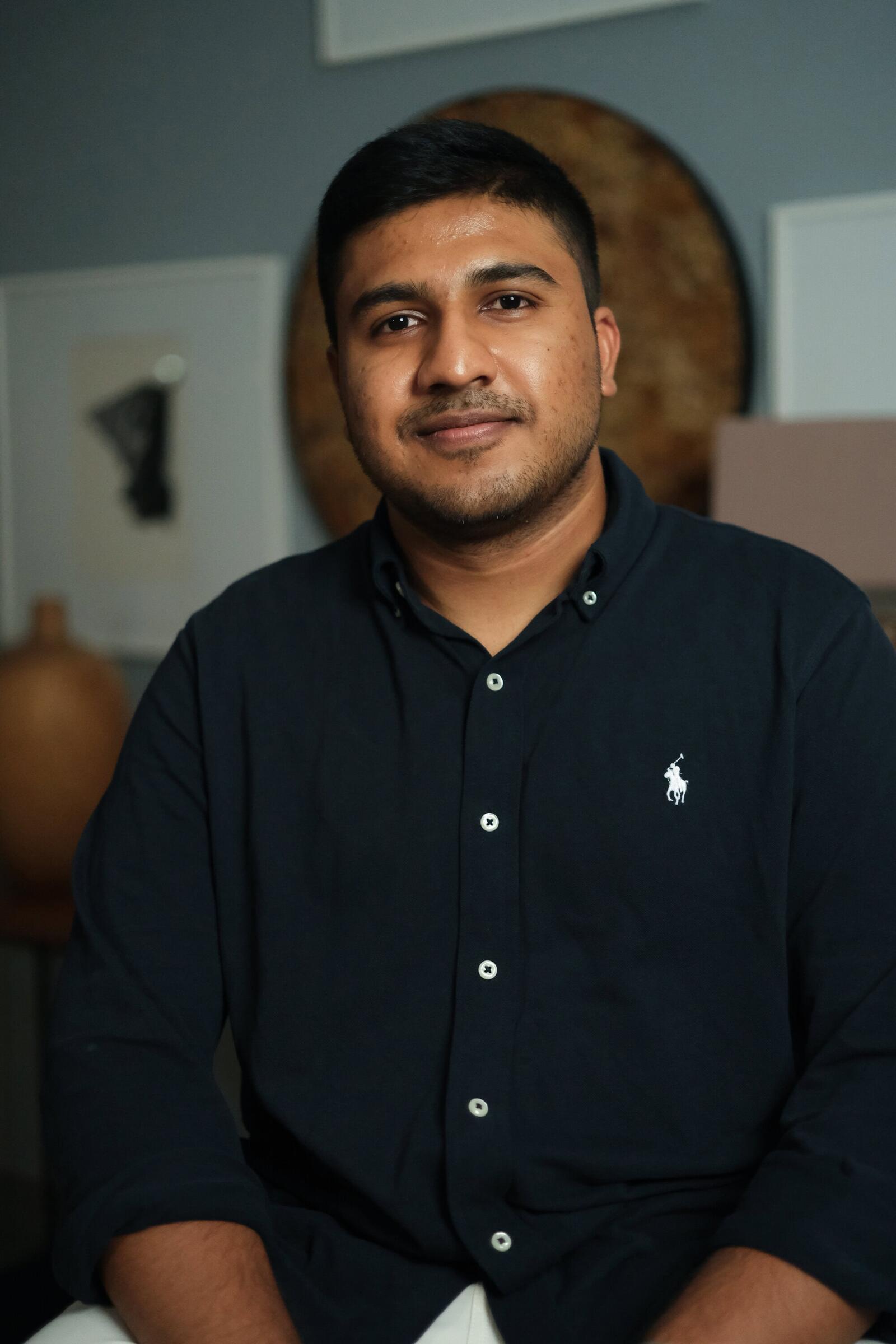
TechRound had a conversation with Madhu Nadig, co-CEO and co-founder of Flagright and an ex-Plantir, AWS and Forto engineer.
Please Tell Us a Little About Yourself and What Led You To Co-Found Flagright?
I’m Madhu Nadig, co-founder and co-CEO of Flagright, where I lead engineering and platform architecture. Before Flagright, I worked at Palantir, AWS and Forto, building systems that handle complex data at scale.
The starting point was a practical problem. My co-founder, Baran, had struggled to find transaction monitoring software that delivered the speed and flexibility financial institutions needed. His experience with that problem and my engineering background gave us a clear starting point, to build infrastructure that compliance teams could rely on as their businesses grew. We began with real-time transaction monitoring and expanded as we understood more of the work surrounding each alert.
What Was the Gap In the Financial Crime Compliance Market That You and Your Co-Founder Identified, and Why Did You Feel It Needed a Different Approach?
There was a gap between identifying potentially suspicious activity and helping a team reach a well-supported decision about it. Generating an alert is one step. Someone then has to gather information, understand the customer’s behaviour, investigate what happened and document the outcome.
When that work is spread across disconnected systems, analysts spend valuable time reconstructing context. We saw an opportunity to connect detection with the investigation and decision-making process. That required a broader approach to the infrastructure, with shared data and controls that compliance teams could adapt to their own operations.
Flagright Describes Itself As An AI Operating System for Financial Crime Compliance. What Does That Mean In Practice, and How Is It Changing the Way Financial Institutions Approach Compliance?
It means giving financial crime teams a connected environment in which to run their work. Flagright brings transaction monitoring, watchlist screening, dynamic risk scoring and case management together, with AI supporting investigations and governance.
Take a transaction alert for example. The investigator needs the customer’s history, previous alerts and relevant risk information to understand it. Having that context available within the investigation makes it easier to assess the activity and record the decision.
AI can then help gather evidence and prepare investigation narratives within that workflow. The practical aim is to reduce the time spent assembling a case so teams can devote more attention to evaluating it.
As Co-CEO, You Lead Engineering and Platform Architecture. What Have Been Some of the Biggest Technical Or Commercial Challenges Involved In Building a Platform That Financial Institutions Can Trust With Such Sensitive Operations?
One of the hardest engineering challenges is combining flexibility with predictable behaviour. Institutions have different products and risk policies, so the platform needs to accommodate those differences while keeping decisions traceable.
That affects the architecture throughout. A change to a rule or workflow needs to be tested, its impact understood and its approval recorded. The team using the system needs to know what changed and why.
Commercially, we have to earn the confidence required to change an important operational system. That means making implementation practical and giving customers a clear way to evaluate performance before expanding their use. Trust develops through what happens during deployment and everyday use, including how you respond when something needs attention.
AI Is Increasingly Being Adopted Across Financial Services, But Concerns Around Explainability, Transparency and Human Oversight Remain. How Do You Balance Innovation with the Need for Accountability In a Highly Regulated Environment?
Accountability has to shape the system from the beginning. You need to define what the AI is authorised to do, what evidence supports its output and when a person needs to intervene.
At Flagright, institutions can test AI agents against historical cases and use deployment modes ranging from observation alongside analysts to recommendations that require human review. That gives teams a way to assess performance before granting more autonomy.
I also think meaningful human oversight requires more than an approval button. The reviewer needs enough context to challenge the recommendation. A fluent explanation should never be treated as proof that a conclusion is correct. Evaluation has to include difficult cases and the consequences of getting them wrong.
Financial Crime Is Constantly Evolving, with Criminals Also Making Use of Increasingly Sophisticated Technology. How Do You See AI Changing the Relationship Between Financial Institutions and Financial Criminals Over the Next Few Years?
AI is reducing the effort required to create convincing scams and personalise them at scale. Europol has documented the use of generative AI to tailor social engineering attacks to people’s circumstances. I expect that to put greater pressure on institutions’ ability to investigate and adapt quickly.
AI can help analysts examine activity and assemble relevant evidence, but its effectiveness will depend on the quality of the information available and how it fits into the institution’s controls.
The institutions best-placed to respond will be those that shorten the cycle between discovering a new threat, understanding it and testing an appropriate response. That learning process will remain essential as criminals change their methods.
What Do You Think Separates a Genuinely Valuable AI Solution From One That Simply Uses AI As a Selling Point? What Should Businesses Be Looking For When Assessing New Technology?
Start with what changes for the person doing the work. Can they complete a task more effectively, and can that improvement be demonstrated against their current process?
Businesses should test AI on representative cases, including awkward ones, and measure the total effort involved. A tool that produces an answer in seconds can still create substantial work if someone has to spend twenty minutes checking it.
I would also examine what happens when the system is uncertain or wrong. Can users inspect the supporting evidence and correct the result? Understanding those limits is part of assessing whether a product is ready for operational use.
From Your Experience Building Flagright, What Are Some of the Qualities You Believe Founders Need To Build Successful, Sustainable Technology Businesses, Particularly In Complex Or Highly Regulated Industries?
Founders need the judgement to distinguish between a feature that can wait and a risk that cannot. In regulated industries, some foundations need to be sound from the outset, even while other parts of the product are evolving.
They also need to understand both the person buying the software and the person using it every day. Their priorities can differ, and a successful product has to work for both.
Another quality I value is the ability to revise an assumption without losing direction. Customer evidence should change how you build. You can remain committed to solving a problem while recognising that your first proposed solution needs substantial work.
As a Judge for the TechRound100, What Will You Be Looking for In the Startups Entering the Competition?
I’ll be looking for a clear explanation of the customer’s problem and evidence that the company is making progress against it. How is the customer managing that problem today, and what makes the proposed solution worth adopting?
The evidence should reflect the company’s stage. An early startup might have a small customer base but strong evidence of repeated use and a clear understanding of what it has learned. A more established business should be able to demonstrate that it can deliver consistently as it grows.
I’ll also pay attention to how honestly founders discuss the difficult parts of their business. Understanding what still needs to be solved is a sign of judgement.
Looking Beyond the Competition, What Are You Hoping To See from the Next Generation of Startups?
I’d like to see more companies take on essential work that people have learned to tolerate doing badly. There are substantial opportunities wherever skilled people spend hours reconciling information, navigating disconnected systems or repeating administrative tasks.
AI creates new possibilities, but the product still has to fit into someone’s working day. I’m interested in founders who understand the effort required to adopt their technology and take responsibility for making that transition worthwhile.
The next generation has an opportunity to make sophisticated capabilities accessible to organisations that previously lacked the resources to build them. I hope we see that translate into products people can depend on over time.


