


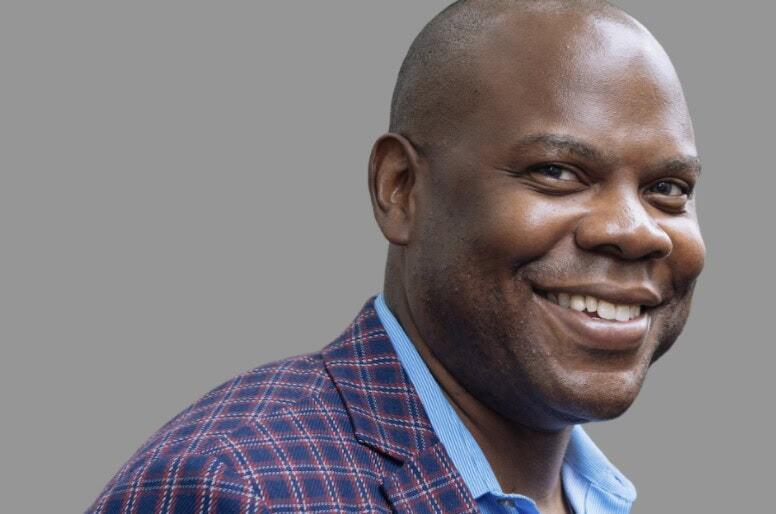
FounderTribes is like Tinder or Bumble for founders. We are working with professors at Yale and Oxford to create machine-learning technology that connects founders to the mentors, funding sources and educational content that they need to start up and scale up their business. We aim to cut out a lot of the noise and time-wasters that help entrepreneurs to fail. Instead, we connect founders to experts who have the experience, capacity, know-how and resources to support and invest in them, even if they don’t fit the typical pattern of founders. And the statistics are pretty dire. According to Extend Ventures, in the UK, between 2009 and 2019,
-
-
- 0.24% of venture capital went to Black entrepreneurs, 38 businesses in total;
- 1 Black female founder raised Series A funding;
- Despite making up 14% of the UK population, only 1.7% of capital at all stages went to BAME entrepreneurs;
- Only 3% of VC funding went to all-female or women-led teams, with 92% of European VC funding invested in all-male founding teams (Atomico, 2019);
- 88% of all VC funding in 2020 went to London-based companies (Tech Nation 2020); and
- 45% of all British-educated tech CEOs attended independent schools (Wired).
-
We have partnerships with NY City, Silicon Valley Bank and London & Partners, among others, to democratise entrepreneurship to include women, people of colour and other folks from the “wrong” backgrounds or geographies.

How did you come up with the idea for the company?
After 9 years of Wayra UK, I realised that the accelerator model doesn’t work for the vast majority of people if they’re not quickly identified as potential unicorns. The model is not scalable, and it’s often not inclusive.
I saw technology and innovation being applied everywhere but in supporting and investing in founders. You can buy or rent a house anywhere in the world via various platforms, or watch a Spanish series like Elite on Netflix, but you still needed to have face-to-face meetings via a traditional accelerator or in a fancy office in an expensive city to get funded. It all seemed so contradictory, old-fashioned and ripe for much-needed technological disruption.
More from Interviews
- Interview With Joe Gillam, Co-Founder Of Soul Spaces
- A Chat With Alexander Kihm, Founder And CEO Of POMA AI
- A Chat With Jason Day, Head Of EMEA At Luma: How Agentic AI Is Rewriting The Rules Of Creative Production
- A Chat With Yahya Hmida, XWorld: Building An Enterprise AI Company With No Outside Funding
- A Chat With Antonio Barradas, Epassi And Zest: Why Choice Alone Isn’t Enough For Employee Benefits
- A Chat With Laura Harrison, Education Lifeguards: Rethinking Teacher Wellbeing This World Mental Health Day
- A Chat With Luca Steinmetz, FARAWAYHOME: How AI Search Is Rewriting The Rental Listing
- A Chat With Lucid Software’s Jamie Lyon: Why Shared Context Is Becoming AI’s Real Competitive Edge
How has the company evolved during the pandemic?
The last two years have brought together various trends, the confluence of which has benefitted FounderTribes. Firstly, George Floyd’s murder catalysed various conversations about diversity and inclusion.
Secondly, the pandemic has precipitated the normalisation of virtual and hybrid learning. Finally, technology has made the world more accessible, as it’s no longer required — or possible — to travel to meet investors face-to-face to pitch and get potential investments.
What can we hope to see from FounderTribes in the future?
I’d like to see FounderTribes as the default platform for anyone trying to start or scale a business. Business schools and accelerators have a role to play, but they are inaccessible to the vast majority of the world’s 582 million founders.
They are simply too costly, too time-consuming and too “exclusive”. That’s a huge market opportunity and a tremendously underserved market. We intend to fix that.


