


Neat is a video conferencing start-up founded in Oslo, Norway and also based in London.
CEO Simen Teigre, is the driving force behind the company’s vision to create a fantastic video communications experience as an accomplished leader with vast experience in the video collaboration industry. That includes previously being co-founder and CEO of Pexip, Senior Director at Cisco – where he led the unified conferencing products team – and vice-president of Product Management at telecommunications company, Tandberg.
Since launching in 2019, Neat has received investment of $41 million from Zoom, valuing the company at over $640 million and has amassed an impressive global client which includes The White House; in fact President Biden uses Neat technology to hold meetings with members of his cabinet.
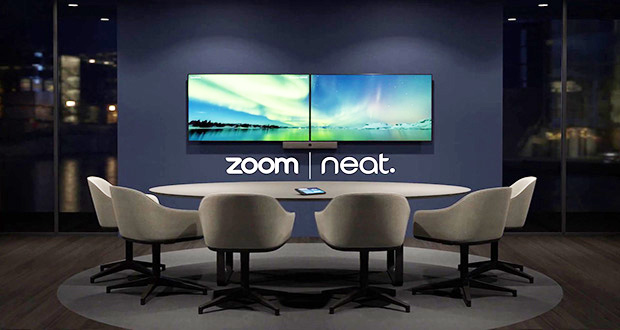
By designing simple and elegant pioneering video devices that make virtual meetings feel almost as real as meeting face-to-face, Neat seamlessly brings rich and meaningful experiences to people’s work, interactions and lives across any meeting space.
Neat devices have crystal-clear audio and video, plus advanced capabilities that support an enhanced, engaging and safer hybrid working and learning environment.
We spoke to Simen to find out more…
How did you come up with the idea for Neat?
I have worked in telecommunications for many years now. My time spent at Tandberg gave me great exposure in all aspects of a telecoms company – from product, to channel, to finance. Being a consultant at McKinsey also allowed me access to some of the biggest organisations’ C-Suites to learn the skill sets it takes to be an entrepreneur.
Neat was born right before the Covid-19 pandemic, with the goal to make video collaboration easy – easy to purchase, easy to install and easy to use. Plus from the start we’ve focused on championing the professional wellbeing of workers with experiences that make video conferencing more comfortable, engaging and equitable for all. Our goal is to allow for a greater work life balance by introducing integrative technology to people’s lives to better balance our work lives. We wanted to create hardware that offered this, whilst creating an equitable meeting experience for all, which commonly lacks in in-housed desktop technology.
More from Interviews
- Interview With Joe Gillam, Co-Founder Of Soul Spaces
- A Chat With Alexander Kihm, Founder And CEO Of POMA AI
- A Chat With Jason Day, Head Of EMEA At Luma: How Agentic AI Is Rewriting The Rules Of Creative Production
- A Chat With Yahya Hmida, XWorld: Building An Enterprise AI Company With No Outside Funding
- A Chat With Antonio Barradas, Epassi And Zest: Why Choice Alone Isn’t Enough For Employee Benefits
- A Chat With Laura Harrison, Education Lifeguards: Rethinking Teacher Wellbeing This World Mental Health Day
- A Chat With Luca Steinmetz, FARAWAYHOME: How AI Search Is Rewriting The Rental Listing
- A Chat With Lucid Software’s Jamie Lyon: Why Shared Context Is Becoming AI’s Real Competitive Edge
How has Neat evolved during the pandemic?
Neat has truly embodied the hybrid workplace – most of our company growth has taken place during the pandemic and we’ve added over 200 employees during that time, most of them remotely. We continue to grow with the recent opening of our London office in February 2022. Through the pandemic we strengthened our partnership with Zoom, and even secured multiple investments from the powerhouse. We’ve also partnered with Microsoft to make Neat devices available for Microsoft Teams, so we’re working with the two biggest players in the market. By the time of our 2nd anniversary last October, we were valued at $640 million. It’s only up from here!
What can we hope to see from Neat in the future?
We will continue to innovate our products to develop the features that customers need to enjoy the best possible video experience. Moreover, we continue to expand business in our markets – the UK being one of them – as companies in the region continue to have a big appetite for virtual methods of communication.


