


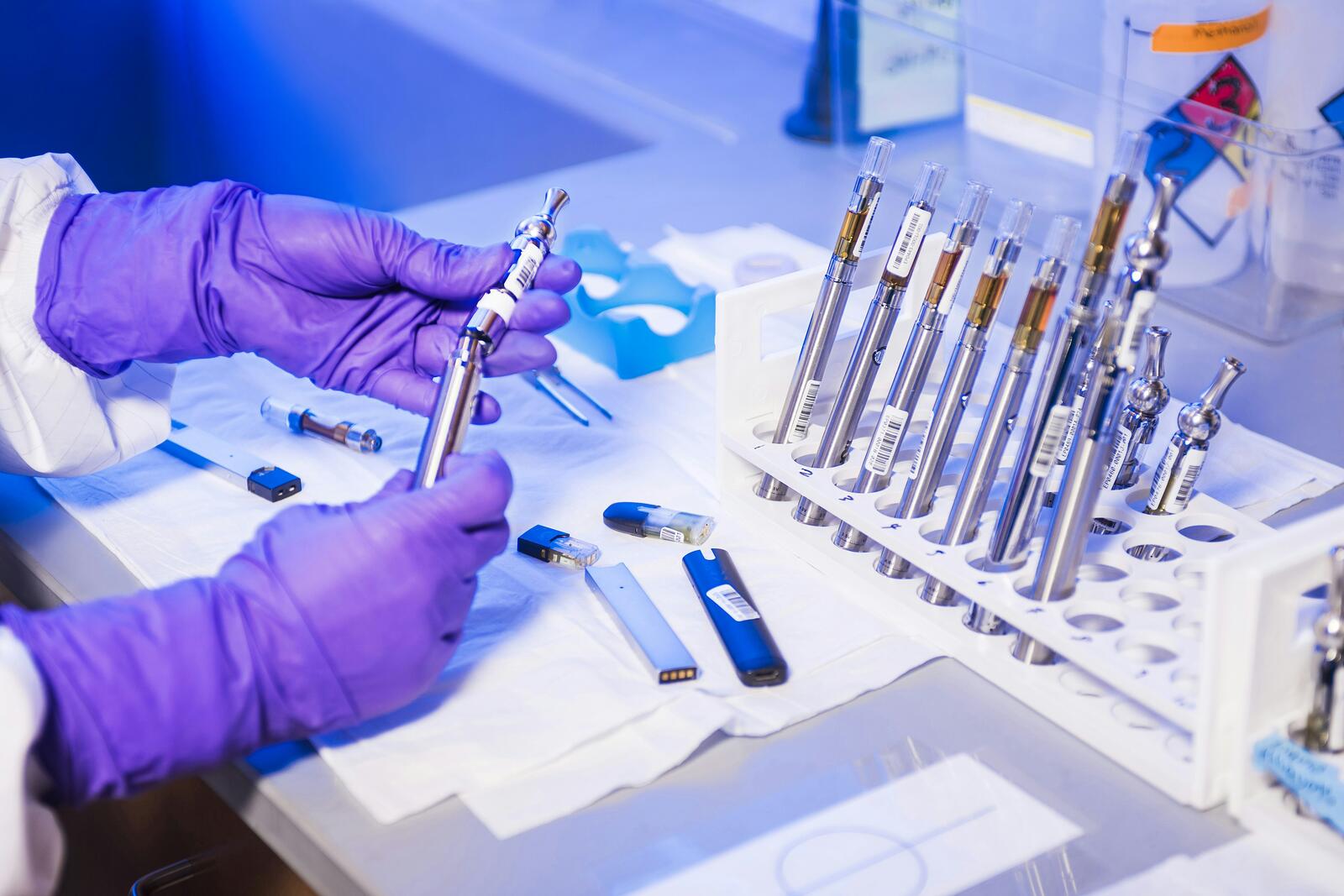
Clinical trials have always been one of the slowest parts of healthcare innovation. Recruiting patients, collecting data, monitoring outcomes and analysing results can, frustratingly, take years, delaying access to potentially life-changing treatments. It can be incredibly frustrating, but there are good reasons for the slow movement in clinical trials.
But, advances in artificial intelligence, cloud computing and wearable technology are raising a possibility that is equallly intriguing as it is concerning: what if we could use advanced technology to allow clinical trials to happen in real time?
The question has become increasingly relevant following recent efforts to accelerate medical research during disease outbreaks. Researchers are exploring whether AI could help analyse patient data as it’s generated, allowing trials to adapt more quickly and potentially identify effective treatments sooner. This would mean analysing data and coming up with accurate conclusions in real time rather than having humans analyse it on a case by case basis and dealing with endless bureacracy.
Indeed, the technology that would allow this is advancing rapidly, that’s not really the issue. The bigger question, however, is whether healthcare systems, regulators and researchers are ready to keep up.
Why Are Clinical Trials Changing?
Traditionally, clinical trials operate in stages. Researchers recruit participants, they collect data over a defined period, analyse the results and then determine whether a treatment is safe and effective.
According to a review published in International Journal of Medical Informatics, AI is increasingly being used throughout the clinical trial process, helping with everything from patient recruitment and trial design to monitoring participants and analysing results. The study reported that AI has the potential to improve efficiency, reduce costs and accelerate drug development.
At the same time, wearable devices and digital health platforms are generating unprecedented amounts of real-world health data. Rather than relying solely on periodic hospital visits, researchers can now potentially monitor patients continuously.
Asya Paloni, Chief Product Officer at Welltory, believes this shift could fundamentally change how researchers understand human health. “The important thing here is whether medicine is ready to accept that human health does not happen in snapshots.” She added, “Meanwhile, millions of people walk around with devices like smartphones, smartwatches and smart rings that continuously measure aspects of their physiology. This brings the opportunity to watch the body change in real time rather than reconstructing those changes afterwards.”
More from Artificial Intelligence
- What Happens When A Startup’s Entire Codebase Is Written By AI?
- The Most Important AI Design Decision Is Where The Model Stops
- OpenAI’s Astra Could Change How Startups Are Built, Says OpenAI’s Tricia Troth
- AI Influencers Vs. Real Humans: What Actually Works In Marketing?
- The Rise Of AI-Powered Start-Ups
- Trump’s Calling It “Superintelligence” Now – But The AI Industry Might Have Bigger Problems Than Its Name
- Are AI Agents Secretly Building Surveillance Files On Your Friends And Family?
- AI In Education Is Moving Fast, Are School Policies Keeping Up?
The Technology May Actually Already Be Here
While real-time, AI-powered clinical trials may sound futuristic, some experts argue that the underlying technology already exists.
According to Clinion, AI is already being used to automate administrative processes, identify suitable trial participants and analyse large datasets more efficiently than traditional methods.
Indeed, further to this, Ranjith Raghunath, CEO of CX Data Labs, believes the technical foundations are largely in place.
“Technically, we’re ready to go. Some of our best work has been in science and medicine, specifically setting up simulated testing environments based on existing data.” But, according to Raghunath, AI is unlikely to eliminate traditional trials entirely.
“AI can only replace traditional testing up to a point, and some actual human trials are still necessary before a drug can be brought to market.”
Similarly, Amy Gordon Franzen, Chief Executive Officer of Rune Labs, believes that, “The industry is more ready than people think, with companies developing wearable sensors and digital health platforms to collect continuous data and leverage AI to analyse that information in real-time.”
According to Franzen, this approach could be particularly valuable for conditions that fluctuate significantly between appointments, such as Parkinson’s disease. Indeed, continuous monitoring could be an asbolute game changer.
Could Real-Time Trials Improve Patient Safety?
One of the biggest arguments in favour of AI-driven trials is that continuous monitoring may provide a more complete picture of how treatments perform in the real world.
A study published in npj Digital Medicine reported that AI-powered approaches could help improve decision-making throughout the clinical trial process, particularly when integrated with digital health technologies and real-world data sources.
Franzen believes continuous monitoring has the potential to improve both effectiveness and safety.
“By providing a more complete picture of a disease, we have the potential to enhance the efficacy and safety of treatments.” She noted that traditional assessments can miss important fluctuations in patient health that occur between visits.
There is, of course, the other side of the argument too. Indeed, some experts are quick to point out that more data does not automatically mean better outcomes. As Franzen explained that “it’s important to point out that more data does not automatically create better evidence.” Instead, success depends on turning large volumes of information into reliable insights that researchers and clinicians can actually use.
The Challenge of Governance
While the technology appears increasingly capable, regulation remains a major question mark. According to DelveInsight, concerns around data privacy, transparency and regulatory compliance continue to be among the biggest barriers to widespread adoption of AI in clinical research.
Dr. Dorothy Ogwuru, MD and Founder of PharmaLink Academy, believes governance may ultimately prove more important than technology, and this argument certainly carries a geat deal of merit given the way in which AI technology has been received more generally. “The global health system is more technologically advanced than its operational or ethical capacity in conducting AI-enabled clinical trials.”
She added that “the future of clinical trials will inevitably be real-time, but governance should frame the clinical trials and not the technologies.”
Andrea Morabito, Director of B2B Channels EMEA & Global International Partnerships at L-Nutra, echoed this sentiment. “The critical issue is that clinical evidence cannot move faster than the quality of the data and governance behind it.”
According to Morabito, adaptive trials can strengthen scientific rigour, but only when safety thresholds, endpoints and monitoring processes are clearly defined from the outset.
So, Is The Global Health System Ready?
The answer appears to be both yes and no – an unsatisfying but, unfortunately, realistics answer.
The tools needed to enable real-time, AI-driven clinical trials are rapidly becoming available. AI can analyse huge datasets, wearable devices can monitor patients continuously and cloud infrastructure can process information at unprecedented speed.
But, at the same time, the technology may be advancing faster than the systems that are designed to govern it.
Questions around consent, accountability, data quality and regulatory oversight remain unresolved, and healthcare systems also vary significantly in their digital maturity, meaning some hospitals and research centres may be far better positioned than others to adopt these approaches.
But still, momentum is building. As AI becomes more deeply integrated into healthcare, the conversation is increasingly shifting from whether real-time trials are possible to how they can be implemented safely and effectively.
As Morabito put it, “the opportunity lies in accelerating medicine without allowing speed to compromise evidence.”


