
Nvidia just posted the largest quarterly revenue in the history of the technology industry. Q1 FY27 revenue came in at $81.62 billion, up 85% year on year, with data centre revenue alone hitting $75.2 billion – a 92% increase driven by demand for Blackwell-series AI chips. To put that number in context: Nvidia’s data centre business now generates more revenue in a single quarter than most sovereign wealth funds deploy in AI infrastructure in a year.
The Gulf is one of the reasons those numbers look the way they do. Saudi Arabia, the UAE, Qatar and Kuwait have collectively committed well over $100 billion into AI infrastructure, much of it built around Nvidia GPU clusters. Saudi-led ventures like Humain are positioning the Kingdom as a global AI hub on the back of Nvidia compute. UAE-linked investments are anchored to the same hardware stack. The region has become one of Nvidia’s most significant customers, rivalling parts of Europe in AI infrastructure spend.
At the same time, Jensen Huang acknowledged in the same earnings call that Nvidia has largely conceded China’s domestic AI chip market to Huawei. That deserves attention. It confirms that Nvidia’s global dominance is geographically selective – and that where access is cut off, alternatives can emerge fast. For MENA founders and investors building on Nvidia-dependent infrastructure, the question that follows is an uncomfortable one: what happens if that access gets complicated?
The Other Side Of The Bet
The dependency risk is real, but it’s only half the story.
The same concentration of capital and political will that built the Gulf’s Nvidia-heavy infrastructure could, in theory, be turned toward reducing it. Gulf sovereign wealth funds have the scale to cross-subsidise non-US compute alternatives – European or Asian hardware stacks, open-source inference infrastructure, multi-vendor cloud architectures – in a way that most markets simply can’t.
Some analysts argue this is already the logical next move. The Gulf’s buying power gives it genuine leverage with chip manufacturers beyond Nvidia, including AMD, Intel and emerging Asian players. A deliberate push toward hardware-agnostic infrastructure – mandating interoperability as a condition of sovereign wealth investment, backing open-source orchestration layers, funding Arabic-language foundation models on mixed hardware – would convert today’s infrastructure lead into a more durable strategic position. The question is whether that diversification happens by design or only after a supply shock forces it.
We put the question to a group of experts across AI infrastructure, investment and MENA tech strategy.
More from Artificial Intelligence
- The AI Governance Gap: Why Global Agreements Mean Little Without Corporate Action
- The Best AI-Native Gateways For Developer-First Teams In 2026
- What Does A Planned US “Freeze AI” Walkout Say About Public Attitudes Towards Big Tech?
- Why UK Allied Health Is Using AI To Cut The Paperwork
- Quite Contrary: Most Startups Don’t Have An AI Problem, They Have A Distribution Problem.
- AI Models Are Mentioning Your Brand, But Is Your Website Being Cited?
- AI Could Move From The Cloud To The Phone – What Does That Mean For App Developers?
- What Happens When A Startup’s Entire Codebase Is Written By AI?
Our Experts
- Mario Omaña: Chief Operating Officer, GO4
- Kaveh Vahdat: Founder and President, RiseOpp
- Kadan Stadelmann: Co-founder, Compance.AI
- Syed Asif Ali: Founder and Digital Identity Architect, Point Media
Mario Omaña, Chief Operating Officer, GO4

“The Gulf’s compute bet is bold – but the real strategic question isn’t about buying more GPUs. It’s about what you build on top of them.
“I’ve spent over two decades building IT and telecom infrastructure across emerging markets, and the pattern is familiar: a region makes a massive hardware investment in a dominant vendor, early movers benefit enormously, and then the dependency risk becomes apparent only when it’s expensive to unwind.
“The founders who will win long-term in MENA aren’t the ones racing to consume Nvidia capacity today – they’re the ones designing their stack to be hardware-agnostic from day one. That means investing in orchestration layers, open-source inference frameworks, and multi-cloud architectures that can shift workloads across GPU providers as AMD, Intel, and custom silicon mature.
“A diversified MENA tech stack should look like three layers: sovereign compute at the base (government-backed data centres with mixed hardware), a middleware layer built on open standards (Kubernetes, Ray, vLLM), and application-layer AI companies that are deliberately vendor-neutral. The sovereign wealth funds funding this infrastructure should mandate interoperability as a condition of investment.
“The biggest risk isn’t that Nvidia hardware underperforms – it’s that a $81 billion dependency on a single supplier creates pricing leverage that erodes the region’s competitive advantage over time.”
Kaveh Vahdat, Founder and President, RiseOpp
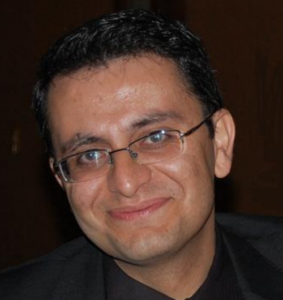
“I think the diversification debate is being framed too narrowly. The bigger strategic dependency isn’t a single hardware supplier. It’s reliance on models, datasets, and AI products developed elsewhere. Even if the Gulf deploys some of the world’s largest compute clusters, most of the value could still accrue overseas if local companies remain consumers rather than producers of AI.
“The long-term opportunity is to convert infrastructure leadership into intellectual property leadership. That means regional foundation models, sector-specific AI companies, and proprietary datasets in industries where the Gulf has unique advantages, such as energy, logistics, finance, healthcare, and government services.”
Kadan Stadelmann, Co-founder, Compance.AI

“Nvidia is driving a major geopolitical shift. Gulf states like the UAE and Saudi Arabia are securing hundreds of thousands of Nvidia GPUs and building gigawatt-scale AI clusters in an effort to be leaders in AI infrastructure, data centres, and chip acquisitions.
“The Gulf states view AI dominance as a rare opportunity to take a leadership role in the global economy. The Nvidia boom is a means to an end. That end is vertical integration by leveraging abundant low-cost energy for energy-efficient AI factories, Arabic-language models, climate adaptation tools, and sector-specific applications in energy, finance, and healthcare.
“Founders in the region should be involved in crafting regional governance frameworks that blend global best practices with local ethical principles. Their goal should be to build proprietary models, intellectual property, and exportable AI solutions diversified across multiple vendors with their own hardware, models, and talent sources.
“The Gulf can use its buying power to kickstart a technological renaissance and compete with the west and east in the AI arms race. MENA founders have the opportunity to secure compute, build proprietary data and models, and ship leading AI solutions underpinned by the region’s energy abundance.”
Syed Asif Ali, Founder and Digital Identity Architect, Point Media

“I’ve got mixed feelings about the Gulf pouring billions into Nvidia infrastructure because I’ve already seen what vendor lock-in looks like on a smaller scale. Running Point Media in Dubai, we built parts of our AI workflow around Nvidia hardware simply because that’s what every serious provider in the region offered at the time. It worked great… until costs started climbing and suddenly every roadmap decision depended on one company’s pricing and supply chain.
“Gulf founders should absolutely take advantage of the infrastructure lead while it exists. Most regions would be grateful for this level of compute access. But the mistake would be building businesses that only function inside one ecosystem. The smarter founders are designing flexibility early – using tools and workflows that can move between Nvidia, AMD, Trainium or regional cloud providers without rebuilding everything from scratch later.
“The long-term opportunity for MENA isn’t who owns the most GPUs. It’s who builds the most resilient ecosystem around them. That means local AI infrastructure, regional cloud players, Arabic-language models, compliance layers, and talent that understands how to operate across multiple systems instead of depending on one vendor forever. Otherwise we risk becoming consumers of infrastructure instead of owners of strategy. And those are two very different things.”
For any questions, comments or features, please contact us directly.