


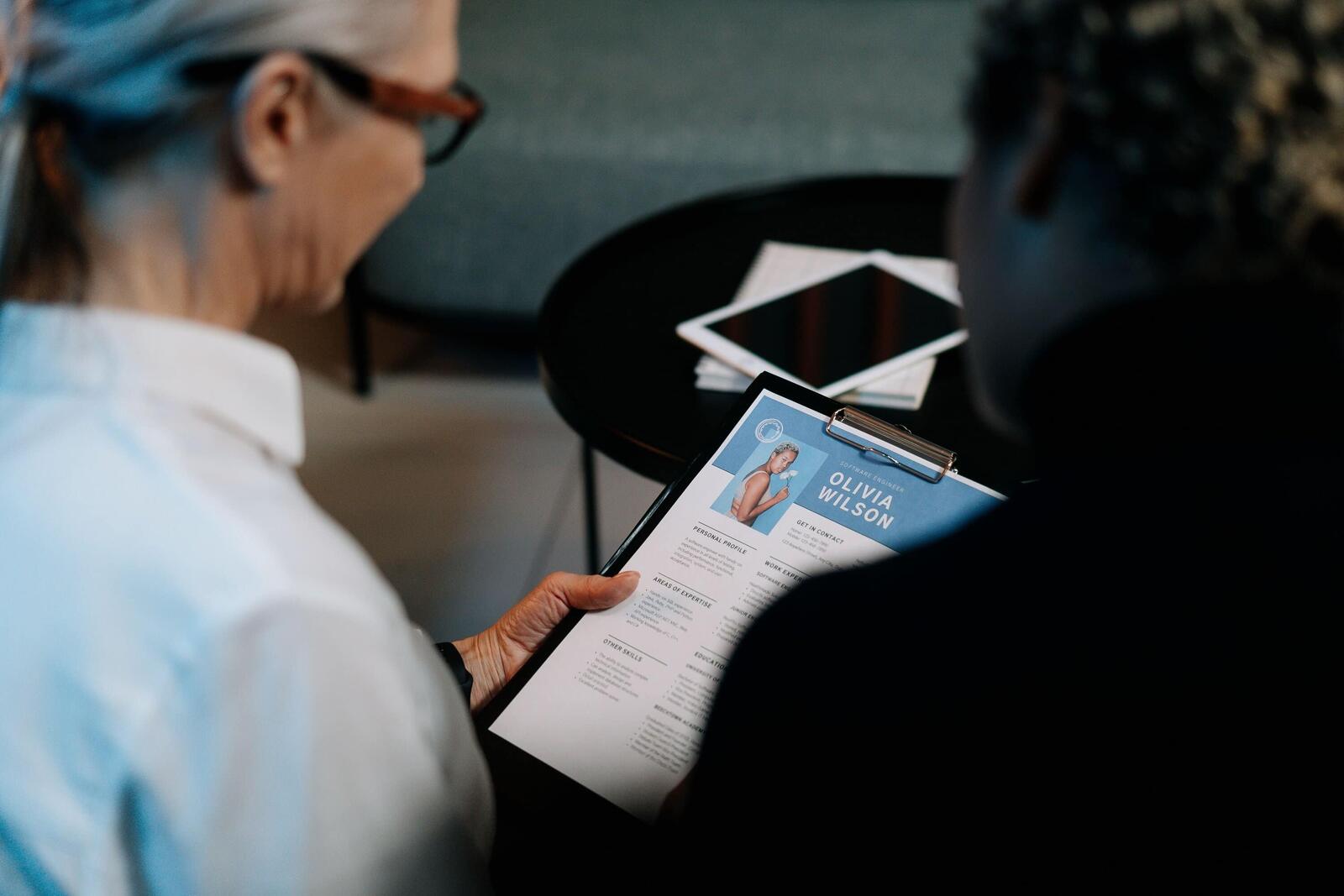
Writing a CV is the only task where you can spend an hour deciding whether you’re “organised” or “highly organised”, then another twenty minutes wondering if that Saturday job from years ago looks thorough or desperate. By the end, it reads somewhere between a sales pitch and a witness statement and you’ve gone over it so many times that every sentence has stopped meaning anything.
Then it gets sent off and the person on the other end may well have typed your name into Google before they’ve even opened it. What they find there got no proofreading, no font tweaking and in a lot of cases, no thought at all, which doesn’t seem fair on the version of you that sometimes gets read first.
A CV Is Your Best Take, A Search Is Everyone Else’s
A CV is the version of your career with the useless bits sanded off. The job titles line up, the dates never overlap and every responsibility has been reworded to sound slightly more impressive than the afternoon it actually happened on. Nobody’s lying; it’s just that a document built to impress can only tell the story one way, and it stops the moment you press send.
That’s a lot of weight to put on a single page and it’s why more of the picking and choosing now happens somewhere else. Alexis Quintal, Founder & CEO of Rosarium Collective, believes an online presence can reveal something a CV misses. As she puts it, “Your CV tells an employer what you have done. Your online presence tells them who you are when nobody is assigning you a task, which is the more useful signal.”
Debra Andrews, Founder and CEO of Marketri, looks for something similiar when evaluating candidates and potential partners. “When I evaluate a candidate or a potential partner, the CV tells me where someone has been. Their digital footprint shows me how they think.”
She also points out that a polished LinkedIn profile with no activity says very little, while thoughtful posts about real problems in someone’s field can reveal much more. The difference isn’t necessarily how much someone posts, but whether it offers anything of substance.
Gabriel Shaoolian, CEO and founder of Digital Silk, takes the idea of an online résumé to its logical end, describing a Google search of someone’s name as “essentially the résumé the world has created for you”.
More from Business
- How IntraTEM Helps Enterprises Navigate Telecom Expense Management During Growth and Acquisitions
- Anthropic’s CEO Reportedly Floated Video Games As A Fix For AI Job Losses: Is That A Plan Or A Punchline?
- University Of Washington: Successful Alumni Who Founded Companies
- When Bad Publicity Becomes Good Marketing: Why Brands Are Embracing Controversy
- Poor Offboarding Processes May Leave Former Employees With Access To Sensitive Data
- HeyGen Alternative Platforms For Training Teams: 2027 Comparison
- Could The Landline Switch-Off Create New Opportunities For Rural Businesses?
- Why Are Startups And VCs Suddenly Hiring “Ecosystem Leads”?
Your Next Recruiter Might Ask A Chatbot About You
Googling someone used to be the whole job. Now there’s another route, because a recruiter or potential client can ask ChatGPT, Gemini or Claude who someone is or who to call about a particular problem and get a tidy paragraph back with no scrolling required. Those answers can draw on publicly available information such as articles, talks, professional profiles and project write-ups, although what an AI tool returns won’t necessarily be complete or accurate.
Thiago Ferreira, Founder & CEO of Elevate AI Consulting and Adjunct Professor at the University of Miami, has seen this happen in his own business. He says, “Many discovery calls at Elevate AI Consulting start with ‘ChatGPT recommended you.'”
That’s the sort of discovery Answer Engine Optimisation (AEO) is concerned with. While traditional SEO focuses on helping websites appear in search engine results, AEO is about making information easier for AI-powered answer engines to find, understand and potentially use when responding to questions.
Having a reliable source of information about yourself can help with this, and Josh Paul Popkin, Founder & Principal of Position Strategy Group, sees personal websites as an important part of that. In his words, “Your personal website is one of the most authoritative sources of information about you and can be among the first sources AI chatbots cite when answering questions about you.”
Chatbot recommendations are another way for people to discover professionals, not a replacement for interviews, references or checking someone’s actual work. AI tools can also get things wrong or overlook information, so being mentioned in an answer isn’t the same as having your expertise verified. What’s changed is that your online presence now has another potential audience: software that can pull together information about you before you’ve even had a chance to introduce yourself.
It’s Being Built Either Way, So You Might As Well Help
Here’s the bit that should come as a relief: none of this is set in stone. You can’t stop other people writing about you or tagging you in photos from 2016, but you’ve got a say in what else is out there, and it doesn’t take daily posting or a professionally taken profile picture. Having a reputation online is about giving people accurate, useful things to find when they go looking, which is a much lower bar than being internet famous.
That can start small. A write-up of a project you’ve finished, a few thoughtful comments under other people’s posts or a profile that explains what you do in normal language all count. Ferreira’s advice to his University of Miami students comes down to three words: “publish proof, not claims”.
Searching your own name every so often can reveal outdated profiles, incorrect information or results that no longer reflect your work. Checking what AI assistants return about you can offer another perspective, although their answers shouldn’t be treated as a definitive record. If something is inaccurate, you can look at the original source and see whether it can be corrected. You can also make sure your professional profiles, website and published work give people a more current picture of what you actually do.
Gabriel Shaoolian makes a similar point about the limits of controlling your online presence. “You obviously can’t stop others from talking, but you can shape what exists.” It’s less about controlling every mention of your name and more about making sure there’s enough accurate information available to give people a fair picture of who they’re looking at.
The Opportunities You’ll Never Hear About
Neglecting your online reputation rarely comes with a rejection email, which is exactly why it’s so easy to put off. Nobody phones to say they’d have got in touch if they’d found anything. Alexis Quintal describes the cost as something that often goes unnoticed, saying, “It costs you the opportunities that never reach you, because the person who could have recommended you had no idea what you were working on.”
Steve Lambert, now a freelance PR and communications consultant, has the opposite story, and it reads more like a lucky break than a job application. After taking a career break to travel in 2025, he posted on LinkedIn that he was available for work. “A connection I had never met saw it and employed me as PR Lead the following week.”
Read next to each other, Quintal’s missed opportunities and Lambert’s one-week job offer are the same mechanism running in opposite directions: a stranger either has something to find or they don’t. Lambert also explains that he’d spent years creating the conditions for that opportunity to convert. The LinkedIn post wasn’t an isolated stroke of luck; it gave someone who already had a way to assess his professional background a reason to get in touch.
That’s a good reason not to wait until the week you start applying to begin building your online presence.
Plenty Of Great Candidates Don’t Post And That’s Fine
There’s a flaw in treating an online footprint as the main event. Anyone who’s worked on a team will know the person who’s brilliant at the job and says almost nothing in meetings. Plenty of people like that have no interest in publishing opinions or building a personal brand, and it’d be a shame if they got passed over for it. The reverse is just as true, because a slick website and a big following don’t prove somebody can do the work.
Nick Stamoulis, President and Founder of Brick Marketing, keeps the balance where it belongs. He argues that online presence shouldn’t become the deciding factor in recruitment, adding that “a person’s skills, experience, and expertise should be at the forefront of hiring decisions.”
A digital reputation can get you noticed and give an employer a fuller picture, but it can’t stand in for being good at the job. It’s also worth remembering that not everyone has the same opportunities, time or inclination to maintain a visible online presence. A lack of public activity shouldn’t automatically be mistaken for a lack of ability.
Nobody’s Asking You To Become A Content Creator
A CV still has a place in the hiring process and nothing online is about to change that. What it can’t do is speak for the hours of work, the opinions and the people attached to your name, and those are already being collected somewhere whether you’re the one writing them or not.
That doesn’t mean turning into a full-time content creator or sharing your breakfast with strangers. A few useful things with your name on them, kept accurate and added to now and then, can give people a better picture of your professional life than a list of job titles ever could. Your CV might introduce you, but your digital reputation is a major part of what people find out next.
Our Experts:
- Gabriel Shaoolian: CEO and Founder of Digital Silk
- Alexis Quintal: Founder and CEO, Rosarium Collective
- Thiago Ferreira: Founder and CEO at Elevate AI Consulting, Adjunct Professor University of Miami
- Debra Andrews: Founder and CEO, Marketri
- Josh Paul Popkin: Founder & Principal, Position Strategy Group
- Steve Lambert: Freelance PR and communications consultant
- Nick Stamoulis: President and Founder of Brick Marketing
Gabriel Shaoolian, CEO and Founder of Digital Silk

“A person’s digital footprint has become more important than their résumé, in my opinion. A Google search of your name is essentially the résumé the world has created for you, which some people might deem more objective since it’s an amalgamation of information.”
“You obviously can’t stop others from talking, but you can shape what exists. If you have a messy history or no presence at all, you run the risk of raising some red flags.”
“Your first impression is the digital trail you leave behind: your profile, podcast appearances, bios, media mentions and general search results.”
“I think you should look at it as an ongoing story. Always prioritize genuine participation over self-promotion. Sharing what you’re learning often connects more with audiences and employers than listing accomplishments alone.”
“If you want to boost your credibility even more, try things like demonstrating curiosity, crediting others’ ideas and engaging openly in professional discussions.”
Alexis Quintal, Founder and CEO of Rosarium Collective

“Your CV tells an employer what you have done. Your online presence tells them who you are when nobody is assigning you a task, which is the more useful signal.”
“The mistake is treating digital reputation as something to clean up before a job search. By then it is damage control. The people who get opportunities built a visible track record years earlier, while they had nothing to ask for, and that is exactly what makes it credible.”
“You have more control than you think. Reputation comes from showing up consistently with something useful to say, in the places your industry actually reads.”
“Neglecting it rarely costs you a dramatic rejection. It costs you the opportunities that never reach you, because the person who could have recommended you had no idea what you were working on.”
Thiago Ferreira, Founder and CEO of Elevate AI Consulting and Adjunct Professor at the University of Miami

“A CV is what you say about yourself. Your digital reputation is what others can check, and more of that checking now happens through AI. When a recruiter or potential client asks ChatGPT, Claude or Gemini about someone, the answer comes from whatever is public: articles, talks, project write-ups, a LinkedIn profile that explains your work.”
“I see this in my own business. Many discovery calls at Elevate AI Consulting start with “ChatGPT recommended you.” Answer Engine Optimization, getting recommended by AI, works the same way for a person.”
“My advice to my University of Miami students: publish proof, not claims. Write up a project you built and what you learned. Then ask an AI assistant what it knows about you, and fix what’s wrong or missing. If you leave it empty, someone else’s version of you fills the gap.”
Debra Andrews, Founder and CEO of Marketri

“When I evaluate a candidate or a potential partner, the CV tells me where someone has been. Their digital footprint shows me how they think. I look at what they choose to share and whether their point of view holds up over time. A polished LinkedIn profile with no activity says very little, while a few thoughtful posts about real problems in their field say a lot.”
“I don’t think a digital reputation replaces the CV, but it increasingly decides whether the CV gets read. People have more control than they assume. Pick a couple of topics you know well, write about them consistently and comment on other people’s work in a way that adds something. Staying silent has a cost, because if a recruiter or buyer can’t find evidence of your expertise, they will find someone else’s.”
Josh Paul Popkin, Founder and Principal of Position Strategy Group

“Your online reputation is more important than your CV in today’s agentic era.”
“Today, more and more people are asking AI chatbots (ChatGPT, Google AI Overviews, Gemini, Claude) questions—especially about other people. We track this. If you haven’t published anything, AI fills the gap with old news, little to no information, or worse—what your competitors or others are saying about you.”
“When it comes to getting a job, there are a couple of basic steps every job seeker should take. Number one: create a personal website and work on your Answer Engine Optimization (AEO) strategy. Your personal website is one of the most authoritative sources of information about you and can be among the first sources AI chatbots cite when answering questions about you.”
“Employers are checking one thing: Does what you say in the interview match what the internet says about your work?”
Steve Lambert, Freelance PR and Communications Consultant

“A strong digital reputation is increasingly an extension of your CV. It gives employers, clients and professional contacts a much fuller picture of your expertise, interests and credibility than a list of previous roles ever could.”
“That does not mean posting constantly or manufacturing a ‘personal brand’ that is not really you. It is about being strategic: showcasing great work, offering useful analysis on your sector and building genuine professional connections, both online and offline.”
“After taking a career break to travel in 2025, I posted on LinkedIn saying I was available for work. A connection I had never met saw it and employed me as PR Lead the following week. Now, as a freelance PR and communications consultant, that same digital profile continues to generate more opportunities than any cold emails would.”
“It might sound like luck, but I had spent years creating the conditions for that opportunity to convert.”
Nick Stamoulis, President and Founder of Brick Marketing

“Online footprint and digital reputation is definitely something to consider about an applicant during the hiring process, but it certainly isn’t the number one thing to be considering. It has been standard to take a look at someone’s public social media profiles to check that they align with company values, especially LinkedIn since that is primarily a professional social media platform. But overall, social media shouldn’t be a determining factor on whether a person gets hired, unless something truly alarming shows up during a search.”
“In the end, a persons skills, experience, and expertise should be at the forefront of hiring decisions.”


