

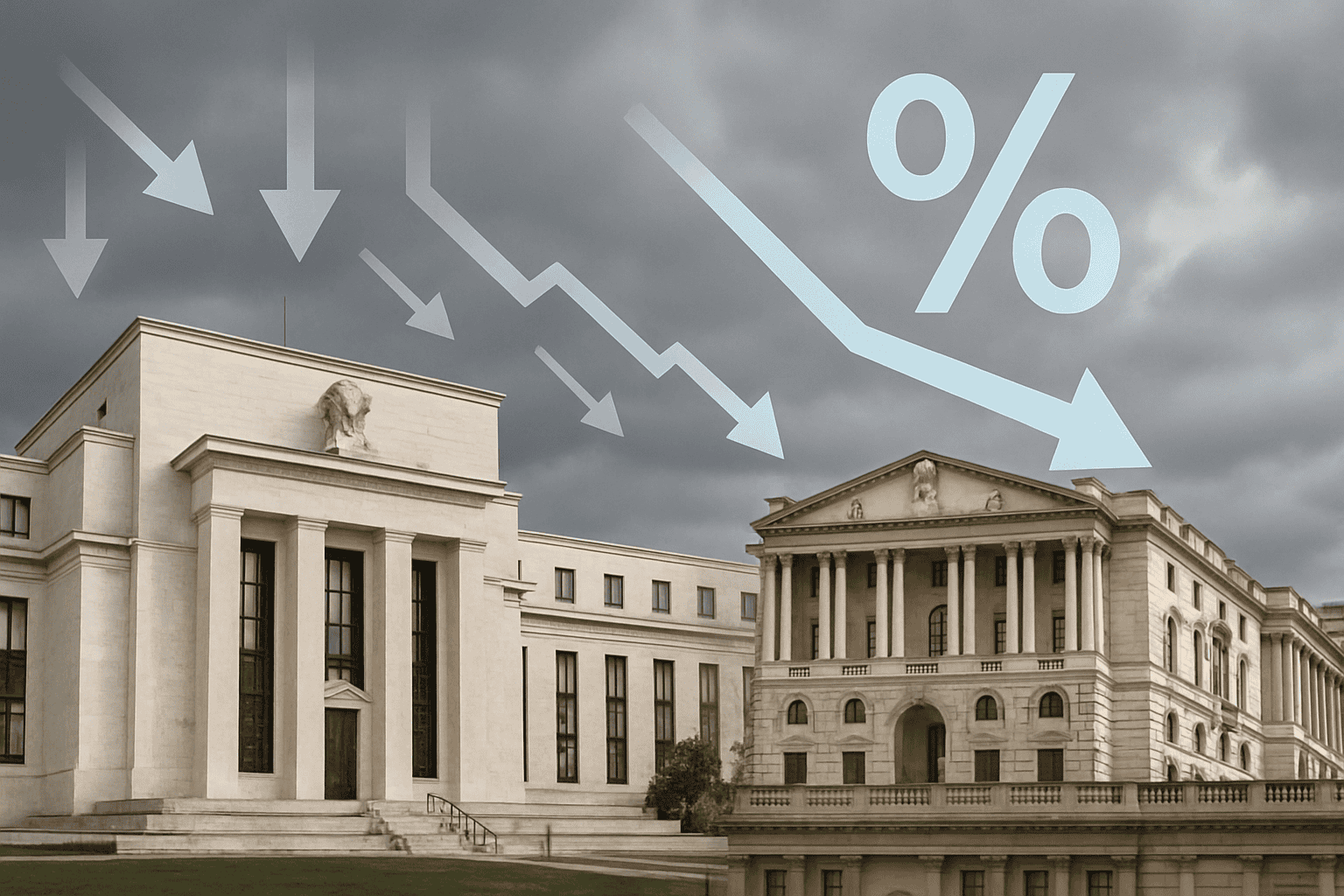
After years of battling high interest rates on both sides of the Atlantic, it seems like the end might be in sight.
The US Federal Reserve and the UK’s Bank of England are both rumoured to be considering interest rate cuts in the near future, a decision that could come as a welcome relief for many people and businesses.
But how likely is it to happen? Behind the scenes a lot is going on. There are gaps in data, split ideas and inflation to get under control, but for many businesses around the world, this decision could shape 2026.
Here’s what you need to know.
Why Do National Banks Adjust Interest Rates?
National banks like the Federal Reserve and the Bank of England exist to help keep a country’s economy stable. Their main aim is to keep inflation steady, whilst also supporting growth. This can be a tight rope to balance, and interest rates are usually used as the adjustment tool.
If inflation is too high, a rise in interest rates can make borrowing more expensive and saving more appealing. This generally slows spending, and with less demand, businesses aren’t able to continue raising prices, which slows inflation down.
Conversely when the economy is too slow, banks will cut interest rates to make borrowing cheaper. This drop in mortgage rates, loans and credit means that people have more money in their pockets. This helps boost the economy to stop prices falling too fast.
The Fed Are Debating A Cut, But Are Divided
The Federal Reserve is due to meet next week to decide whether to continue cutting rates after it dropped 0.25% in October. Normally, these kind of decisions are heavily data driven, but due to the US government shutdown, getting inflation data in time for the vote looks unlikely.
The result? A divided committee according to multiple outlets, with some voting for a cut and others against it.
Despite this however, Goldman Sachs still reported that it expects a deduction. This is mainly due to the US’ labour market, which has slowed down in recent years. Currently, the US interest rate sits at 4%.
More from Business
- How Are VoIP Digital Phone Systems Saving Small Businesses Money?
- Is Remote Work Still Relevant For UK Businesses In 2026?
- Alternatives To Hotels.com
- The UAE Is Leaning On Tax Incentives Once Again, But Are Tax Breaks Still Enough To Hold Onto Startups?
- Industry Disrupted? Revolut Just Became A “Real Bank”, And Traditional Bankers Have A Lot To Say
- Turns Out, Bigger Isn’t Always Better – Here’s Why Lean Teams Are Outperforming Large Departments
- Should Businesses In The USA Freeze Credit In Light Of Iran Cyber Threat?
- What Is Hugging Face And How Does It Work?
The Bank Of England Are Also Leaning Towards Another Cut
After the Autumn Budget, many economists in the UK have speculated that a cut in the national interest rate is coming mid-December.
The UK has already had a few rate cuts since August 2024 as the cost of living crisis, driven by high rates of inflation, swept the country. With taxes up, the cost of living high and the economy slowing, cutting rates will be a welcome relief for many – although the exact level of the cut is not guaranteed.
Why Do Interest Rates Matter For Businesses?
When national banks cut rates, it affects businesses in a multitude of ways.
Not only does it help with business costs, it also provides an economic boost, meaning customers and other businesses have more cash to transact.
Here are a few ways businesses benefit from lower interest rates:
Cheaper borrowing – meaning lower interest paid on business loans, mortgages and credit.
More consumer spending – driving demand and revenue for the business.
More money for investment – as wider costs lower and demand and revenue increases, businesses can invest more in employees, equipment and improving their offering.
Are Rates Finally Dropping?
After years of battling inflation, both the Federal Reserve and the Bank of England seem like they will both be cutting rates this December.
But the path ahead isn’t so simple, it’s a constant juggling act between keeping costs down and the economy moving.
For businesses, lower rates mean cheaper borrowing, more demand and the ability to invest more in themselves. For now, we will wait and see what both National banks decide to do, and just how quickly the economy will respond.