


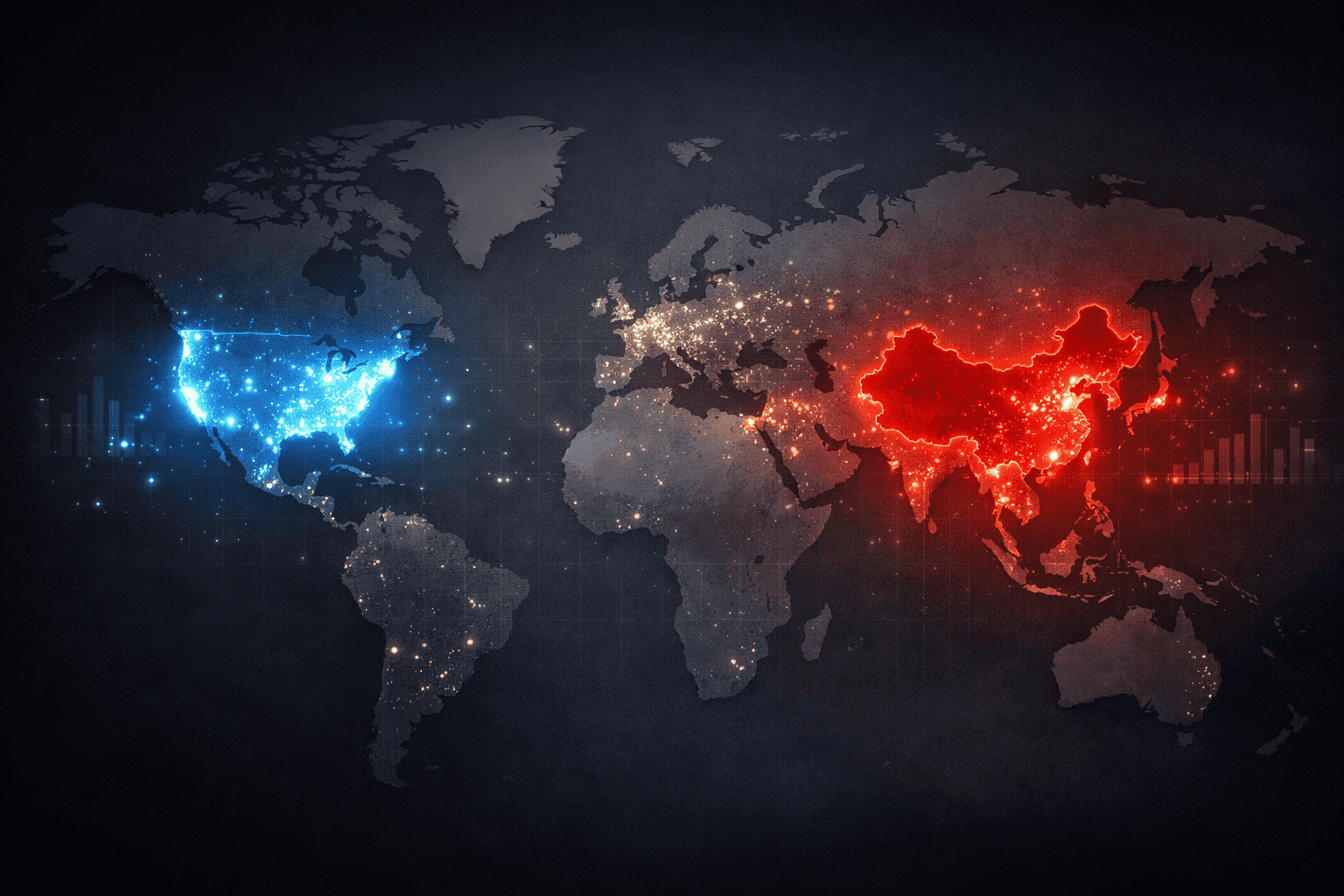
Between 2020 and 2025, the global unicorn boom was dominated by just two countries.
According to new research by Ilya Strebulaev and the Stanford Graduate School of Business, the US and China alone account for 72% of all global unicorns.
Out of 1,582 private companies that were privately owned and valued at over $1 billion during the time period, 804 were based in the US and 340 were based in China.
Together, that’s over three quarters of all new unicorns created around the world.
What Is A Unicorn?
A unicorn is a term used to describe a privately owned startup valued at $1 billion or more. The term was first coined by venture capitalist Aileen Lee to as a sign of how rare these companies were.
But now, higher tiers also exist. Companies valued over $10 billion are now called decacorns, with those valued above $100 billion called “super unicorns” or “hectocorns”.
More from Business
- Is Open Banking Still The Best Foundation For UK FinTech Startups?
- Netflix Raises Prices Again, Indicating The Rising Costs Of AI And Streaming Tech
- How Are VoIP Digital Phone Systems Saving Small Businesses Money?
- Is Remote Work Still Relevant For UK Businesses In 2026?
- Alternatives To Hotels.com
- The UAE Is Leaning On Tax Incentives Once Again, But Are Tax Breaks Still Enough To Hold Onto Startups?
- Industry Disrupted? Revolut Just Became A “Real Bank”, And Traditional Bankers Have A Lot To Say
- Turns Out, Bigger Isn’t Always Better – Here’s Why Lean Teams Are Outperforming Large Departments
The Unicorn Leader Board By Country
When it comes to the number of companies that became unicorns in each country between 2020 and 2025, the rankings show a big gap between the top 2 and the rest.
The leader board looks like:
- United States: 804 new unicorns
- China: 340
- India: 73
- United Kingdom: 62
- Germany: 31
- France: 27
- Canada: 24
- Singapore: 23
- Israel: 23
- Japan: 19
India and the UK were the only other countries that produced more than 50 new unicorns in the 5 year period. After that, the numbers drop pretty quickly, showing a huge gap in dominance.
Why The US and China Are On Top
For a long time, the US has topped the leader board when it comes to unicorns. As a country, it has a lot on its side: a lot of venture capital, big tech hubs around the country and a huge domestic market.
After all, when your country is home to Silicon Valley, New York City, Austin Texas and Boston, you have a lot of power behind you.
According to Wikipedia, the US is home to more than 1,000 unicorn companies as of late 2025, which is around 2.3 unicorns per million people.
But China has also risen to the top, albeit for slightly different reasons.
Firstly, as the second most populated country in the world, China has a huge domestic market to tap into. With a billion people within its borders, it’s a massive opportunity for Chinese companies.
China also has historically been very technologically advanced, keen on researching, developing, manufacturing and implementing new tech. This makes it a great location for innovation.
And whilst China has fewer unicorns per million people than the US, it still accounts for a huge number of the global total.
Small Countries With A Big Impact
It’s not surprising that the countries with the biggest number of unicorns are also large countries themselves. A bigger population means a higher proportion of successful businesses.
However when you look at the unicorns per million people, a slightly different story emerges.
Israel, for example, has 4 unicorns per million people. Singapore sits close behind with 3.69 and Estonia blows them both out of the water with 7.30.
So despite only having fewer of the world’s unicorns, these countries defy the odds in terms of unicorn t0 population ratios.
The UK also performs strongly in this regard, boasting 1.35 unicorns per million people.
AI And Unicorn Valuations
Over the past few years, AI has become one of the biggest drivers of unicorn growth. Research from PwC showed that AI companies were responsible for a 44% increase in valuation across the world’s top 100 unicorns in the past year alone.
In fact, AI was also the most common sector among the top unicorns, showing just how much investor hype there is in the space.
US-based unicorns benefited the most from this trend, with their combined valuations jumping by 78%, driven by funding rounds with big valuation boosts.
Unicorn Status Doesn’t Mean Profitability
One of the other interesting findings to come out of the unicorn boost is that status alone does not equate to profitability. In fact, in the same report by PwC, researchers found that only 6 unicorn startups out of 73 were actually profitable. That’s less than 10%!
What this means is that some companies, whilst conceptually impressive, may be liable to over-valuation.
One example of this is WeWork, whose rise and fall showed that a high valuation does not necessarily make a business fail-proof.
The Unicorns Of The Future
Whilst the US and China are still at the forefront of the unicorn race, other countries are trying to pick up the pace.
And with the AI revolution driving even higher valuations, it will be interesting to see whether the world’s unicorns stay concentrated to these two countries or whether the rest of the world can play catch up.