


For years, the AI conversation has been dominated by model builders. Companies like OpenAI, Anthropic and Google have competed to create ever more capable systems, while startups have raced to build applications on top of them.
But, as AI adoption moves from experimentation to enterprise deployment, another battleground is beginning to emerge – infrastructure.
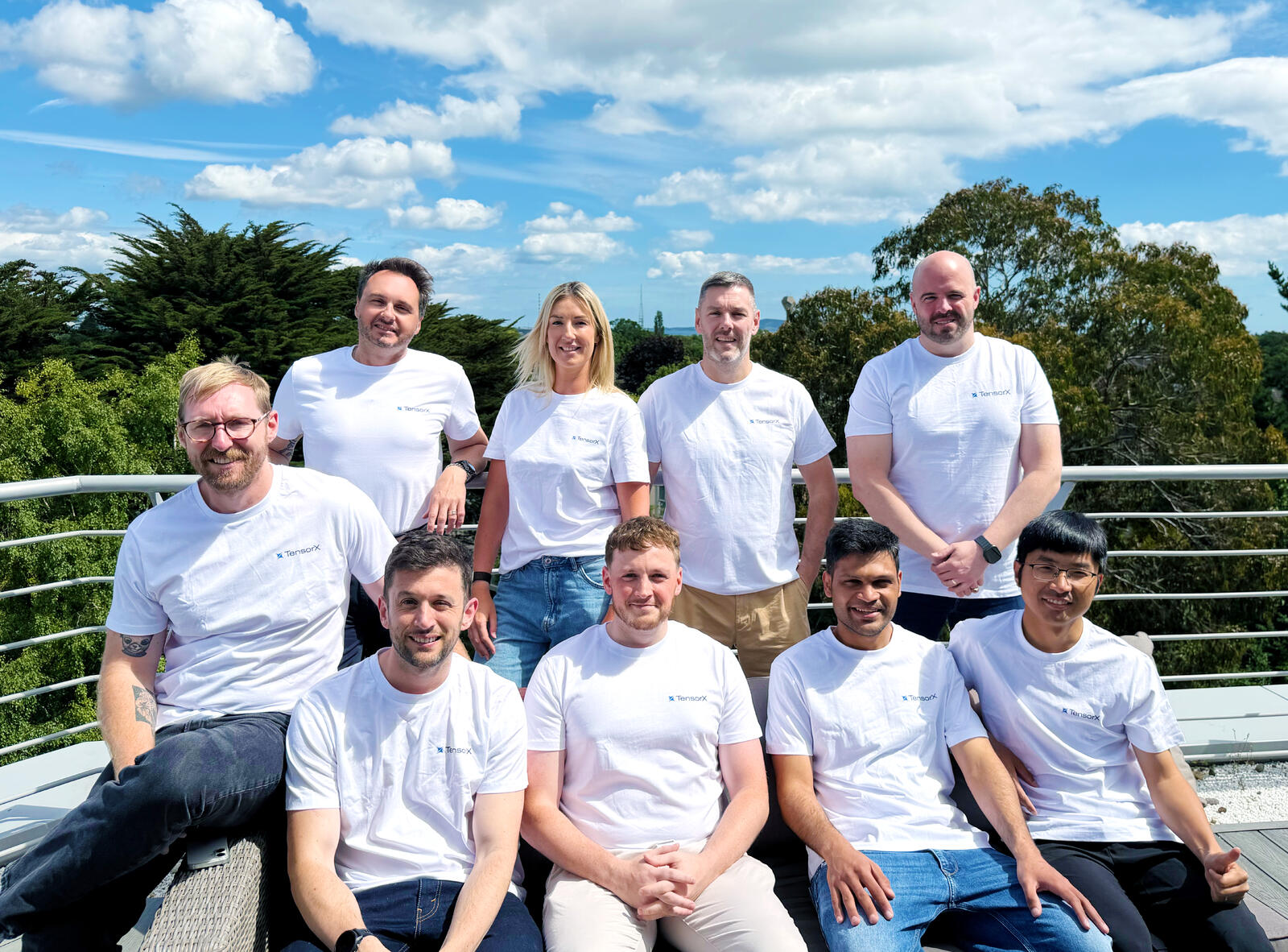
This week, Irish startup TensorX announced an €8 million seed funding round as it looks to capitalise on growing demand for sovereign AI infrastructure across Europe. The company plans to deploy dedicated NVIDIA Blackwell GPUs in European data centres, allowing businesses to run AI workloads without sensitive data leaving European jurisdiction.
While the funding itself is notable, the announcement reflects a much larger shift taking place across the continent.

AI’s Next Challenge Is No Longer Capability
For many organisations, the question is no longer whether AI works. Rather, the question has become where it works.
Over the past two years, enterprises have rapidly adopted AI tools for everything from software development and customer service to financial analysis and compliance. But, highly regulated industries like banking, healthcare and legal services have encountered a significant obstacle.
Many AI services rely on infrastructure operated by US-based cloud providers. Now, that creates uncertainty around where data is stored, who can access it and which laws ultimately govern it.
As regulations such as GDPR and the EU AI Act continue to evolve, data sovereignty has become a boardroom issue rather than simply a technical one.
For many businesses, particularly those handling sensitive customer information, AI adoption increasingly depends on being able to demonstrate that data remains under local control.
More from Funding
- As AI Gets Smarter, BOOKR Raises €6.1M To Make Kids Better Thinkers
- Even Realities Hits Unicorn Status As Smart Glasses Race Heats Up
- StirlingX Raises $20 Million Series A To Scale Sovereign Data Intelligence Platform
- Techdollar Raises $3 Million To Help Startup Employees Unlock The Value Of Their Equity
- Nebu~Flow Secures £2M To Advance Next-Generation Inhaled Drug Delivery
- Davis Raises $5.5M To Bring AI Speed To Real Estate Development
- Fuel Ventures Backs Misti AI With £250K To Build “Physical Observability” Layer For Industrial Operations
- Orkes Raises $60 Million Series B To Help Developers Deploy AI In Production
Why Sovereign AI Is Becoming A European Priority
The term “sovereign AI” has become one of the most frequently discussed concepts in European technology circles over the past year, and this doesn’t seem to be changing.
At its core, the idea is relatively simple – organisations want AI systems that operate within their own legal and regulatory frameworks.
“European companies don’t want to make a political statement about their AI stack. They want to make a practical one,” said Tim Grant, Executive Chairman of TensorX. “Their data has to stay in Europe, on infrastructure they can trust, under laws they are required to comply with. This is what TensorX was built from, from the chips up. We’re excited to grow this team to power our ambitions to scale rapidly.”
The challenge is that much of the world’s AI infrastructure remains concentrated in the United States.
This has created concerns around the US CLOUD Act, which allows American authorities to request data from US-headquartered technology providers under certain circumstances, regardless of where that data is physically stored.
Whether those concerns become a practical issue for most businesses remains a matter of debate. But, they have, undoubtedly, accelerated demand for alternatives.
As a result, European governments, investors and technology companies are increasingly investing in domestic AI capabilities.
Infrastructure Is Becoming The New Battleground
TensorX’s approach reflects a broader trend across the AI market. Rather than building foundation models, the company is focused on AI inference – the computing power used when AI systems generate responses, analyse data or complete tasks in real time.
Inference may not attract the same attention as model development, but many industry observers believe it could become one of the most valuable layers of the AI stack.
Every chatbot query, coding assistant prompt and AI agent action requires inference infrastructure to operate.
As enterprise adoption grows, demand for that infrastructure is expected to grow alongside it.
This helps explain why companies across Europe are investing heavily in data centres, GPU capacity and sovereign cloud services.
The competition is no longer just about creating the smartest AI model. Increasingly, it’s about deciding where that model runs.
A Growing Opportunity For European Startups
TensorX says it is already serving paying customers and generating revenue, with demand growing across Ireland, the UK, Germany, France and the Nordics.
That mirrors a wider trend as European organisations seek local AI providers capable of meeting increasingly complex regulatory requirements.
For startups, this creates an interesting opportunity.
The first wave of AI innovation focused heavily on applications and user experiences. The next wave may be defined by infrastructure, governance and trust.
As AI becomes embedded into critical business processes, enterprises are likely to place greater emphasis on compliance, security and control.
The result could be a new generation of European technology companies built not around AI models themselves, but around the infrastructure that makes them usable in regulated environments.
TensorX’s funding announcement may therefore be less about one company raising €8 million and more about a growing belief that Europe’s AI future will require European infrastructure to support it.


