


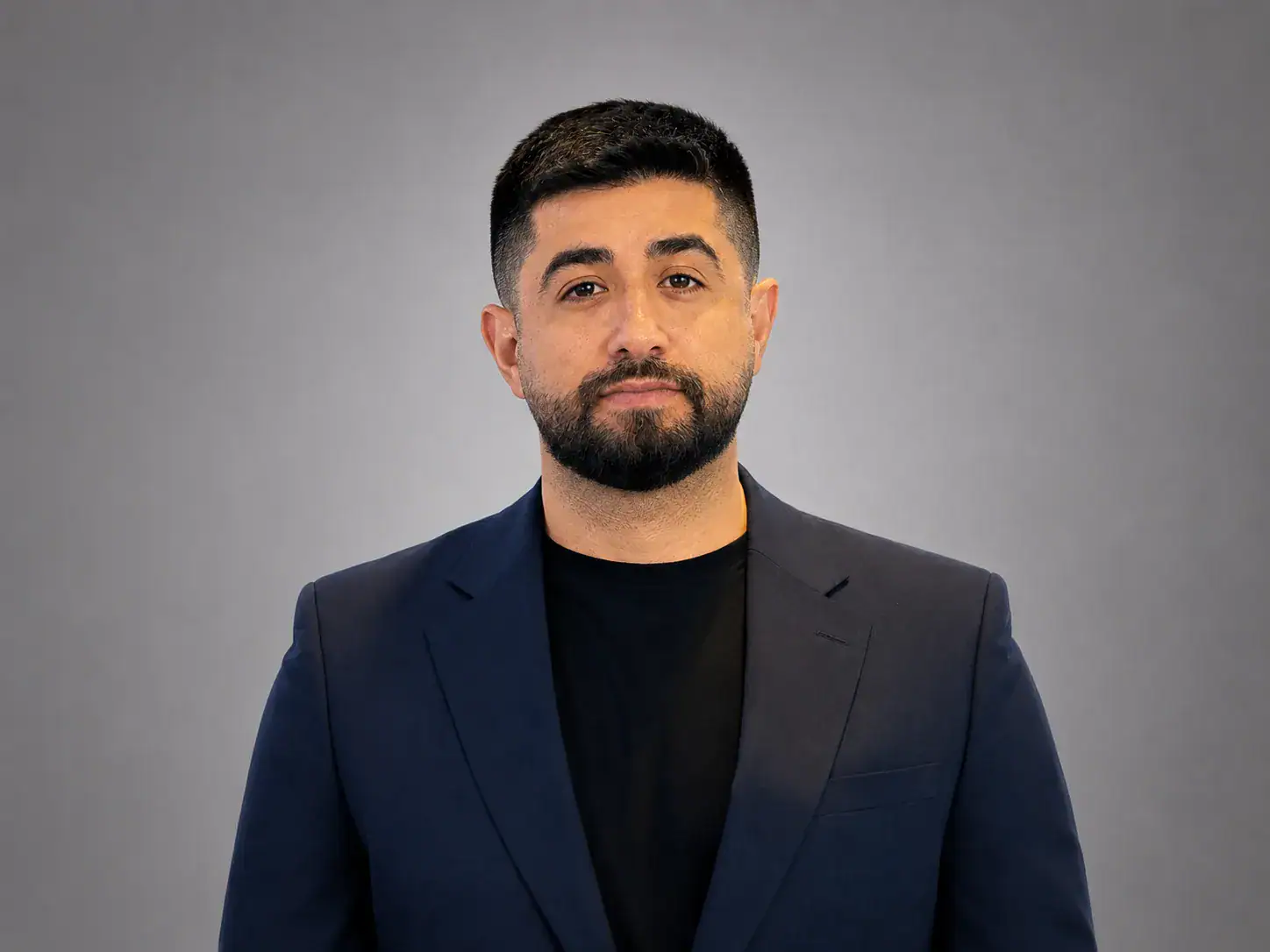
Cloud infrastructure has a habit of getting complicated fast, and Cloudzy has built its business around keeping it simple. As Deputy CEO, Aler Rab oversees strategy, operations and strategic partnerships, with one priority running through all of it: making sure the company’s services work for the people and businesses relying on them.
Cloudzy’s customers range from solo developers and independent builders to small startup teams and established businesses. All of them come for reliable performance, straightforward services and pricing that doesn’t spring surprises, without the extra layers of complexity that so often come with infrastructure. For Rab, much of the job comes down to listening: working out what customers need, the challenges they’re up against and how Cloudzy can make their day-to-day a little easier.
Rab, who’s judging this year’s Cybersecurity40, shared with us what he looks for in cybersecurity startups, why usability matters so much in security and what it takes to earn long-term trust.
With your experience in cloud services, product strategy and operations, how do infrastructure decisions affect a business beyond its technical performance?
I think infrastructure decisions affect a lot more than just performance. They influence how reliably your services run, how much time your team spends managing them and how prepared you are when something goes wrong.
When choosing a provider, it’s easy to focus on specifications and pricing. But those numbers don’t always tell you what the actual experience will be like. For example, when there’s an outage or a technical issue, things like responsive support, clear communication and recovery options suddenly become much more important.
That’s why I think it’s worth looking beyond the initial cost and performance. You also need to consider reliability, security and how easy the infrastructure is to operate and maintain. A good infrastructure decision should make your team’s work easier, not introduce new problems they constantly have to deal with.
Businesses increasingly need to balance security, performance, accessibility and cost. How can they make these trade-offs without compromising their ability to grow?
I think the first step is understanding what each system actually needs. A customer-facing application handling sensitive data has different requirements from an internal development environment, so it doesn’t always make sense to treat them the same way.
Of course, there are certain fundamentals you shouldn’t cut corners on, like proper access controls, keeping systems updated and having reliable backups and recovery plans. Beyond that, businesses can make more practical decisions about performance and cost based on their actual needs and risks.
But it’s also important to think a little ahead. Something that works well for a small team today might become expensive or difficult to manage as the business grows. And if maintaining security or improving performance requires major changes every time your needs increase, that can become a problem.
For me, it’s about getting the fundamentals right from the beginning and choosing solutions that give you enough flexibility to grow without constantly adding complexity or taking unnecessary risks.
What separates a technically impressive cybersecurity product from one that businesses can realistically adopt, integrate and scale?
I think the main difference is how well the product works in a real environment, not just how impressive the technology is on paper.
A cybersecurity product might have great capabilities, but businesses need to know whether it can actually work with the systems and tools they already use. Most companies have an existing infrastructure and workflows in place, and they can’t just rebuild everything around a new security solution.
To me, integration is a big part of that. You might have a technically excellent product, but if it’s difficult to connect to a customer’s existing stack, or requires major changes just to get it running, that’s a serious barrier to adoption.
And then there’s scalability. As the number of users, systems or workloads increases, the product needs to keep up without becoming significantly more complicated or expensive to manage.
At the end of the day, technical capabilities matter, but so does how easily customers can bring those capabilities into their existing environment and actually benefit from them.
How important are usability and customer experience when it comes to cybersecurity solutions, particularly for businesses without large security teams?
I think usability is extremely important, but what good usability looks like really depends on who your customers are. That’s why understanding your target audience from the beginning matters so much.
For example, a large enterprise with a dedicated security team might need detailed controls, advanced configurations and more flexibility. But a small business where developers or IT staff are handling security alongside their other responsibilities has very different needs. They probably care more about straightforward setup, clear alerts and knowing exactly what action to take when something goes wrong.
And this is where I think customer experience goes beyond just having a nice interface. If a product is too complicated for its intended users, they might misconfigure it, overlook important alerts or simply stop using certain features. That’s a problem, especially when we’re talking about security.
So, to me, the key is knowing who you’re building for and designing the experience around their actual needs and capabilities. You don’t necessarily need to make every product simpler. You need to make it usable for the people it’s meant to serve.
As cybersecurity threats and requirements continue to evolve, what should businesses look for in solutions that need to remain reliable and effective as they scale?
One question I think businesses should ask is, how does this provider behave when something goes wrong? Because what matters isn’t just how well a product works today, but whether you can keep relying on it as threats evolve.
AI is a good example of how quickly things are changing. We’re already seeing attackers use it to automate parts of their operations and make social engineering more convincing. At the same time, businesses are introducing AI tools and agents into their own systems, which brings new security challenges. So the threats are changing, but so is the environment businesses need to protect.
That’s why I’d pay attention to how actively a provider maintains and improves its product, how quickly it addresses vulnerabilities and how transparent it is when incidents happen. Customers also need enough visibility to understand what’s happening and what they need to do about it.
And of course, as the business grows and its infrastructure becomes more complex, the solution needs to keep up without becoming increasingly difficult to manage. To me, long-term reliability is about choosing a provider that can adapt to new challenges while keeping things practical and manageable for its customers.
As a judge for Cybersecurity40, what are you most looking forward to seeing from the companies taking part in this year’s competition?
I’m really looking forward to seeing the different approaches companies are taking to cybersecurity challenges, especially problems that technical teams have been dealing with for years.
There’s a lot happening in the industry right now, from AI and automation to new approaches to infrastructure security. I’m curious to see what these companies are working on and whether they’re finding new ways to solve familiar problems.
I wouldn’t describe myself as a cybersecurity specialist. My background is more in cloud infrastructure, products and operations. But I’ve worked closely with teams that depend heavily on cybersecurity, so I understand many of the practical challenges they face and how important it is to have solutions they can actually rely on.
That’s the perspective I’m bringing to the judging panel. I’m interested in understanding how these founders approach problems, what makes their solutions different, and how well their ideas translate into real-world use. And I’m also looking forward to learning from people who bring different expertise and perspectives to the table.
When assessing cybersecurity companies, what do you look for beyond the technology itself? How do you evaluate factors such as market readiness, scalability and commercial viability?
The first thing I’d look at is how well the company understands its customers. Who needs the product, what would convince them to adopt it and how much effort does it take to get started?
When it comes to market readiness, I don’t think it’s just about revenue. Even an early-stage startup can show real potential through customer feedback, pilot projects or early adoption. I’d want to see that they’ve tested their assumptions with real customers rather than just relying on what they believe the market needs.
One thing I find particularly interesting when looking at scalability is how a product fits into a larger ecosystem. For example, if a security solution can be integrated into a generative engine or infrastructure layer that’s already growing, it has the opportunity to grow alongside it. As that platform attracts more users or handles more workloads, the security solution can potentially reach more customers without having to be sold and deployed separately every time.
Of course, that only works if the integration makes sense and the product actually delivers value. I’d also look at whether the company can maintain its service quality, support its customers and keep its costs manageable as demand increases.
And when it comes to commercial viability, I’d want to understand whether the pricing makes sense, whether customers see enough value to pay for it and whether the company has a realistic way to reach its target market.
I wouldn’t expect an early-stage startup to have everything figured out. But I’d like to see that the founders understand not only what they’re building, but also how they can bring it to market and make it sustainable.
How can you tell whether a cybersecurity startup is solving a genuine business problem rather than simply developing an interesting technical solution?
One thing I’d want to understand is how customers are dealing with the problem today. Are they spending hours on manual work, relying on multiple tools or struggling with something their existing solutions don’t handle well? That can tell you a lot about whether there’s a genuine need.
I’d also want to know what actually changes for the customer once they start using the product. Does it help them reduce risks, save time or deal with something they couldn’t properly address before? Because being technically better than existing solutions doesn’t necessarily mean you’re making a meaningful difference.
Of course, cybersecurity is a little different because customers aren’t always aware of every risk they’re exposed to. Sometimes, part of the challenge is helping them understand why a problem matters in the first place.
And I think that’s where good founders stand out. They can clearly explain the problem, why existing approaches aren’t enough, and what their solution changes in practice. Ideally, they can back that up with some real-world feedback or results, even if they’re still at an early stage.
What advice would you give to cybersecurity founders who want to turn promising technology into a product that businesses will adopt, trust and continue investing in?
I’d tell founders to think beyond getting the technology to work. In cybersecurity, you’re building something people need to trust and rely on, and that takes more than having an impressive product.
I also think this is a particularly interesting time to be building in cybersecurity. AI is opening up opportunities to automate work, identify threats earlier and solve problems that used to require a lot of time and resources. But it’s also changing the other side of the equation. Some attacks that were too difficult or expensive to carry out at scale are becoming much more practical, and the growing use of AI tools and agents is introducing new security risks. So founders need to keep an eye on where the industry is heading, not just the problems customers are facing today.
Beyond that, I’d pay close attention to the customer experience. Understand how your product fits into their existing systems, make its value clear and don’t underestimate things like documentation, support and how easy it is to manage.
And most importantly, be honest about what your product can do and where its limitations are. Listen to your customers, keep improving, and be there when something goes wrong.
Getting customers to adopt your product is one thing. Giving them confidence that they can continue relying on it as things change is what builds long-term trust.


