


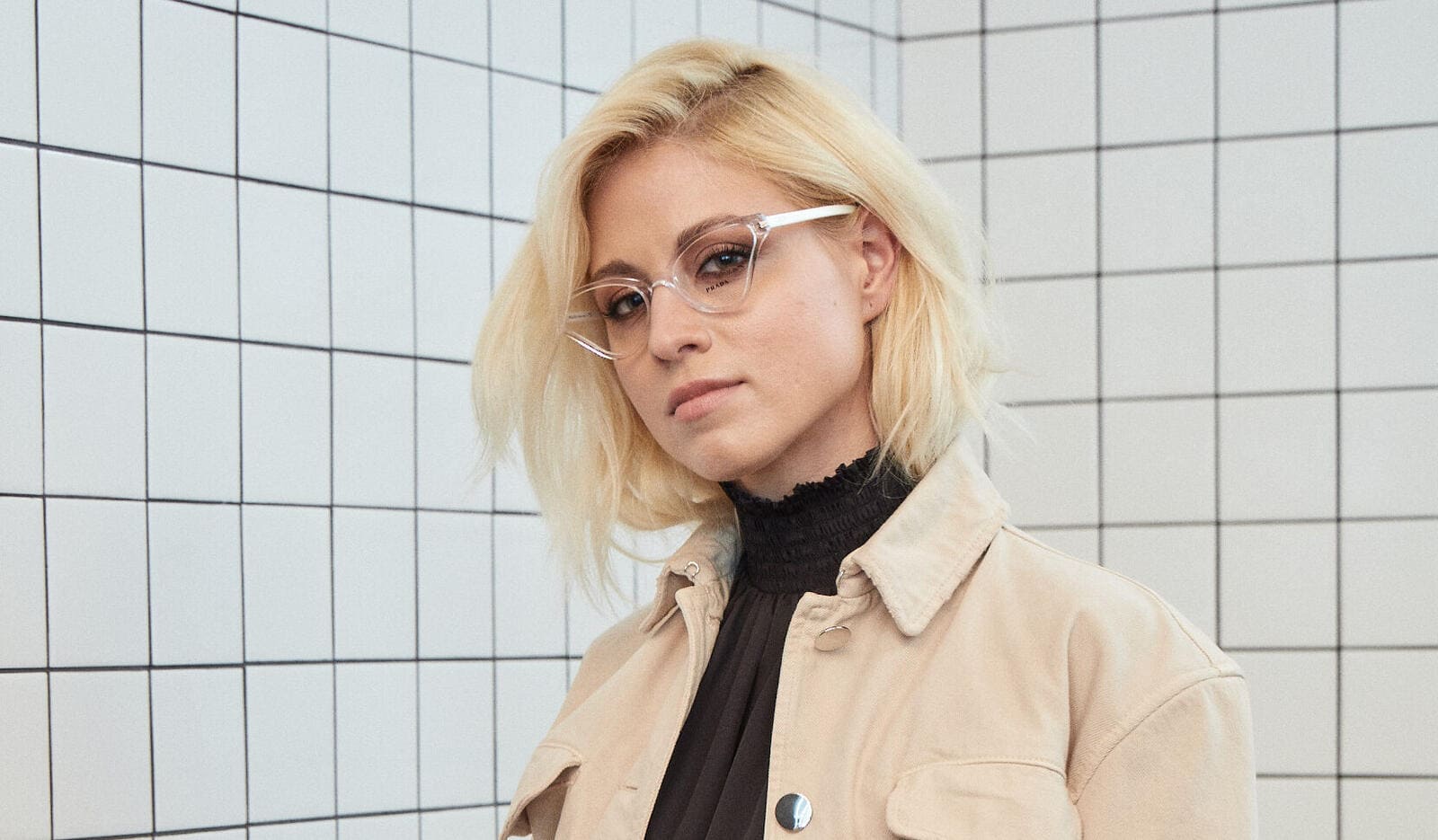
Tell us about yourself
My name is Anna Belova, I am the founder and CEO of OpenWay.AI, and before that, the founder of DEVAR, one of the pioneers in consumer augmented reality. For the last ten years, I have been building companies at the intersection of imagination and infrastructure — from publishing books on augmented reality that have sold over 15 million copies in 75 countries and 27 languages, to launching MyWebAR, a no-code AR content creation platform now used by over 250,000 creators, brands, and more than 200 universities in 180 countries.
Today, at OpenWay.AI, I am focused on an equally bold goal: building autonomous AI agents that manage the entire customer lifecycle and help companies grow almost like living, thinking colleagues.

How did you start the company?
For me, the story has always been the same: take something that others thought was impossible or impractical and prove that it is possible. Almost ten years ago, after starting a company that worked with augmented reality technology, we presented our product at a trade show in China. After seeing the reaction of children to our new product — coloring books with augmented reality, where the main characters came to life in the colors the child chose — I realized its potential for education and entertainment, primarily for children. Inspired by their reaction, my team and I began demonstrating augmented reality technology to children’s publishers.
But none of them understood the idea — they thought it was too complicated and risky. I had no experience in publishing, but I decided to create my own children’s publishing house from scratch. We created books and encyclopedias with augmented reality ourselves, brought them to market, and entered the international stage. Today, DEVAR’s AR books have sold over 15 million copies in 75 countries and 27 languages. That experience taught me one of the most important lessons in business: if there’s no ecosystem, sometimes you have to build it yourself.
More from Interviews
- A Conversation With Ayoola Samagbeyi, CTO Of 9jaPay, Co-Founder Of Canalis Labs And SportsTech22 2026 Judge
- A Chat With Suzanna Chaplin, Founder And CEO, esbconnect, On The Future Of Acquisition And How Email Is The New Identity Layer
- Meet James Taylor, Founder and CEO at Particular Audience, The Company Bringing Amazon-Style Hyper-Personalisation To Every Other Retailer
- Truly Intelligent Content – Meet HumanCulture
- Interview With Shiv Shankar, CEO Of Boundless On Being The Largest ZK Protocol
- In Conversation With Chris Pettit, CEO And Co-Founder At Revving On How Messy Industries Often Hide The Biggest Opportunities
- A Chat With Kelvin Tan, audax CEO, On How Fintech Is No Longer About Disruption, Its About Fixing Banks’ Structural Problems
- A Discussion With Ben Gulak, Owner And CEO of NALA | The Art Matchmaker
What have you learnt along the way?
The same frustration was at the heart of OpenWay.AI. Over the past few years, as AI tools have exploded in popularity, I’ve noticed founders and teams drowning in them — juggling dashboards, copying data from one app to another, and spending more time managing tools than thinking strategically. It felt like many of us had become AI tool secretaries rather than founders. That was the tipping point. We built Growth Hacker, an AI agent that learns your business, adapts to it, and actually drives growth, rather than just generating reports.
It’s interesting that I’ve built AR and AI companies with millions of users, and I’ve never written a line of code. For me, this isn’t a weakness, it’s a superpower. It forces me to look at products through the eyes of a non-geek, to obsess over simplicity, usability, and the human side of technology. Ten years ago, a designer’s primary tool was their hands. Today, it’s language. True craftsmanship is how well you can describe an idea so that AI can bring it to life. On MyWebAR, we see creators who’ve never coded or created 3D models generating entire AR scenes simply by typing. This is democratization in action, and I believe that in the near future, the most valuable creative skill will be storytelling through prompts — “painting with words.”
Of course, it hasn’t been an easy road. In 2015, most people didn’t think of augmented reality as something serious and sustainable. Some investors told us that it would never scale, publishers were afraid to add the technology to children’s books. But we didn’t stop. We built our own ecosystem, launched products, and showed that augmented reality was not only viable, but transformative. I think the same is happening with AI agents now. The challenge is no longer to prove they work, but to show how to integrate them so they can actually scale a business.
What advice would you give to aspiring entrepreneurs?
If I had to give entrepreneurs one piece of advice, it would be this: aim high from the start. When DEVAR was a tiny startup, I came to Hasbro with an idea for augmented reality books. There was nothing like it on the market at the time. But I believed in the concept. Hasbro listened, and together we launched a global collaboration that opened up an entirely new category — coloring and educational books with augmented reality. This story taught me that even the largest companies are open to innovation from the smallest startups, if they have a strong enough idea.
You don’t have to “warm the world.” You just have to put your product in good hands. Passion and conviction can open doors that a budget never will.
What does the future hold?
Looking to the future, I think we’re just getting started. Just as augmented reality once changed the way we interact with books and products, AI agents will change the way companies grow and operate. The future won’t just be about managing tools — it will be about working closely with intelligent systems that manage coordination and scaling while humans focus on imagination and purpose. At OpenWay.AI, we’re building just such an infrastructure.
That’s what excites me: combining human creativity with machine precision to create a world where technology enables rather than inhibits, where imagination and infrastructure finally move in sync.