


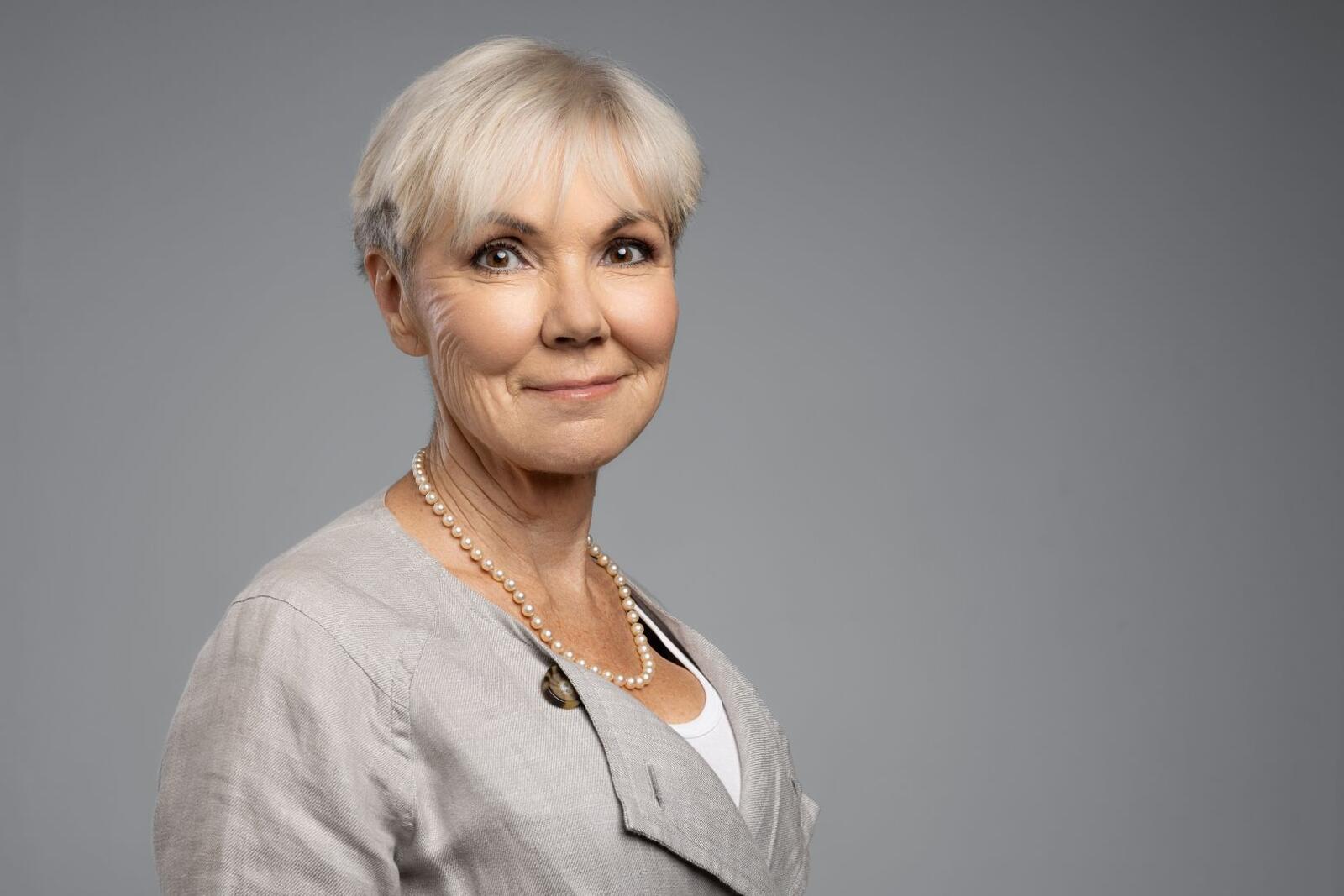
Janet Gourand spent much of her career in the corporate world as an international HR director.
On paper, she had a successful and fulfilling life, but behind the scenes, alcohol had gradually become far too important to her. Like so many professional women, she was a functioning drinker. She wasn’t drinking in the morning or losing her job, but wine had become her reward, her stress reliever and her way of switching off.
Eventually, she realised alcohol was taking much more from her life than it was giving her. She quit drinking in 2015 and describes the change as extraordinary: more energy, better sleep, greater confidence and a renewed sense of purpose. She also realised there were thousands of women like her who didn’t identify as alcoholics but knew, deep down, that their drinking was holding them back.
That’s why she founded Tribe Sober the same year, wanting to help others do what she had done. What began as a personal mission has grown into an international sobriety community, and now, at 75, Gourand has unexpectedly found herself becoming something of a tech entrepreneur.
Gourand shared with us how she built Sober Buddy, Tribe Sober’s AI chatbot, without any coding background and what it takes to build one people can trust.
What is Tribe Sober, and who is it for?
Tribe Sober is an international online community helping people change their relationship with alcohol. We work particularly with midlife women who are successful in many areas of their lives but find themselves increasingly dependent on that evening glass of wine.
Many of our members have spent years trying to moderate their drinking. They’ve made endless rules about when, what and how much they can drink, but somehow alcohol keeps taking up far too much space in their heads.
Our approach is positive, practical and completely non-judgemental. We offer coaching, online programmes, regular Zoom meetings, WhatsApp support groups and a welcoming community of people who understand exactly what you’re going through. We don’t focus on what people are giving up. We focus on everything they stand to gain.
Our message is simple: sobriety isn’t about deprivation. It’s about freedom.
What made you decide to build Sober Buddy, your AI chatbot for members?
After more than a decade of helping people quit drinking, I’d noticed something important. People don’t necessarily struggle when they’re attending a coaching session or talking to their sober friends. They struggle at 6 pm after a terrible day, when they’re alone in the kitchen and that bottle of wine starts calling.
They might be lying awake at 3 am feeling anxious about their drinking, or sitting at a social event wondering how to refuse another glass. Those are the moments when they need support, and they can’t always wait until their next coaching call.
I’d also accumulated an enormous library of resources over the last decade: podcast episodes, articles, training materials and answers to hundreds of questions about alcohol and sobriety. I began wondering whether AI could make that knowledge accessible whenever someone needed it.
That’s how Sober Buddy was born. I wanted to create something that could offer encouragement, practical strategies and a reassuring voice at any time of day or night. Not to replace human connection, but to provide an extra layer of support between those human conversations.
What was it like building Sober Buddy as a non-technical founder?
It was a mixture of excitement, frustration and sheer amazement!
I’m 75, and although I’ve always been interested in technology, I have absolutely no background in coding or software development. A few years ago, I would never have imagined that I could create an AI-powered product. But the emergence of no-code AI platforms has changed everything. I used a platform called Pickaxe, which enabled me to build and customise Sober Buddy without writing code.
There was certainly a learning curve. I had to understand how to structure the knowledge, refine the instructions, test the responses and work out how to make the product available to members. I made plenty of mistakes along the way, but I discovered that curiosity and persistence are far more important than age.
For me, that’s one of the most exciting aspects of AI. It gives people like me, with decades of experience in a particular field but limited technical expertise, the opportunity to turn that knowledge into something useful. I think that’s incredibly empowering.
How did you train it on your own content, and how do you keep it consistent with your approach?
Over the years, I’ve created a substantial library of sobriety resources through Tribe Sober. These include training materials, articles, coaching guidance, podcast content and practical exercises that we’ve developed through working with our community.
I used these resources to create Sober Buddy’s knowledge base and gave it detailed instructions about how to respond. The most important thing was making sure it reflected the Tribe Sober philosophy.
We don’t believe in shame, judgement or frightening people into sobriety. We believe in helping people understand how alcohol affects them, challenging their beliefs about drinking and showing them that an alcohol-free life can be enjoyable and fulfilling.
I wanted Sober Buddy to sound like a compassionate, knowledgeable coach rather than a clinical textbook. In fact, I wanted it to sound like me! I regularly test it with realistic questions and refine the instructions when something doesn’t feel quite right. I collect feedback from our users who are finding it incredibly helpful. As one of them said to me, “Sometimes I just don’t feel like talking to a human about the fact that I’ve had a slip-up.”
It’s important to recognise that this isn’t the same as training an AI model from scratch. We’re using existing AI technology and tailoring it with our own knowledge, experience and guidance.
What can members ask Sober Buddy, and what is it designed not to do?
Members can ask Sober Buddy almost anything related to changing their relationship with alcohol.
For example, they might ask:
“I’ve had a terrible day and really want a glass of wine. What can I do?”
“Why do I keep waking up at 3am after drinking?”
“How can I get through a dinner party without alcohol?”
“I’ve been sober for three weeks but I’m feeling miserable. Is that normal?”
“I’ve had a slip. Does that mean I’ve failed?”
Sober Buddy can offer practical suggestions, explain common experiences and help people work through difficult moments. It can also introduce ideas from our programmes and encourage people to connect with the Tribe Sober community.
But it’s important to be clear about its limitations. Sober Buddy isn’t a doctor, therapist or emergency service. It can’t diagnose medical conditions, prescribe medication or provide personalised medical treatment. It’s designed to support and educate, not to replace professional healthcare or human relationships.
What safeguards are in place if someone is in crisis or needs more than a chatbot can give?
This is something I take extremely seriously.
Alcohol dependence can involve significant physical and mental health risks, and an AI chatbot must never give someone a false sense of security. Sober Buddy is instructed to recognise when a question goes beyond everyday sobriety support.
For example, if someone describes symptoms of severe alcohol withdrawal, expresses thoughts of self-harm or appears to be in immediate danger, it encourages them to seek urgent professional or emergency assistance. We also make it clear that people who are physically dependent on alcohol may need medical supervision when stopping drinking.
The central principle is that AI should complement professional and community support, never replace it. We recognise that no automated safeguard is infallible, which is why clear boundaries and ongoing testing are so important.
How are you handling members’ data and privacy, given how sensitive the subject is?
Privacy is particularly important in the sobriety space. People may be sharing things about their drinking that they’ve never discussed with their family, friends or even their doctor.
We therefore want people to understand what Sober Buddy is, how the technology works and the limits of confidentiality before they use it. Sober Buddy operates through a third-party AI platform, so we’re transparent about the role of the technology provider and how information is processed.
We’re also conscious that AI conversations shouldn’t be presented as equivalent to confidential therapy sessions. Trust is absolutely fundamental to Tribe Sober, and we want to apply that same principle to our use of AI.
How do members use Sober Buddy between coaching calls, and what feedback have you had?
One of the biggest advantages is that people can use it at the precise moment they need help.
Someone might have a coaching session on Monday but face a difficult situation on Thursday evening. Instead of waiting days to talk it through, they can ask Sober Buddy for suggestions immediately. It can help them prepare for a social occasion, manage a craving, reflect on their progress or simply remember why they decided to stop drinking.
We’ve only recently launched Sober Buddy, so it’s still early days in terms of collecting meaningful feedback. But what excites me is the potential to extend the support we already offer, particularly during those vulnerable moments when people feel isolated or tempted to drink.
I’m particularly interested in encouraging our members to use it alongside our coaching and community support, rather than instead of them.
What has been the biggest challenge in building and running it, and how did you overcome it?
The biggest challenge has been understanding that creating an AI chatbot is relatively straightforward, but creating one that people can genuinely trust is much harder.
I quickly realised that the quality of the answers depends enormously on the instructions, the knowledge base and the testing. Sometimes Sober Buddy would give an answer that was technically correct but didn’t sound like Tribe Sober. Other times it would be too wordy or overly cautious.
I’ve spent a lot of time refining it, asking questions, checking responses and making adjustments. There have also been plenty of technical challenges around access, subscriptions and integrating the product into our existing systems. But I’ve approached it in much the same way I approached building Tribe Sober: learn as you go, ask for help when you need it and don’t be afraid to experiment.
I also think being a non-technical founder has an advantage. I’m constantly looking at the experience from the perspective of an ordinary user. If I find something confusing, there’s a good chance other people will too!
Your book, Tribe Sober: 90 Day Reset, is out on 10 November. What can readers expect from it, and how does it fit with Tribe Sober and Sober Buddy?
My book, Tribe Sober: 90 Day Reset, will be available to pre-order on Kindle on 20 October, and the paperback is released on 10 November.
It brings together everything I’ve learned from more than a decade of helping people change their relationship with alcohol. It’s a practical, compassionate guide for people who are sober curious, tired of trying to moderate or simply wondering whether life might be better without alcohol.
The book takes readers through a structured 90-day journey, helping them understand their drinking habits, challenge the beliefs that keep them stuck and build a life where alcohol no longer feels necessary. I use the metaphor of a helicopter journey: first rising above the problem to see the bigger picture, then gradually coming down to make practical changes in everyday life.
The book also includes real stories from the Tribe Sober community, reflection exercises and strategies readers can put into practice. I’m also delighted that bestselling author Clare Pooley has written the foreword.
I see the book, Tribe Sober and Sober Buddy as three complementary ways of supporting people.
The book provides the roadmap, the community provides human connection and Sober Buddy offers additional guidance when someone needs it.
Together, they can make the journey feel much less lonely.
What’s next for Tribe Sober and Sober Buddy?
My ambition is to make sobriety support more accessible to people wherever they live and whenever they need it.
Tribe Sober has always been an international community, and technology gives us the opportunity to reach people who might never attend a traditional support group or coaching programme.
We’re continuing to develop Sober Buddy, improve its responses and explore how it can work alongside our programmes and membership. I’m also looking forward to introducing more readers to Tribe Sober through my book and showing them that quitting alcohol doesn’t have to be a grim exercise in willpower.
But perhaps the most unexpected part of this journey has been discovering what’s possible with AI at my age. I sometimes think that if someone had told me at 65 that I’d spend my 75th year launching a book and building an AI product, I’d have thought they were mad!
I’d love my story to encourage other older entrepreneurs to experiment with technology rather than feel intimidated by it. You don’t have to be young, technical or a coding expert to innovate. Sometimes all you need is experience, curiosity and a problem you’re determined to solve.


