


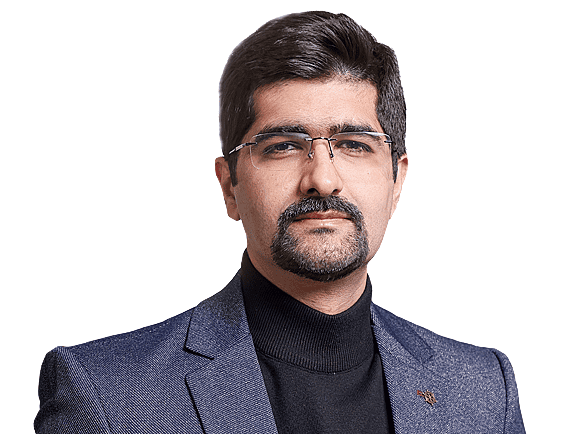
“Security doesn’t fail from lack of talent. It fails from lack of leverage. We’re giving security teams their humanity back.”
Tell us about Secure.com
Secure.com was built around a simple conviction: modern security has become operationally impossible. In the AI era, threats scale at machine speed, attacks adapt in real time, and environments expand continuously across cloud, SaaS, and APIs, while compliance expectations only intensify. Yet security teams are still expected to operate with fragmented tools, manual handoffs, and point-in-time controls that were never designed for adversaries that learn, automate, and move faster than humans.
Secure.com is an AI-native cybersecurity platform designed to address this execution gap. Rather than adding another layer of alerts or dashboards, we focus on running the full security lifecycle as a coordinated system – from discovery and asset intelligence, through classification, exposure and risk analysis, to case management, remediation, and continuous compliance. Everything operates on a shared automation and integration backbone that works with existing security and IT investments.
The platform is built around multiple role-specific Digital Security Teammates – AI-native agents designed as always-on digital co-workers built to augment security teams. Each Digital Security Teammate is aligned to real security functions such as threat operations, cloud and infrastructure security, identity governance, application security, and GRC. These teammates don’t just surface findings. They investigate, correlate context across tools, recommend next steps, and execute approved actions – while operating inside clearly defined policies, approval gates, and separation-of-duties.
Governance and trust are fundamental. Every recommendation is explainable. Every action is traceable and auditable. Automation accelerates execution, but accountability remains with humans – ensuring security can move at machine speed without becoming opaque or risky.
Secure.com is headquartered in Dubai and backed by Disrupt Labs, the venture studio behind Cloudways’ $350M acquisition by DigitalOcean, bringing deep operating experience in building and scaling cloud and enterprise platforms.
Today, we work with enterprises across FinTech, SaaS, and HealthTech – organizations facing real complexity, regulatory pressure, and lean teams. Secure.com helps them move from fragmented security operations to a structured, outcome-driven execution model that scales without adding enterprise headcount.

How did you come up with the idea for the company?
Secure.com wasn’t born in a brainstorm. It came out of running security at scale – and realizing it was breaking.
After two decades building and scaling companies across the Disrupt.com group – serving millions of users and tens of thousands of businesses through platforms like PureVPN, Cloudways, and PureSquare – I thought I understood security. We had the tools. We had experienced teams. What we didn’t have was leverage.
Running security across our portfolio, the problem wasn’t a lack of technology or expertise – it was the operational weight of doing security the way the industry expects it to be done. Dozens of tools, endless dashboards, manual handoffs, repeated runbooks. The same work, performed again and again.
And this wasn’t limited to one function. It showed up across asset intelligence, identity hygiene, exposure management, compliance evidence, and audit preparation. Security scope kept expanding across domains, while teams stayed flat – or shrank. We weren’t facing a tooling gap; we were facing a structural talent and execution gap.
Security doesn’t fail because teams lack skill. It fails because humans are being asked to operate at machine scale.
So we stopped asking how to build a better tool and started asking how to build leverage.
We pulled fifty engineers off revenue-generating products and gave them fourteen months with one mandate: build a unified security execution layer that was simple enough for lean teams, intelligent enough to scale across environments, and governed enough for real enterprises.
What emerged wasn’t another dashboard or alert factory. It was Digital Security Teammates.
Role-aligned teammates that work alongside humans – owning real security work across asset intelligence, risk, identity, threat operations, and compliance. They handle repetitive execution, connect context across systems, explain every action, and operate inside defined policies and approval gates.
The impact was immediate: detection time improved by ~70%, response time improved by ~50%, and security and compliance teams shifted from constant firefighting to sustained control.
That’s when we realized we hadn’t just built an internal system – we’d uncovered a new operating model.
The lesson was simple and hard-earned: security doesn’t fail from a lack of talent – it fails from a lack of leverage.
Secure.com exists to close the cybersecurity talent gap – now estimated at 4.8 million unfilled roles globally – not by replacing people, but by giving them teammates that scale with the problem and return time, clarity, and control to humans. This leverage is critical as AI-driven attacks rise in volume and speed, overwhelming human-only teams with alerts and fragmented work. Digital Security Teammates operate at machine speed – absorbing the noise, executing repetitive tasks, and surfacing clear, explainable decisions – so security professionals can focus on protecting what actually matters.
More from Interviews
- A Chat With Avion Gray (CEO) And Samantha Rosenberg (COO), Co-Founders Of Belong On Wealth Building
- Interview With Bert van der Zwan, CEO at Bizzdesign On Enterprise Transformation
- Supporting Sustainability: Didi Gan, Founder And CEO Of N&E Innovations, Zayed Sustainability Prize-Winning Organisation
- Inside The Mind Of Anti Fund Partner Steve Han On Backing The Next Wave Of Disruptive Founders
- A Conversation With Ayoola Samagbeyi, CTO Of 9jaPay, Co-Founder Of Canalis Labs And SportsTech22 2026 Judge
- A Chat With Suzanna Chaplin, Founder And CEO, esbconnect, On The Future Of Acquisition And How Email Is The New Identity Layer
- Meet James Taylor, Founder and CEO at Particular Audience, The Company Bringing Amazon-Style Hyper-Personalisation To Every Other Retailer
- Truly Intelligent Content – Meet HumanCulture
Tell us about your core product or service
Our core product is Digital Security Teammates (DSTs) – an AI-native execution layer designed as a coordinated set of role-aware teammates that operate across an organization’s existing security stack.
Secure.com was built to reflect how security actually operates – across both complex enterprises and lean mid-market teams. Security isn’t a single function; it spans asset intelligence, application security, identity, risk, compliance, and operational execution. Secure.com delivers role-specific Digital Security Teammates for large organizations, while providing broader, multi-disciplinary teammates that give smaller teams end-to-end coverage – without forcing everything into a single workflow or dashboard.
DSTs start with asset intelligence – continuously discovering and classifying assets across cloud, SaaS, applications, identities, and infrastructure, and establishing ownership, criticality, and regulatory context. On top of this foundation, Secure.com maintains a persistent knowledge graph that connects assets, identities, applications, vulnerabilities, misconfigurations, access paths, risk exposure, and compliance obligations.
Built on a shared security context, Secure.com’s Digital Security Teammates are modular by design – deployable by core security functions such as case management, vulnerability management, identity, and compliance, or aligned to organizational roles like SOC, AppSec, GRC, and risk teams. Enterprises can compose and customize these teammates to match their internal structures, define reporting lines, and control how work flows across teams, while mid-market organizations benefit from the same coordinated system delivering end-to-end security execution without fragmentation.
When change or risk is introduced – whether through a new release, configuration shift, identity change, or vulnerability – the relevant DST evaluates impact in context and presents a decision-ready view aligned to the human’s role. With approval, it executes remediation, updates systems of record, and maintains complete audit trails end-to-end.
DSTs are governed, explainable, and human-in-the-loop by design. Every action is policy-bound, traceable, and reversible.
Deployment is intentionally lightweight. Secure.com is agentless and integrates with 200+ existing tools, allowing organizations to activate multiple teammates quickly without disruption.
The result is enterprise-scale leverage – faster visibility, clearer ownership, earlier risk prioritization, continuous compliance evidence, and far less manual coordination – delivering measurable gains: 70% faster detection, 75% faster triage, 60% fewer false positives, and 528 analyst hours saved monthly across asset discovery, classification, and management, reclaiming thousands of hours annually at scale. DSTs don’t replace teams – they allow organizations to run security the way it actually operates in the enterprise: distributed, role-driven, and outcome-focused.
What most excites you about your industry?
What excites me most is that cybersecurity is finally being forced to confront its real constraint: leverage.
For years, the industry optimised for visibility – more tools, more alerts, more dashboards – assuming humans would somehow absorb the growing workload. That model has quietly collapsed. Security scope keeps expanding across assets, applications, identities, and compliance, while budgets, headcount, and human attention simply can’t scale at the same rate. At the same time, boards and customers now expect security to protect revenue, uptime, and deal velocity – not just “reduce risk.”
Meanwhile, attackers have already solved the scaling problem by using AI to automate discovery, exploitation, and lateral movement at machine speed. Defending against AI-powered attacks with human-only workflows was never sustainable.
What’s changed – and what genuinely excites me – is that the industry is moving from tools to execution capacity. AI is no longer just an analytics layer that explains what happened; it’s becoming an operational layer that can maintain context, coordinate work across domains, execute consistently, and produce outcomes that stand up to audits and regulators.
This also reframes the workforce conversation. The future isn’t about replacing security professionals – it’s about elevating them. Digital Security Teammates take on the repetitive, burnout-inducing work that consumes teams today, so humans can focus on judgment, prioritisation, and risk decisions that actually require experience and accountability.
After building and operating platforms that protected millions of users globally, one lesson is clear: security professionals aren’t failing. The operating model failed them. What excites me is that we finally have the technology – and the urgency – to fix that in a way that works both operationally and commercially.
What has been the biggest challenge you’ve had to overcome along the way?
The biggest challenge wasn’t simplified security theory – it was designing for real operating environments across both large enterprises and lean mid-market teams.
Very early, we realized the problem wasn’t a missing feature or agent – it was the absence of a shared execution foundation. Security breaks down because data, context, and action are fragmented across tools, teams, and timelines. In enterprises, responsibilities are distributed across SOC, AppSec, IAM, GRC, and operations. In the mid-market, those same responsibilities collapse onto a few people doing everything at once. In both cases, coordination fails long before detection ever does.
That forced a hard realization: we couldn’t just build “AI on top of tools.” We had to build the full stack underneath it. Secure.com evolved into a unified data and execution layer – streaming security signals from across the stack, normalizing context in real time, and connecting intelligence directly to workflows and actions. The AI layer only works because the data, integrations, and execution fabric beneath it are designed to operate as one system.
This is why we didn’t build a single “super agent.” We built Digital Security Teammates that share a common data, intelligence, and execution layer – able to operate as specialized teammates in enterprises, or as broad, multi-function teammates for lean teams – without fragmenting context or control. The hard problem wasn’t capability; it was making sure actions in one domain strengthened the whole system instead of creating new risk.
Trust became the real constraint. Automation only survives if it’s explainable, auditable, and policy-bound. Every teammate had to act within clear guardrails, with human oversight and full traceability from signal to decision to action.
Finally, adoption mattered. Enterprises don’t rip and replace, and mid-market teams can’t absorb disruption. Secure.com had to layer cleanly into existing stacks, stream data without friction, and deliver value immediately.
Solving for all of that is what shaped Secure.com – not as a point product or an AI feature, but as a coordinated, full-stack security execution and data streaming platform that scales across enterprise complexity and mid-market reality without losing trust, clarity, or control.
What is your number one piece of advice to aspiring entrepreneurs?
Build from problems you’ve personally lived through – not from trend reports or second-hand market analysis.
The most durable products come from solving pain you’ve experienced at scale. When you’re both the builder and the user – when you’ve felt the consequences of failure at 3 a.m. – you develop a clarity that no amount of research can replicate. You know what truly matters, what can wait, and what simply doesn’t belong.
That said, don’t confuse building for yourself with building only for yourself. We started by fixing our own operational problem, but we designed the solution to work for any organization facing the same underlying constraints. The discipline is in abstracting the problem correctly, not overfitting to your own context.
You also have to be willing to make uncomfortable bets. The obvious answers – buy another tool, hire more people, follow the category leader – are often symptoms of a broken model, not real solutions. Sometimes the right move is to build what doesn’t exist yet, even if it looks irrational at first.
And finally, be honest with yourself: if the problem you’re solving doesn’t genuinely keep people awake at night, it’s unlikely to sustain a meaningful company. The hardest problems are also the ones worth committing to.
What can we hope to see from Secure.com in the future?
Secure.com is focused on one outcome: making enterprise-grade security available without enterprise-scale teams. For large organizations, that means governed, role-aware Digital Security Teammates that operate across complex environments with full control and auditability. For the mid-market, it means democratizing those same outcomes – so smaller teams can run real security programs, not watered-down versions.
We are building toward autonomous security operations, but deliberately and responsibly. Autonomy in security isn’t a switch you flip; it’s something you earn. Today, Digital Security Teammates focus on maintaining context, reasoning across domains, and executing approved, policy-bound workflows with humans firmly in control. Autonomy is introduced only where it demonstrably reduces risk – not where it introduces new uncertainty.
That’s why our model isn’t a blanket “auto-response.” It’s governed execution. Actions are pre-approved, reversible, and context-aware – tied to asset criticality, blast radius, and organizational policy. High-impact systems will always require explicit human judgment, and every action remains auditable with clear kill-switches.
In parallel, we’re expanding the scope of where Digital Security Teammates can safely and meaningfully operate. That means pushing security reasoning earlier into how software is built, broadening execution beyond cloud-only environments, and ensuring attackers’ external exposure is continuously understood – not periodically assessed. Just as importantly, we’re embedding compliance into daily operations, so evidence is generated naturally through execution rather than assembled under audit pressure.
A critical focus is learning – not in the abstract sense, but grounded in real outcomes. Digital Security Teammates continuously learn from analyst decisions, approvals, and results, allowing them to reduce false positives and unnecessary work through context, not suppression. The goal is confidence and precision, not silence.
The vision behind all of this is simple: enterprise-grade security outcomes should not require enterprise-scale teams. Just as cloud computing removed the need to own infrastructure, Secure.com is removing the need to scale security linearly with people.
Ultimately, our goal is to close the gap between overwhelmed and empowered security teams – completely – and to do it in a way enterprises can trust, govern, and sustain.