

Tell us about yourself and Collaborator
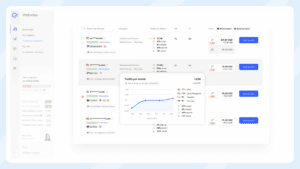
Hi everyone. I’m Mykhailo Shcherbachov, CMO and Co-Founder at Collaborator, a platform that helps brands distribute PR content and secure high-quality backlinks on authoritative sites all around the world. We streamline partnerships between advertisers and publishers, making digital PR more transparent and scalable.
How did your career lead you to launching this business?
I first started as an SEO specialist in 2007. I was 19 at the time and was just discovering the world of website promotion. In 2010, I joined one of the largest Ukrainian agencies at that time – an agency that worked, and still works today, with some of the biggest e-commerce players on the market. In 2011, I founded Livepage, the Digital Marketing agency, which by 2015 had started to actively work with English-speaking projects in Europe and the US.
I met Igor Rudnyk in 2012, and we immediately understood that we wanted to build a product together. At first, it was websites created primarily to generate revenue. We were able to promote them quite easily and attract lots of organic traffic, but what interested us more was building projects with a strong brand component.
We tested a few products in several niches, like construction and design, parenting and family, finance and investments, and healthcare. One of the most successful projects was a web portal about one of the esports disciplines, which was a topic I understood very well.
Eventually, we wanted to build not just an informational portal, but a marketplace. We spoke with many other founders of different marketplaces and decided to try building the best possible product in a niche we knew extremely well — link building.
That’s how Collaborator started. In 2017, we registered the collaborator.pro domain, and the first release took place in the summer of 2018.
Backlinks and digital PR have changed a lot in the AI era. What role does Collaborator play in helping brands stay visible today?
Search engines have definitely changed. It’s much harder now to get good results with shortcuts or AI functionalities, and you can only get so far with basic quality content. But links from authoritative websites still matter a lot, especially when those sites have an actual audience and share real editorial content.
What we are trying to do with Collaborator here is pretty straightforward. We help brands avoid weak placements and instead provide direct access to websites that can really help move rankings and brand visibility. Instead of chasing volume, people can focus on placements that are alive, have a reputation, and make sense context-wise. That’s usually where links still work.
So our role is mostly about helping teams make fewer bad decisions and put their efforts into mentions that search engines are more likely to trust.
Your platform has grown significantly since 2022. What’s driving that rapid expansion?
We were growing every year even before 2022. But as we are a company with Ukrainian roots, we made the clear decision to stop working with the Russian market and shift the focus to the US and European markets instead.
It was a very pleasant surprise how warmly the international community accepted our marketplace. Most of the core interface decisions were made directly by Igor and me, which is why Collaborator feels intuitive to SEO specialists, regardless of the language or market they work in.
In 2025, we also started attending international conferences more actively. We’ve been to various major SEO events in different parts of the world, from the US to Vietnam, and since then we’ve continued taking part in the international community and working with agencies all over the world.
Can you explain how features like the AI Overviews metric or Automatic Competitor Analysis help marketers make smarter decisions?
A lot of people still build links with no concrete strategy behind them. Some people follow checklists or repeat what worked years ago, but we wanted to give users a bit more context before they spend their link building budgets.
The AI Overviews metric is one example. It simply shows whether a website is being cited in Google’s AI answers. If a site shows up there regularly, it usually means Google already trusts that its answers are authoritative in that niche. For many teams, that can be useful information for when they’re deciding where to place articles, if one of the goals is to get cited as well.
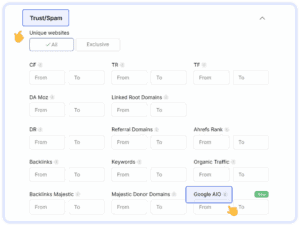
Competitor analysis works in a similar way. Instead of manually checking competitors and exporting data from different tools, you can see where competing sites are already getting links and which placements are actually happening. It’s all based on public data, nothing secret, but having it in one place saves time and helps you notice things you might otherwise miss.
Overall, these features don’t replace thinking – they just reduce guessing.
Some users are beginners, while others are advanced SEO teams. How does Collaborator manage to serve both ends of that spectrum?
Different people get to know Collaborator at very different stages. Some have never placed a guest post before, and others manage link building for agencies or big in-house teams.
We try not to overwhelm the beginners: you log in, filter websites, choose a publisher, and place an article – that’s basically it. The interface is simple, most actions take a couple of clicks, and you don’t need to understand SEO in depth to get started. You can order copywriting, add deletion insurance, and manage everything in one place.
More experienced teams usually go further, like using advanced filters, competitor data, traffic indicators, and automation. The Master Account is especially useful for agencies, as it lets them manage multiple clients, budgets, and team members with transparency.
We didn’t want to build something that only works for one type of user, so you can start simple. If your workflow becomes more complex with time, the marketplace has room for that.
Looking ahead, what improvements or trends in digital PR and search visibility should brands prepare for in 2026?
I don’t think anything radically new is coming in terms of SEO tricks. I think it is going to keep getting harder to get results from things that don’t make sense, like random placements, weak sites, AI-generated content published just to place a link. I think all of that will stop working faster than it used to.
Links will still work, but there is much more pressure to choose the right places for them. Things like who owns the site, what they usually publish, whether people actually read it, they matter more. If a publisher looks artificial or disconnected from the topic, it’s a risky placement.
From our side, we’re trying to make it easier for SEO professionals to see this before they spend their budgets, to ultimately help people make fewer mistakes. I strongly believe that brands that start paying attention to reputation and consistency earlier usually feel much more stable later on than those who keep chasing short-term dopamine.
Anything you’d like to add?
We built Collaborator to reduce manual work and unnecessary mistakes. Whether you are placing your first link or managing a lot of placements every month, the goal is to make the process simpler and more predictable.
A lot of the platform came from user feedback, and that’s still how it evolves.