


After years of research at world-leading universities (including Cambridge, Stanford, and Imperial College) and collaboration projects with some of the world’s most advanced engineering companies (including NASA, Rolls-Royce and Airbus) Monolith was born.
Our AI platform utilises the latest in machine learning, to help design and engineering teams significantly improve the product development process.

How did you come up with the idea for the company?
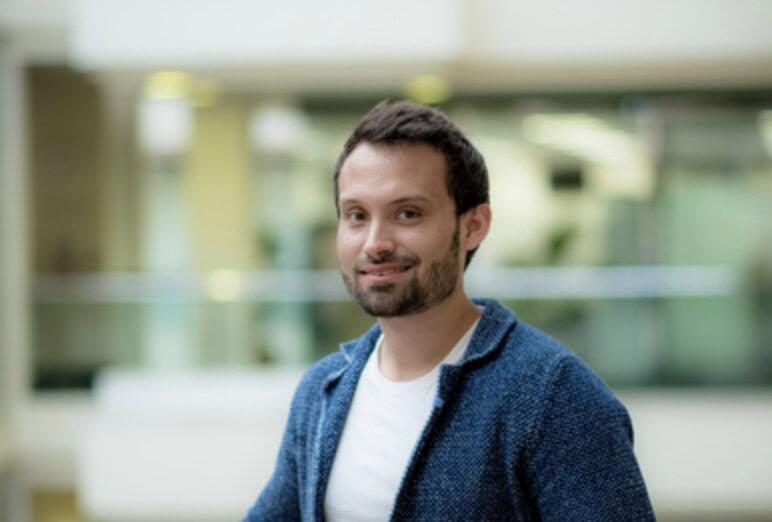
Monolith AI was founded from my PhD at Imperial College London and my research work on surrogate models of space launches for NASA’s Space Launch System (which will carry humans to Mars in the mid-2030s).
I have always wanted to build world-transforming tech with the vision behind Monolith being JARVIS from Iron Man, the ultimate assistant for engineers – imagine how quickly we could develop new products with that kind of help!
More from Interviews
- Interview With Joe Gillam, Co-Founder Of Soul Spaces
- A Chat With Alexander Kihm, Founder And CEO Of POMA AI
- A Chat With Jason Day, Head Of EMEA At Luma: How Agentic AI Is Rewriting The Rules Of Creative Production
- A Chat With Yahya Hmida, XWorld: Building An Enterprise AI Company With No Outside Funding
- A Chat With Antonio Barradas, Epassi And Zest: Why Choice Alone Isn’t Enough For Employee Benefits
- A Chat With Laura Harrison, Education Lifeguards: Rethinking Teacher Wellbeing This World Mental Health Day
- A Chat With Luca Steinmetz, FARAWAYHOME: How AI Search Is Rewriting The Rental Listing
- A Chat With Lucid Software’s Jamie Lyon: Why Shared Context Is Becoming AI’s Real Competitive Edge
How has the company evolved during the pandemic?
The pandemic lockdown accelerated the steady growth of virtual and cloud engineering. Some of Monolith’s users are engineers at Kistler.
Testing new design performance in-person generally requires multiple people in a shared space. Therefore, throughout the global pandemic, these kinds of tests have either been impossible (depending on the extent of local restrictions) or meant risking your health. With Monolith, however, the engineers at Kistler can use data from previous tests they conducted and accurately predict what would happen this time.
We’ve also introduced a new teams feature – just like with Zoom or Miro – allowing different engineering teams to share data and dashboards and work together more collaboratively.
What can we hope to see from Monolith in the future?
Similar to how Google Deepmind delivered a breakthrough in protein folding, we want to deliver breakthroughs in engineering and sustainability. We’ve already started working with packaging manufacturers and retailers to create more sustainable products without compromising the customer experience. We are also currently focussing on larger projects, such as helping to develop hydrogen-powered aircrafts.


