


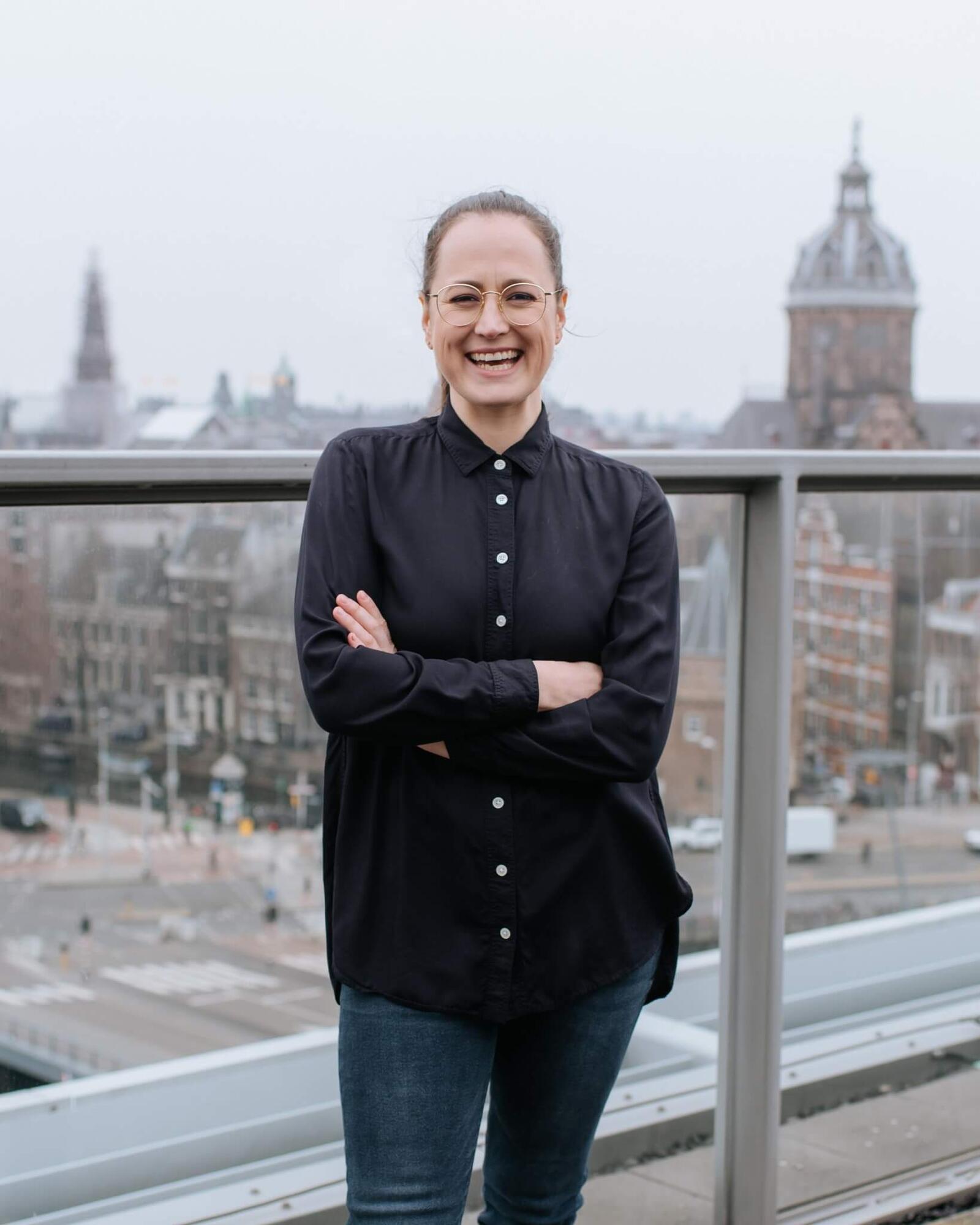
Serial entrepreneur Kirsty Sharman is the Founder of Referral Factory. She boasts an impressive career with over a decade of experience in technology and marketing, having consistently identified the latest consumer trends and built companies to address these needs. Prior to her current venture, she Co-Founded and built what is now Africa’s largest influencer marketing platform, Webfluential.
In 2015 she was nominated by M&G as one of the top 200 young South Africans to watch. She also Co-Founded Johannesburg’s first edition of Girl Geek Dinners, an NGO focussed on empowering women in IT. Since moving to The Netherlands, she has cemented a commitment to diversity, with Referral Factory being recognised by Techleap as one of the most gender-diverse startups in the Netherlands in 2019.
Kirsty’s expertise as a trend spotter in the marketing and technology spaces has seen her featured by Adweek, the BBC, The Drum, The Next Web, Social Media Today and more.
What Inspired You To Establish Referral Factory?
I was working as an outsourced CMO for a few startups, and in every case I found myself doing the same thing. I was manually building referral pages, tracking referrals in spreadsheets, and sending rewards one by one. It was a complete admin nightmare.
At the same time, this channel was performing incredibly well. We were generating hundreds, sometimes thousands, of referrals every month. That contrast really stood out to me. On one hand, it was one of the most effective marketing channels. On the other hand, it was painful to run.
It made me realise something quite obvious: most businesses weren’t running referral programs, not because they didn’t work, but because they were too much effort.
So the idea behind Referral Factory was simple. If we could remove the complexity and automate the entire process, then any business could run a referral program and benefit from it. That’s exactly what we did. Today we’re close to $2M ARR, which still feels surreal. We didn’t invent referrals, we just made them easy and accessible for everyone.
What Did You Spot In The Market That Spurred You On To Build It?
There really wasn’t an accessible way for businesses to get started with referral marketing. Typically, you had to hire a consultant to design the strategy, build the system, and manage it. That could cost thousands, which made it out of reach for most companies.
We wanted to change that by building a platform where anyone could launch a referral program without needing external help.
With Referral Factory, everything is handled out of the box. You can ask for referrals, track them and reward them automatically. The goal was to remove the heavy lifting so more businesses would actually try it.
I was also noticing a bigger shift happening. People were clicking less on ads and trusting them less. That pushed me to look for alternative channels, which is when I came across case studies like Dropbox and PayPal.
Dropbox grew by over 3900% in 15 months largely through referrals, and PayPal famously paid users to refer friends, helping them achieve massive early growth. That was a big signal that this wasn’t just a niche tactic, it was a foundational growth channel.
How Have Consumer Trends Changed In The Last 5 Years?
I wouldn’t say trends have just changed, I think they’ve flipped completely. With AI, it’s now easier than ever to make something look polished and convincing. You can build a beautiful website or brand in a day. But that’s actually reduced trust, not increased it.
People trust ads less. They trust websites less. They’re more skeptical of influencers. But one thing hasn’t changed. People still trust other people.
If a friend recommends a product or service, that carries more weight than any ad ever could. That’s why referral marketing is becoming even more important. It’s built on real trust, which is something technology hasn’t been able to replicate.
More from Interviews
- A Chat With Lucid Software’s Jamie Lyon: Why Shared Context Is Becoming AI’s Real Competitive Edge
- A Chat With Tomas Milar: What Startups Should Look For In A Cap Table Management Platform
- A Chat With Danny Sullivan, CEO Of Nomada Digital And PR54 Judge
- Dear Mr. Prime Minister: Mike Bray, VP, Technical Solutions At RS Group
- A Chat With Sisi Ncube, Founder Of FibreTempo, On Building Health Habits That Actually Stick
- A Conversation With Paul Dawalibi, CEO Of Innovation City
- A Chat With Anthony Clements, Head Of Brand Partnerships At Impact On How AI Is Reshaping Affiliate Marketing, Brand Discovery And The Customer Journey
- A Chat With Lisa Miles-Heal, CEO Of Corlytics, On What It Actually Takes To Build A Business Buyers Want
What Sets The Good Platforms Apart From Those That Fail?
Automation is essential, because referral programs are operationally heavy if you’re managing them manually. But beyond that, the best platforms make it easy to actually promote your referral programme, not just build it.
You need multiple ways to ask for referrals. Your business requires multiple touchpoints because more touchpoints lead to increased referral success. The main obstacle for enterprise businesses arises when their referral platforms need access to customer data.
That’s why we introduced an on-premise solution at Referral Factory. It allows companies to run referral programmes without sharing sensitive customer data with us, which removes a major blocker for adoption.
We Are Seeing More Women Coming Into STEM. Why Do You Think That Is?
Part of it is simple, women have always been capable, but access and opportunity haven’t always been there. If you look back just a few decades, women didn’t have the same rights, education, or career opportunities in many parts of the world. It takes time for that to change at scale.
The current situation shows positive developments because there is strong backing and funding support for our efforts. The three sectors of government institutions and companies work together to create STEM opportunities for women through their grant and sponsorship and program initiatives.
I experienced that personally growing up in South Africa. Through sponsorship programs that support young women I received opportunities to visit companies such as Amazon Microsoft and Boeing. The experience provides vital benefits because it offers direct access to important industry knowledge.
When you combine access, support, and visible role models, you start to see real change. And I think we’re just getting started.
What’s the Best Thing About Technology In Marketing?
The biggest shift is just how much more you can do as a marketer today. You can create videos, design assets, build landing pages, and analyze data without needing a full team of designers and developers. That’s incredibly powerful.
I’ve always leaned more technical as a marketer, and that’s given me an advantage. Being comfortable with data and tools lets you move faster and experiment more.
Now with AI, that advantage is even bigger. Marketers who understand technology are essentially gaining superpowers.
What’s Been The Biggest Learning Since Founding Referral Factory?
One of the biggest lessons is that SaaS takes time.
The online story about companies achieving massive revenue growth within a single day does not reflect how most businesses actually operate. Businesses experience their growth process which takes multiple years to develop through consistent progress that occurs at a slow pace.
I developed a strong tendency to doubt everything which people describe with great excitement about technological advancements and artificial intelligence.
You will observe products which make claims about their ability to revolutionize entire job functions but when you test them they turn out to be fundamental software programs which companies market effectively.
The constant exposure to that message creates a feeling of falling behind. The main part of the information turns out to be irrelevant.
The primary objective should always concentrate on your customer needs and your personal professional development. Your skills will create a competitive advantage for you which will endure through all industry developments.
What Do The Next Few Years Have In Store For You?
Right now, I’m focused on continuing to grow Referral Factory. I genuinely enjoy what I’m doing and I’m lucky to have a great team, so there’s no rush to change anything. It’s a great position to be in.
Long term, I do plan to sell the business, but we’re not rushing toward that. For now, the priority is building a great product and helping our customers generate more referrals. Everything else will follow from that.


