


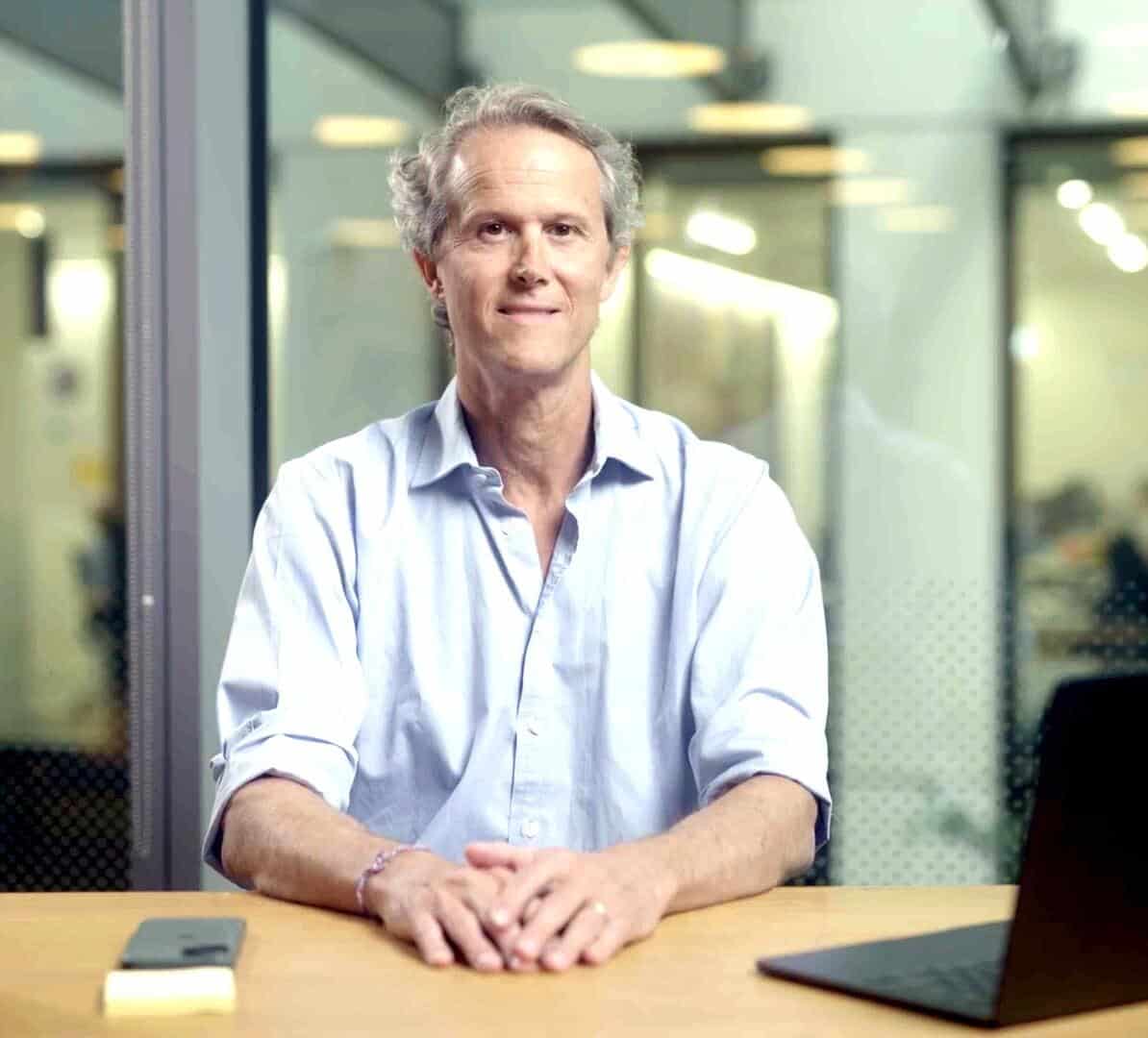
Tell us about Beacon
Beacon is an AI Supply Chain Workspace empowering businesses to achieve more efficient, reliable, and sustainable supply chains. We help importers, exporters, freight forwarders and retailers move beyond disconnected spreadsheets and reactive processes by combining automation, AI, and live collaboration into one workspace. Essentially, we’re taking supply chains from manual tracking and fragmented data to fully automated, intelligent workflows.

How did you come up with the idea for the company?
During my time as Head of Business for Uber’s operations across EMEA, I became fascinated by how technology could orchestrate complex, real-world networks at scale. I saw first-hand how inefficient supply chains were. Even the most sophisticated companies relied on disconnected systems, spreadsheets, email chains and manual updates. Operators were spending countless hours chasing updates, reconciling information across multiple systems, essentially firefighting rather than planning.
Every person I spoke to recognised that their processes could be better, yet there was no single place to unify the data or automate repetitive work. That was the starting point for Beacon. If we could centralise and structure supply chain data, we could unlock efficiency, reduce errors, and lay the groundwork for full automation. What struck me most was how universal this problem was. It wasn’t just isolated to one region or sector – it was systemic across logistics worldwide.
Tell us about your core product or service: Beacon Workspace
Beacon is an AI Supply Chain Workspace designed to take supply chains beyond visibility and into automation. It connects every stakeholder in one shared interface, while container milestones, POs, ETAs, invoices and documents flow in automatically.
Beacon uses AI to surface insights and highlight potential risks early, paving the way for next-best action automation that will help teams resolve issues before they escalate. Live Boards and Maps bring operators, managers and partners together, replacing endless email chains and static spreadsheets.
Beacon turns fragmented supply chain data into actionable reports, reduces manual processes and human error, allowing teams to make faster, smarter, and more reliable decisions.
More from Interviews
- A Chat With Avion Gray (CEO) And Samantha Rosenberg (COO), Co-Founders Of Belong On Wealth Building
- Interview With Bert van der Zwan, CEO at Bizzdesign On Enterprise Transformation
- Supporting Sustainability: Didi Gan, Founder And CEO Of N&E Innovations, Zayed Sustainability Prize-Winning Organisation
- Inside The Mind Of Anti Fund Partner Steve Han On Backing The Next Wave Of Disruptive Founders
- A Conversation With Ayoola Samagbeyi, CTO Of 9jaPay, Co-Founder Of Canalis Labs And SportsTech22 2026 Judge
- A Chat With Suzanna Chaplin, Founder And CEO, esbconnect, On The Future Of Acquisition And How Email Is The New Identity Layer
- Meet James Taylor, Founder and CEO at Particular Audience, The Company Bringing Amazon-Style Hyper-Personalisation To Every Other Retailer
- Truly Intelligent Content – Meet HumanCulture
What most excites you about the supply chain industry?
Supply chains touch everything we use and consume. They are the unseen networks that underpin our daily lives, yet the technology available to manage them hasn’t kept pace with their complexity. What excites me is the opportunity to improve that. For decades, supply chain professionals have relied on manual spreadsheets and fragmented systems. Now, with AI and automation, we can create supply chains that anticipate problems, adapt in real time, and turn data into intelligence that drives better outcomes.
What has been the biggest challenge you’ve had to overcome along the way?
The biggest challenge was discovering that customers often don’t realise what their core problem is. They might ask for better tracking tools or more visual dashboards, but those are just symptoms. The real issue is a lack of a centralised source of truth that can reduce collaboration and communication chaos.
Across industries, we saw supply chain teams drowning in spreadsheets, juggling multiple portals, managing documents manually, and dealing with constant email overload. Leaders face limited visibility into supplier and carrier performance, difficulty optimising inventory, and pressures around costs like detention and demurrage. The complexity is compounded by the fact that people describe symptoms rather than the underlying problems, and different levels of an organisation experience the same root problem in very different ways.
What is your number one piece of advice to aspiring entrepreneurs?
The key is persistence and adaptability, combined with a relentless focus on understanding your customers and their problems. Most overnight successes take many years, and the final product rarely looks exactly as you first envisioned. Start from the bottom up. Don’t define what your product should be, start by mapping the problems your customers face across different roles, and let the solution emerge organically.
Stay close to your customers, uncover the root issues rather than just the symptoms, and remain flexible in your approach – but be stubborn about solving the core problem you’ve identified. The most transformative solutions often address challenges customers didn’t even realise they had, creating moments where users think, “I can’t believe I ever worked the old way”. By combining patience, determination, and deep customer insight, you can navigate complex problems, iterate successfully, and build something that genuinely makes a difference.
What can we hope to see from Beacon in the future?
Our vision is a supply chain that can think for itself and you can ask it complex questions. Imagine spreadsheets that update themselves, workflows that anticipate delays, and AI-driven insights that guide decisions automatically.
We want to redefine what’s possible in the supply chain – the goal is to give supply chain teams the tools to act with confidence, make decisions proactively, and operate in a world where disruption is inevitable.