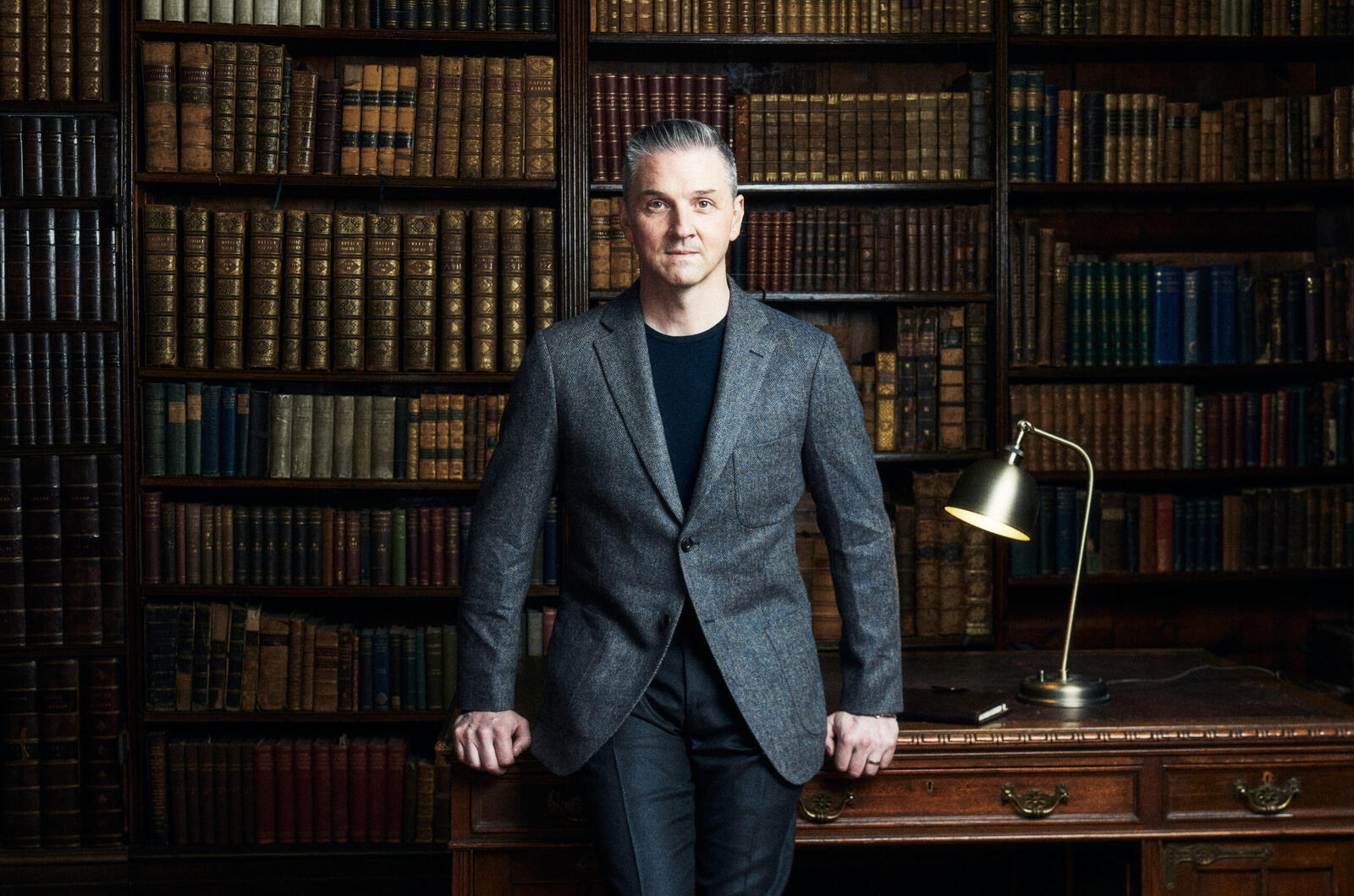
TechRound is delighted to introduce returning judge, Dr. Stuart Grant, as the official Head Judge of the HealthTech44 in 2026.
Dr. Grant is the Founder of Archetype MedTech, as well as a Chartered Engineer, product development leader, named inventor and industry mentor with more than 25 years of experience helping founders and healthcare innovators bring medical technologies to market.
Stuart, you are joining TechRound’s MedTech competition as Head Judge this year. What will you be looking for in the entries?
Innovation matters, of course. Every strong MedTech company starts with a meaningful innovation – a better way to diagnose, treat, monitor, support, or deliver care.
But innovation is only the starting point.
What I’ll be looking for is the quality of the product development behind the innovation. The strongest teams do not just explain what they have built. They show that they understand why they have made the decisions they have, and what those decisions mean further down the development journey.
For me, confidence comes from seeing that a team understands the implications of its product development decisions – a not only for the next milestone, but also for the regulatory pathway, manufacturing strategy, commercial viability, and the route to market still ahead.
More from Interviews
- A Chat With Yahya Hmida, XWorld: Building An Enterprise AI Company With No Outside Funding
- A Chat With Antonio Barradas, Epassi And Zest: Why Choice Alone Isn’t Enough For Employee Benefits
- A Chat With Laura Harrison, Education Lifeguards: Rethinking Teacher Wellbeing This World Mental Health Day
- A Chat With Luca Steinmetz, FARAWAYHOME: How AI Search Is Rewriting The Rental Listing
- A Chat With Lucid Software’s Jamie Lyon: Why Shared Context Is Becoming AI’s Real Competitive Edge
- A Chat With Tomas Milar: What Startups Should Look For In A Cap Table Management Platform
- A Chat With Danny Sullivan, CEO Of Nomada Digital And PR54 Judge
- Dear Mr. Prime Minister: Mike Bray, VP, Technical Solutions At RS Group
You have said before that innovation creates possibility, but product development determines whether that possibility reaches the market. What do you mean by that?
A good idea can create momentum. It can attract interest, funding, and early support. But in MedTech, that is not enough.
Medical technologies have to survive a long and demanding journey before they reach the market. They need to be developed into viable products, supported by evidence, manufactured reliably, approved through the right regulatory pathway, and adopted by the people and systems they are intended to serve.
That journey is shaped by product development decisions. Some are obvious. Others feel routine at the time. But each decision either increases or decreases the likelihood that the product successfully reaches the market.
That is why product development leadership matters. It is not just about managing a process. It is about understanding the implications of decisions before they become expensive, difficult or impossible to unwind.
What gives you confidence that an early-stage MedTech company has the potential to succeed?
I look for evidence that the team has connected the product to the path ahead.
That can show up in how clearly they define the problem, how well they understand the clinical and commercial context, how they think about evidence, and whether the development strategy supports the market they want to enter.
It is not about having every answer. Early-stage teams rarely do, and they should not pretend otherwise. What matters is whether they understand the right questions.
A strong team can explain what they have built, but also why they have built it that way. They can articulate the assumptions they are carrying, the decisions that are likely to matter later, and the trade-offs they have already made.
That tells me much more than a polished description of the technology alone.
You work with founders, investors and MedTech companies, and you’re now judging one of the UK’s leading MedTech competitions. When you review an early-stage MedTech company, what tells you that the team has thought beyond the technology itself?
I listen for whether the story holds together beyond the first milestone.
Many founders can explain the product and the problem. The stronger teams can also explain the chain of implications that follows from their product development choices.
For example, how does the intended use affect the evidence required? How does the architecture influence manufacturability or cost? How does the evidence strategy support not just approval, but adoption? How will early design decisions affect scale?
Those are the kinds of connections that matter. They show that the team is not simply moving from one stage to the next but is beginning to understand the product as a system of coupled decisions.
That is important because MedTech products often do not fail due to a single dramatic mistake. They struggle because earlier decisions, made under pressure and often for good reasons, create constraints that only become visible later.
You recently delivered a Masterclass at AusMedTech in Perth on “hidden decision moments” in export-first MedTech. How does that idea connect to this competition?
The AusMedTech Masterclass was focused on export-first environments, particularly markets such as Australia, New Zealand, Singapore and the UK, where companies often need to think internationally from the outset.
But the underlying principle applies much more widely.
Hidden decision moments are points in product development where a decision appears contained when made, but later shapes regulatory, manufacturing, or commercial outcomes in ways that are not obvious at the time.
For early-stage MedTech founders, those moments are everywhere: problem definition, architecture, evidence planning, verification and manufacturing transfer. None of these decisions is inherently wrong. The issue is whether the team understands what each decision may mean later.
For entrants to this competition, that is highly relevant. The strongest companies will not necessarily be those with the most polished story. They will be the ones that show they understand how today’s product development decisions shape tomorrow’s route to market.
Finally, what advice would you give to founders entering this year’s MedTech competition?
Do not rely on the innovation alone to carry the application.
Explain the problem clearly. Show why your product matters. But also show that you understand the journey ahead.
What assumptions have you already made? Which decisions will be difficult to revisit later? How does your evidence strategy support the market you want to enter? How have you thought about manufacturing, adoption and commercial viability?
You do not need to have everything solved. Nobody does at the early stage. But you do need to show that you understand the implications of the decisions you are making.
A product that never reaches market never reaches patients. That is why product development matters. It is the discipline that turns promising innovation into something that can genuinely be used.