


MeeToo is a free, multi-award winning mental help app that makes it easy for young people to talk about difficult things. MeeToo looks and feels like social media, but the app is actually a cleverly-designed early intervention that provides mental help to 45,000 young people in the UK. MeeToo is a uniquely scalable solution to the current crisis in youth mental health because 85% of all interactions are peer-to-peer.
Anonymity means young people can be completely honest, but the app is fully pre-moderated, by humans, so there is no bullying or humiliation. High-risk users are supported behind the scenes by a team of in-house counsellors.
The app has an integrated directory where users can call helplines, contact support groups, download rated apps or access videos, Ted Talks or useful resources.
How did you come up with the idea for the company?
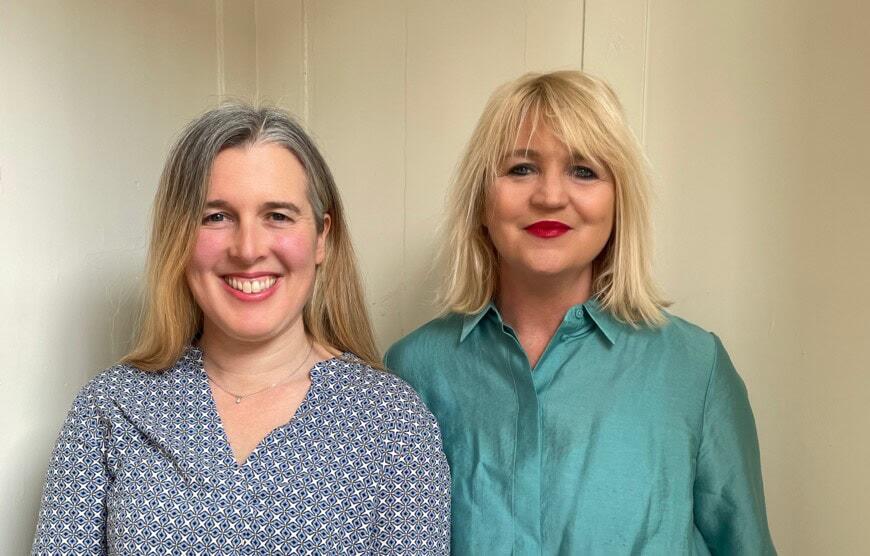
As a psychologist I have always been interested in the unique power of peer support to normalise issues that feel insurmountable at an individual level. In 2016, I met education technologist Kerstyn Comely at a kids’ trampolining class and told her about my idea for a peer support app and she agreed to help me build it.
Although my original emphasis had been on making it easy for young people to ask difficult questions around sex and relationships, when we piloted our MVP in three secondary schools we immediately realised that young people needed support across a much broader spectrum of issues. Five years later, our multi-award winning MeeToo mental help app is supporting 45,000 young people and is part of the NHS apps library.
More from Interviews
- A Chat With Lucy Kemp, Chief Marketing Officer At La Fosse
- A Chat With Janet Gourand, Founder Of Tribe Sober: Building An AI Sobriety Coach At 75
- Interview With Joe Gillam, Co-Founder Of Soul Spaces
- A Chat With Alexander Kihm, Founder And CEO Of POMA AI
- A Chat With Jason Day, Head Of EMEA At Luma: How Agentic AI Is Rewriting The Rules Of Creative Production
- A Chat With Yahya Hmida, XWorld: Building An Enterprise AI Company With No Outside Funding
- A Chat With Antonio Barradas, Epassi And Zest: Why Choice Alone Isn’t Enough For Employee Benefits
- A Chat With Laura Harrison, Education Lifeguards: Rethinking Teacher Wellbeing This World Mental Health Day
How has the company evolved during the pandemic?
Prior to COVID, youth mental health services in the UK were already overstretched and underfunded. During COVID-19 the need for support increased exponentially yet there has been even less support available. Because MeeToo is digital and our moderators work remotely, we are one of the few services who have been able to operate normally.
The impact of COVID was immediately visible within the MeeToo app. Between Monday 16th and Friday 20th March, posting rates on the app increased by 50% and through the course of the last year, user numbers have grown by 250%.
Although MeeToo is designed to be an early intervention, we are now dealing with an increasing number of high-risk users. Since COVID, self-harm and expressions of suicidal ideation have been most prevalent in children aged 11-13.
What can we hope to see from MeeToo in the future?
MeeToo data insights are informing several important research projects into youth mental health which will deliver results in 2021.
The integration of machine learning will speed up the moderation process and enable us to support up to 100,000 young people with the same human moderator to user ratio. This will proportionately reduce how much it costs to support an individual user.
In November we extended our MeeToo service to Ireland and in the next 12 months we will expand into other English speaking countries. Expansion into Australia would enable us to provide a 24-hour service as they could run our night shift and vice versa.


