


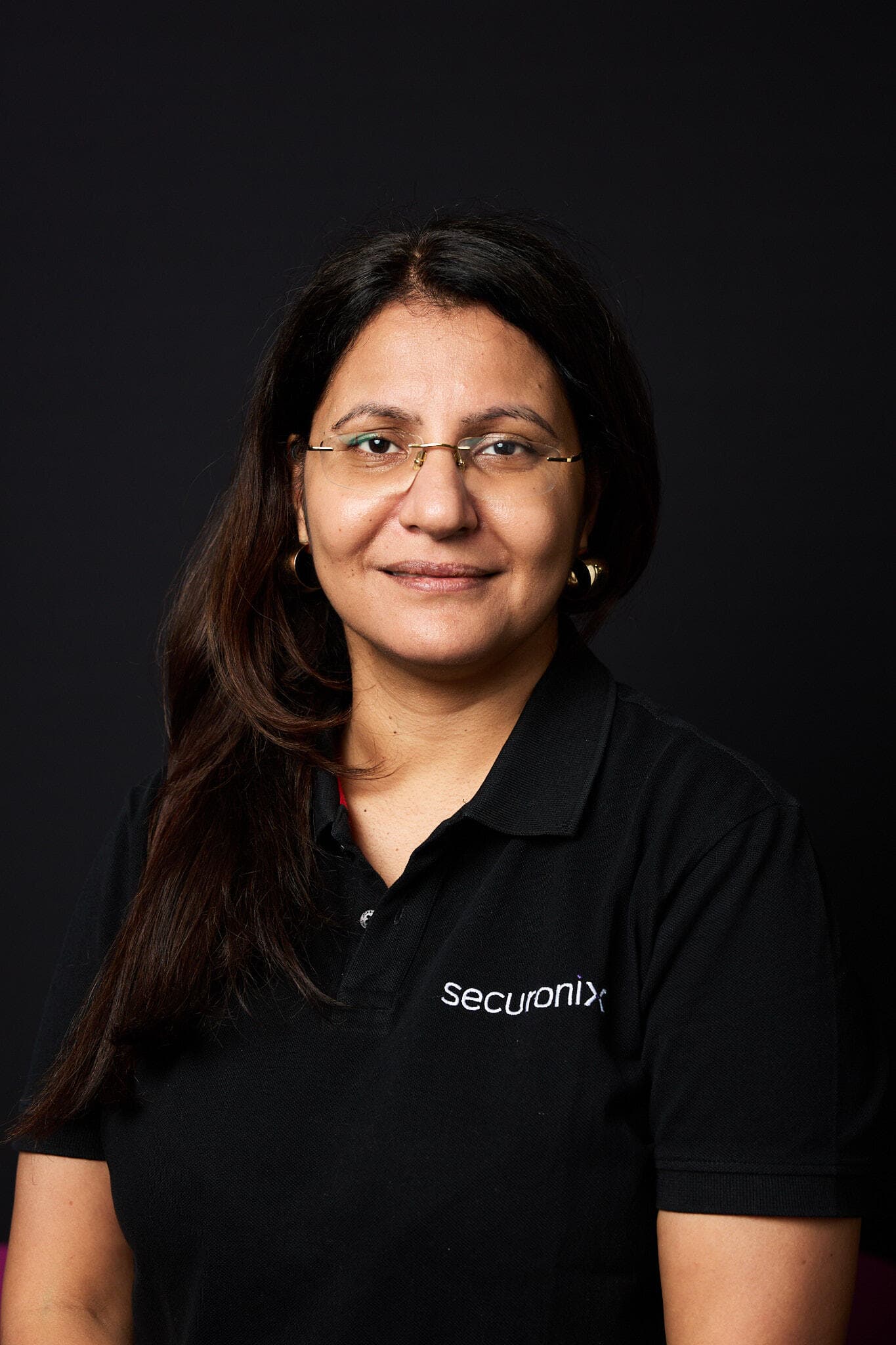
Vinny Sharma is Senior Marketing Director – Global Field and Partner Marketing, Securonix.
Please tell us about yourself and your journey in the tech/startup world.
My career roadmap took an unconventional path, starting with a degree in commerce, followed by a 3-year foundational technology program, and an MBA in Marketing. Early exposure to media and customer-centric roles helped me build a strong foundation in strategic communication and deep insights into shifting consumer behaviours and expectations. While continuing to contribute to strategic marketing, demand generation and brand positioning, my focus remained on accelerating the sales pipeline and cross-functional collaboration.
When I entered tech marketing at a global networking company, the function was largely centred on events. My goal was to evolve it into a true growth and business-enablement function. Then, my role at Securonix evolved from executing heavy responsibilities to strategic leadership. Being the first marketing hire for the organisation in the APAC region, I built the brand and assumed global responsibilities moving forward. I continue to lead my team through organisational changes while elevating Securonix’s brand presence across global markets.
What has been one defining moment in your career so far, and how did it shape the way you lead or build today?
The defining moment in my career has been the growth and opportunities I experienced at Securonix. I initially joined the organisation to lead marketing across Asia Pacific, Japan the Middle East, and Africa. By translating marketing strategies into measurable business outcomes, I helped drive pipeline growth, accelerate revenue and strengthen market presence across these regions.
One of my key contributions was leading SPARK from concept to execution and ultimately turning it into a major engine for brand visibility and pipeline acceleration. Securonix SPARK is a flagship cybersecurity conference that brings together IT and security leaders, experts, and practitioners to explore cutting-edge strategies and innovations in security operations.
As my work continued to deliver tangible impact, I was entrusted with expanded responsibilities. My remit grew to include the European market and, more recently, the North American market. Today, I take great pride in leading marketing initiatives across multiple global geographies.
What challenges have you faced as a woman in the tech/startup landscape, and how did you navigate them?
I was fortunate to work with tech leaders who were my mentors and, at the same time, trusted my strategic vision. They gave me the autonomy to make decisions, which encouraged me to take up leadership roles. I developed a deep understanding of the ecosystem and worked toward accelerating the pipeline for Sales, establishing the right cross-functional collaboration, and building a program that enabled success for the Sales team. This helped me challenge my thinking patterns and gave me the confidence to mold my leadership style.
Key challenges women still face today, though to a lesser extent, include gender bias, limited access to leadership opportunities, and often being paid less than their male counterparts. For meaningful change, the industry must take women leaders seriously and accord them the respect they deserve. At the same time, women must be well-prepared with facts, data, and clarity of purpose, and confidently own their journeys.
What’s something you think the tech world/startup industry is getting right when it comes to supporting women?
The tech and startup ecosystems are showing an increased understanding and acceptance of the potential of women in the sector. Women’s representation in tech is improving, conversations are taking place across the industry, and enterprises are intentional about inclusion.
Organisations are providing targeted skills development for women and encouraging them to participate in industry events, which offer networking opportunities to learn and grow with confidence. Women are also offered hybrid or flexible work environments to support work-life balance. Mentorship and sponsorship programs are further empowering women in tech leadership.
Conversely, where is there still work to be done in supporting women in tech and startups?
While some progress has been made in supporting women in learning, growing, and taking up leadership roles, substantial progress is still needed to close the gender gap and build a truly equitable ecosystem within the tech industry. Investments must increase across long-term mentorship, sponsorship, and role model visibility.
Organisations across all sectors must normalise inclusive hiring, flexible work culture and equal pay, with workplace policies enabling them. Inclusion should become the organisation’s core value and should be measured in the same way we measure performance, accountability, and transparency. Furthermore, with technology evolving at breakneck speed, organisations should provide ongoing training for all employees.
Looking ahead, what change would you most like to see for women in tech over the next five years?
In the short-term, I would like to see increased representation of women in decision-making and leadership roles where they contribute to the organisation’s business strategy, culture, and innovation. Women leaders should be open to experimenting with AI, automation and advanced analytics to drive innovation and lead by example.
As the tech sector increasingly values creativity and communication, women are uniquely positioned to play more strategic and impactful roles, leveraging their strengths in these areas. More importantly, women should become comfortable in showcasing their expertise and passion, which enables them to build a strong personal brand. They should be celebrated in tech, and their success stories must be shared with both internal and external stakeholders across media and other relevant channels.
What advice would you give to women who are just starting out in tech or considering founding their own company?
Women aspiring to build companies or enter the technology sector should cultivate strong analytical and strategic thinking skills from the very outset of their journeys. If they aspire to excel in a tech career, they must gain a deep understanding of the fundamentals and develop excellent soft skills. With women naturally excelling in communication, they should work toward establishing collaborative leadership.
Furthermore, as technology is no longer limited to engineering, women should focus on developing skills in creative problem-solving and cross-functional influencing, while keeping the customer at the centre. They should invest in building their skills in emerging technologies and go on the path of continuous learning. Mentorship and sponsorship should be sought out at early stages because feedback and new opportunities are critical.
Women aspiring to be entrepreneurs should cultivate confidence, network, learn to take calculated risks, and embrace failure as valuable lessons. They should establish a business model that will ensure they are on the right track.
More from Interviews
- Supporting Sustainability: Didi Gan, Founder And CEO Of N&E Innovations, Zayed Sustainability Prize-Winning Organisation
- Inside The Mind Of Anti Fund Partner Steve Han On Backing The Next Wave Of Disruptive Founders
- A Conversation With Ayoola Samagbeyi, CTO Of 9jaPay, Co-Founder Of Canalis Labs And SportsTech22 2026 Judge
- A Chat With Suzanna Chaplin, Founder And CEO, esbconnect, On The Future Of Acquisition And How Email Is The New Identity Layer
- Meet James Taylor, Founder and CEO at Particular Audience, The Company Bringing Amazon-Style Hyper-Personalisation To Every Other Retailer
- Truly Intelligent Content – Meet HumanCulture
- Interview With Shiv Shankar, CEO Of Boundless On Being The Largest ZK Protocol
- In Conversation With Chris Pettit, CEO And Co-Founder At Revving On How Messy Industries Often Hide The Biggest Opportunities
Wins and Wisdom: A Quick Q&A
We did a quick Q&A with Vinny; here’s what she had to say.
1. Who is a woman, past or present, who inspires you the most and why?
I wouldn’t define my inspiration around one single woman. Instead, I’ve been shaped by multiple women who have come into my life at different stages both personally and professionally. Each of them taught me something unique: resilience, composure under pressure, strategic thinking, empathy, courage, or the importance of self-belief.
What inspires me most is how differently strength can show up. Some demonstrated quiet consistency, others bold leadership, and some taught me the power of grace in difficult moments.
Over time, I’ve been able to “stitch” those learnings together and apply them in my own journey.
2. What’s a book, podcast or resource that has helped shape your career?
One resource that has shaped my thinking over time isn’t a single book, but a consistent habit of learning from leadership conversations – whether through interviews, executive podcasts, or long-form discussions with founders and operators.
Listening to how leaders think – how they make decisions amid uncertainty, balance short-term pressure with long-term vision, and navigate growth – has influenced how I approach my own role. It reinforced that leadership isn’t just about expertise; it’s about judgment, adaptability, and clarity of thought.
Staying curious and continuously exposing yourself to different perspectives is one of the most powerful tools for growth. The moment you think you know enough is the moment you stop evolving.
3. Can you share a quote or mantra that motivates you when things get tough?
“It always takes two to win.”
This reminds me that success is never individual – it’s built through alignment, partnership, and shared accountability. Whether it’s with teams, partners, or leadership, sustainable success comes from collaboration and mutual effort.
4. What’s one win or achievement from your career that you’re especially proud of?
I’m particularly proud of successfully expanding my leadership scope across multiple global regions in Securonix while maintaining alignment and momentum. Managing different markets with distinct dynamics requires a balance between strategy and execution, as well as global direction and regional nuance. Being trusted to scale that responsibility has been both challenging and rewarding.
5. What’s one habit or ritual that keeps you motivated and inspired every day?
I start each day by identifying the three most impactful priorities, not just the busiest ones. This keeps me focused on outcomes rather than activity. It helps me stay intentional and aligned with long-term goals, especially in fast-paced environments.
Would you like to participate in our 2026 International Women’s Day Interview series? Contact us