

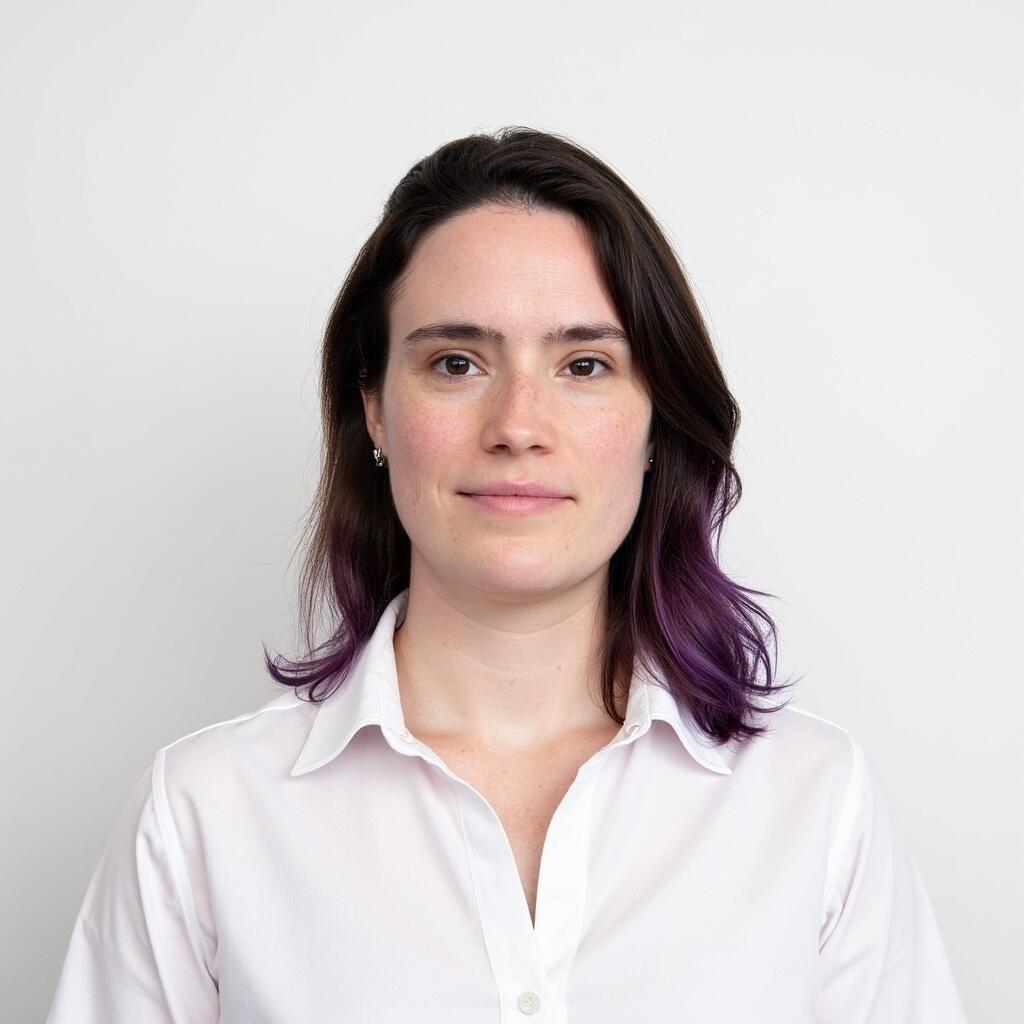
Zelda Mariet, Vice President Of Research And Co-Founder At Bioptimus
Please tell us about yourself and your journey in the tech/startup world.
My name is Zelda Mariet, and I’m vice president of research and a co-founder at Bioptimus, where I co-lead the research team. I grew up in France and trained in a very rigorous mathematical system, before moving to MIT for my PhD. That foundation shaped how I think – I’m drawn to structure, proof, and building principled models for complex systems.
At MIT, I studied strongly Rayleigh measures-an elegant mathematical tool to model the need for diversity in datasets for machine learning. After my PhD, I joined Google DeepMind and worked on large-scale models, including contributions to the Gemini paper, where I became particularly focused on hallucinations and reliability.
That experience pushed me toward medicine. Understanding uncertainty in the biomedical field is a key component of the research process, because it often guides discovery. Today, at Bioptimus, I focus on evaluation strategy while remaining a core contributor to the codebase.
What has been one defining moment in your career so far, and how did it shape the way you lead or build today?
One defining moment was fully grasping how serious hallucinations are in large language models. It’s uncomfortable to realise that systems you help build can generate confident but incorrect answers.
In some domains, that’s inconvenient, but in medicine, it’s unacceptable. It’s not simply about performance benchmarks; you have to consider whether the system behaves responsibly under uncertainty.
This realization also shaped how I lead my team at Bioptimus. I think constantly about how our models will actually be used by researchers or clinicians. For example, are we measuring the right things? Are we communicating uncertainty clearly? Are we building something that people can trust? For me, leadership in AI means insisting on rigor, especially when it would be easier to chase impressive numbers.
What challenges have you faced as a woman in the tech/startup landscape, and how did you navigate them?
I encountered very prevalent and targeted misogyny at the beginning of my academic career. Luckily, I successfully leveraged my academic performance to leave that environment behind and join MIT.
This taught me how much representation shapes the tone of a team and who feels comfortable contributing. At Bioptimus, over 30% of our technical team are women, and we are hiring at even higher proportions. It’s the strongest representation I’ve seen in an engineering organization.
I’ve also been involved in initiatives like the Computer Science Research Mentorship Program (for first-generation students) and Women in Machine Learning, which create structured spaces for mentorship, visibility, and long-term support in technical research.
What’s something you think the tech world/startup industry is getting right when it comes to supporting women?
I think people are increasingly aware that the founding team will shape the culture of the company. Which means that to hire the best people, the founding team must represent them – across gender and ethnicity lines, but so many others as well.
Conversely, where is there still work to be done in supporting women in tech and startups?
To support women in tech and startups, they have to already be there. So to me, the crux of the matter lies at the recruitment process. Understanding why some people apply but others don’t, finding out if you need to reach out to different communities, research labs or academic groups – these are steps you will have to take if you don’t want your recruitment pipeline to be biased.
What advice would you give to women who are just starting out in tech or considering founding their own company?
The same advice I would give anybody is that people usually know that they will need to work hard, build up a strong knowledge base, and skill set. What they may not know is that the people who came before them want to support them and help wherever they can. Don’t hesitate to reach out for support if you have a problem, either scientific or professional! There are so many people who want to help you out, in the same way that they themselves were helped before.
More from Interviews
- A Chat With Avion Gray (CEO) And Samantha Rosenberg (COO), Co-Founders Of Belong On Wealth Building
- Interview With Bert van der Zwan, CEO at Bizzdesign On Enterprise Transformation
- Supporting Sustainability: Didi Gan, Founder And CEO Of N&E Innovations, Zayed Sustainability Prize-Winning Organisation
- Inside The Mind Of Anti Fund Partner Steve Han On Backing The Next Wave Of Disruptive Founders
- A Conversation With Ayoola Samagbeyi, CTO Of 9jaPay, Co-Founder Of Canalis Labs And SportsTech22 2026 Judge
- A Chat With Suzanna Chaplin, Founder And CEO, esbconnect, On The Future Of Acquisition And How Email Is The New Identity Layer
- Meet James Taylor, Founder and CEO at Particular Audience, The Company Bringing Amazon-Style Hyper-Personalisation To Every Other Retailer
- Truly Intelligent Content – Meet HumanCulture
Wins and Wisdom: A Quick Q&A
We did a quick Q&A with Zelda to find out more about what makes her tick. Here’s what she had to say.
1. Who is a woman, past or present, who inspires you the most and why?
Roxane Gay [author], for her wit, kindness, and ability to uplift others.
2. What’s a book, podcast or resource that has helped shape your career?
Rajendra Bhatia’s “Matrix Analysis”. (Springer Science, 1996)
3. Can you share a quote or mantra that motivates you when things get tough?
“No darkness lasts forever, and even then there are stars” – Ursula le Guin.
4. What’s one win or achievement from your career that you’re especially proud of?
One achievement I’m especially proud of is helping build the Optimus models at Bioptimus, particularly M-Optimus. I helped lead the development of H-Optimus, our pathology foundation model suite, which is now approaching one million downloads and is used across cancer research and drug discovery. Building on that, I played a central role in developing M-Optimus, a multimodal, multiscale foundation model that connects histology, genomics, spatial, and clinical data within a single framework.
What makes this meaningful to me is not just the scale, but the shift it represents. We’re moving from siloed, single-modality systems toward shared biological representations that can generalise across diseases. That transition – from fragmentation to integration – is the kind of progress that can truly accelerate biomedical research.
5. What’s one habit or ritual that keeps you motivated and inspired every day?
I weightlift!
Would you like to participate in our 2026 International Women’s Day Interview series? Contact us