


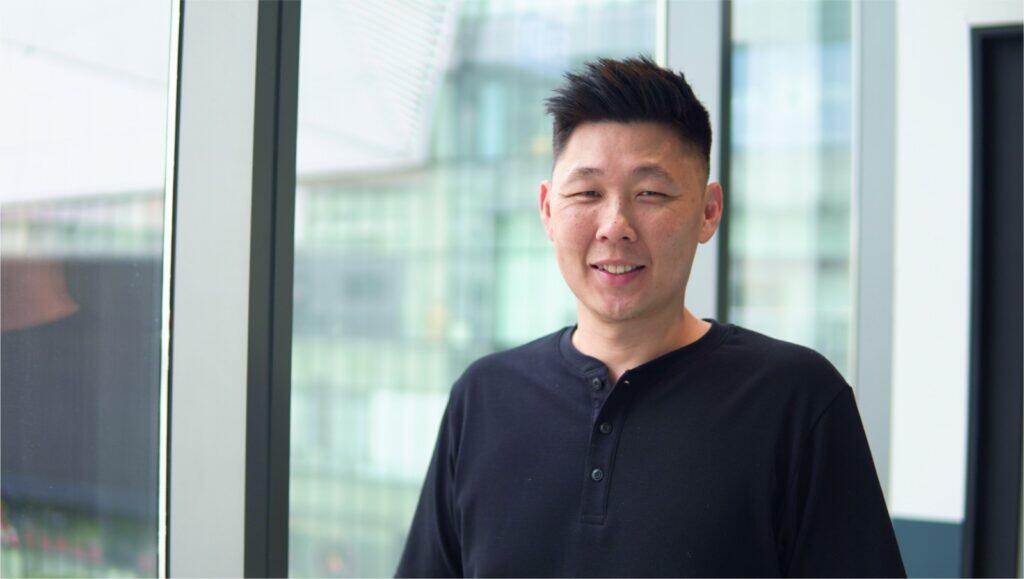
Tell us about audax. How did you come up with the idea for the company?
audax exists because there is a growing gap between the experiences customers expect from their banking providers and what most banks can realistically deliver. I’ve spent much of my career inside large global banks leading transformation initiatives, I repeatedly saw the same challenges – strong intent, ample resources and capital, but technology stacks that simply couldn’t scale, integrate or move at today’s speed.
We were conceived within Standard Chartered with support from SC Ventures, its fintech and innovation arm, under SC nexus. Through SC nexus, Standard Chartered became the first global bank to launch Banking-as-a-Service in Asia to bring in new revenue opportunities with a new technology stack.
Since 2023, we have spun out as a Standard Chartered subsidiary, operating as an independent, cloud-native digital banking technology provider. Our goal is to help banks and financial institutions modernise without ripping out their core systems, empowering them to launch new digital business models faster, more securely and at a fraction of the traditional cost.

Tell us about your core product or service.
At its core, audax provides an end-to-end digital banking platform; a “bank-in-a-box” designed for retail and SME banking. It is modular by design, allowing banks to deploy only what they need rather than overhauling their existing infrastructure entirely. That could mean launching a new digital bank, enabling Banking-as-a-Service, supporting embedded finance use cases, or running a parallel digital stack alongside legacy systems.
What sets our platform apart is its depth. It goes well beyond APIs and front-end applications to include everything required to operate a digital bank at scale -customer onboarding and KYC, account management, payments, lending journeys, data infrastructure, and cloud operations. We prioritise integration, security, operational resilience and regulatory compliance, enabling banks to move from concept to production in months rather than years.
What most excites you about the fintech industry?
What excites me most is how fintech is narrowing the gap between incumbents and innovators in the space. It’s encouraging to see how traditional banks accelerating their modernisation efforts, driven by need to improve returns on equity (ROE), lower acquisition costs, and deliver customer experiences that align with how people live and transact today. This has fostered a more collaborative dynamic between banks and fintechs — one where everyone wins, especially the end customer.
I’m also energised by the growth of Embedded Finance and Banking-as-a-Service, which are reshaping how people access financial services. When banking becomes invisible — where they are seamlessly integrated into the platforms people already use, it drives both inclusion and efficiency. We have seen this take shape in Southeast Asia, where super-apps and digital ecosystems are expanding access to financial tools through partnership models, and increasingly in the Middle East, where there are strong regulatory support and forward-looking institutions are driving large-scale transformation. That combination of scale, intent, and long-term vision makes this a pivotal moment for the industry and it’s exciting to see it unfold in different markets across the world.
More from Interviews
- A Chat With Avion Gray (CEO) And Samantha Rosenberg (COO), Co-Founders Of Belong On Wealth Building
- Interview With Bert van der Zwan, CEO at Bizzdesign On Enterprise Transformation
- Supporting Sustainability: Didi Gan, Founder And CEO Of N&E Innovations, Zayed Sustainability Prize-Winning Organisation
- Inside The Mind Of Anti Fund Partner Steve Han On Backing The Next Wave Of Disruptive Founders
- A Conversation With Ayoola Samagbeyi, CTO Of 9jaPay, Co-Founder Of Canalis Labs And SportsTech22 2026 Judge
- A Chat With Suzanna Chaplin, Founder And CEO, esbconnect, On The Future Of Acquisition And How Email Is The New Identity Layer
- Meet James Taylor, Founder and CEO at Particular Audience, The Company Bringing Amazon-Style Hyper-Personalisation To Every Other Retailer
- Truly Intelligent Content – Meet HumanCulture
What has been the biggest challenge you’ve had to overcome along the way?
The biggest challenge has been changing mindsets. Technology problems are usually solvable; cultural and organisational inertia is harder. Many banks understand what needs to change, but aligning leadership, incentives, and timelines around how to do it is more complex — especially when transformation spans multiple years.
For audax, earning trust has also been critical. Banks are rightly cautious about adopting new platforms that sit at the heart of their operations. Our strength lies in understanding that world — the regulatory scrutiny, operational risk, and scale at which banks operate. Demonstrating credibility and proving that modernisation doesn’t have to mean excessive risk or runaway costs, has been key.
What is your number one piece of advice to aspiring entrepreneurs?
Build something that solves a real problem, not just something that sounds exciting. Too many companies are built around trends rather than tangible needs. If you don’t deeply understand the problem you are solving and why existing solutions fall short, it’s difficult to build something truly durable.
Focus on execution, credibility, and long-term value creation, these are the levers that compound over time.
What can we hope to see from audax in the future?
The next phase for audax is all about scale, depth, and disciplined execution. We are seeing strong momentum across Southeast Asia and the Middle East, where incumbent banks are now operating under a clear imperative: modernise core capabilities quickly, without compromising stability, regulatory trust, or existing revenue engines. In many of these markets, the debate has moved decisively from whether to modernise to how to do so safely, at speed, and with a clear path to monetisation.
The Middle East, in particular, is becoming a major growth market, as regulators and institutions take a long-term view of financial infrastructure. The focus has evolved beyond front-end digitalisation; instead, banks are looking toward platform consolidation, cloud-native cores, data-driven operating models, and new forms of distribution such as Banking-as-a-Service and Embedded Finance.
We are also seeing strong interest from Islamic banks that are leapfrogging legacy systems altogether, rethinking product architectures, profit-sharing mechanics, and compliance workflows to supports automation and regulatory confidence from day one. This is particularly relevant in markets such as Saudi Arabia and the wider Gulf, where Islamic banking sits at the heart of the financial system.
From a product standpoint, we will continue expanding beyond retail and SME banking, adding Islamic digital banking capabilities, advanced data intelligence, automation, and support for emerging asset classes. Our goal remains consistent: to help banks become more scalable, efficient, and relevant while remaining secure, compliant, and trusted. When we achieve that, the technology should largely fade into the background, and banking simply works the way it should.