


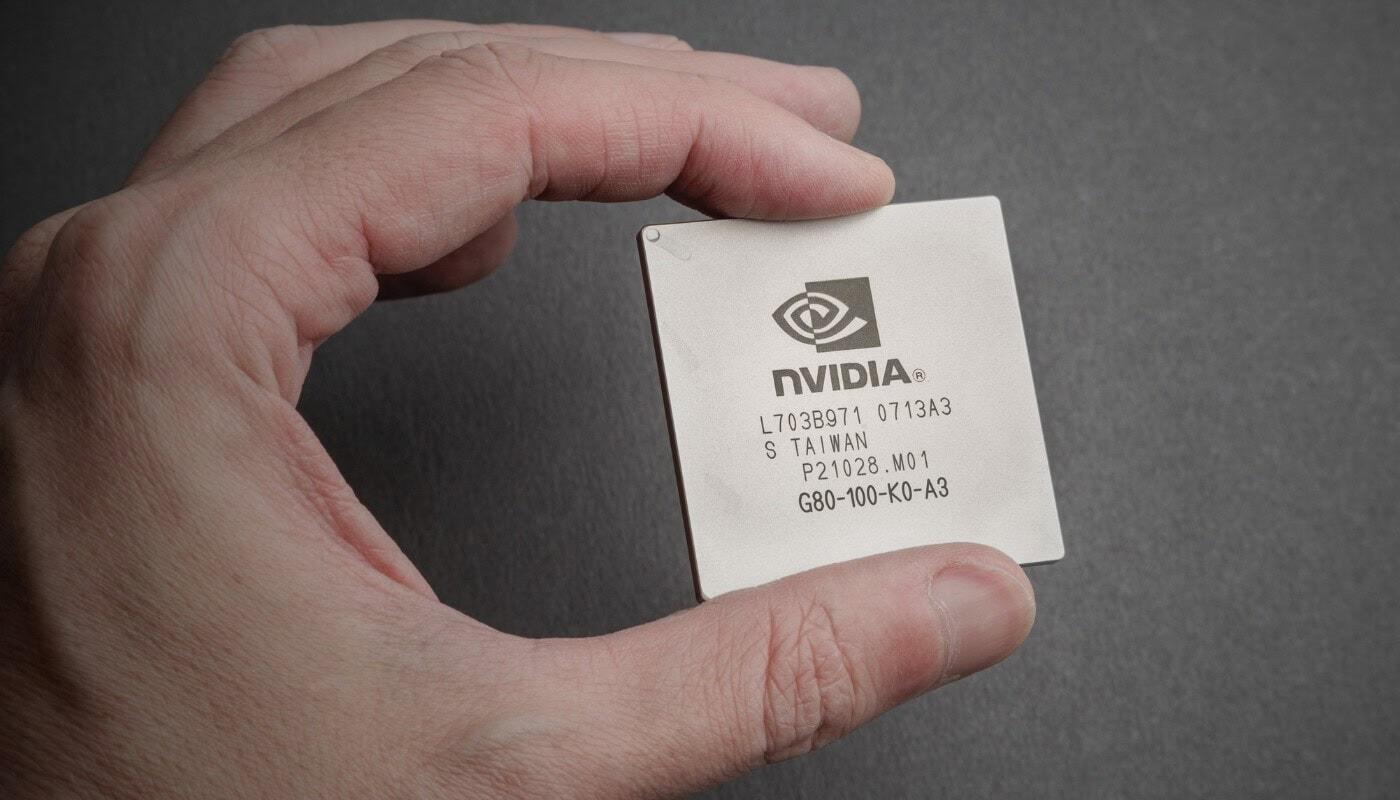
Nvidia has lost the only chief executive it’s ever had. Jensen Huang resigned as president, CEO and board member with immediate effect on 12 November, after 33 years leading the company.
CFO Colette Kress has taken over as interim CEO while keeping her CFO role, and Harvey Jones, a director since 1993, has been appointed the company’s first-ever chair. Nvidia says operations, customer commitments and its product roadmap will carry on without interruption, but its announcement didn’t give a reason for the resignation.
Nvidia’s board opened an independent investigation on 8 November, citing reports that Huang had been the target of a foreign intelligence effort, and published accounts say US officials suspect a woman he was reportedly involved with was recruited by Chinese intelligence. Beijing has rejected the claim as an unsubstantiated smear.
Huang has publicly admitted infidelity, and Nvidia has said it has no information so far suggesting he shared confidential business secrets. Donald Trump says the FBI is investigating, and Huang has reportedly agreed to appear before Congress. None of the allegations has been proven.
What Could The Fallout Look Like If The Allegations Hold Up?
Nvidia’s GPUs are used to train and run large AI models, which makes the company a load-bearing wall for the whole industry, and a crack in its boardroom gets noticed far beyond Santa Clara.
Shares fell about 6% towards a yearly low on 10 November amid the investigation and reports about its China chip sales, and Nvidia reports its third-quarter results on 17 November.
The China numbers are eye-watering, if they hold up. Reuters reported that a network linked to the businesswoman helped channel at least $7.5 billion of Nvidia hardware to Chinese companies from 2023, including roughly 240,000 H100, H200 and some A100 chips, after US export restrictions took effect. Those figures, and any role played by Huang’s relationship, remain allegations and not findings.
Lawmakers have already been asking questions. Senators Elizabeth Warren and Chris Coons have asked the Trump administration to preserve records on Nvidia’s advanced-chip exports to China, with a 17 November deadline for confirmation. Richard Neal and Ron Wyden have separately asked Commerce Secretary Howard Lutnick to preserve records on Nvidia’s export licence applications, including how H200 sales to China were approved.
If investigators did substantiate that confidential information was shared or that export controls were circumvented, the consequences could be wide. Export controls could tighten, a confirmed foreign-intelligence operation could prompt broader national-security and supply-chain scrutiny, and customers and investors could demand stronger assurances on security and governance. No government restriction or supply disruption has been announced so far.
So how bad could this get for Nvidia, the AI industry and the global chip supply chain? We put the question to the experts.
Our Experts:
- Dr Daniel Schatz, Political Scientist And Founder, Intelligent Consulting Stockholm AB
- Kadan Stadelmann, Co-Founder And Former CTO, Komodo Platform
- Babar Khan Javed, Chartered PR Practitioner And Principal, Aberrant
- Peter Boolkah, Business Coach, Keynote Speaker And Author
- Dr Yunita Anwar, Lillian Cook Braun Endowed Chair In Accounting, Shenandoah University
- Rodion Sorokin, Co-Founder And CTO, The Capital Index
Dr Daniel Schatz, Political Scientist And Founder, Intelligent Consulting Stockholm AB

“Jensen Huang’s departure is a serious governance shock for Nvidia, but it does not mean the company suddenly loses its technological edge. Nvidia’s moat rests on years of engineering, its CUDA software ecosystem, customer relationships and an unusually integrated hardware-and-software platform. Still, Huang was more than a CEO: he was the industry’s principal strategist, salesman and public face. Replacing that combination will be exceptionally difficult.
“For customers – from hyperscalers to AI start-ups – the immediate concern is execution: whether Nvidia can maintain its product roadmap, supply commitments and developer confidence during a succession process. Colette Kress offers operational continuity, but the new chair and board must demonstrate that strategic leadership is not concentrated in one individual.
“The China scrutiny adds a second and more consequential pressure point. Advanced-chip sales are no longer simply commercial transactions; they sit at the intersection of US national security, export-control enforcement and technological competition with Beijing. The H200 controversy may therefore lead to tighter oversight, more demanding end-use controls and greater uncertainty for customers globally.
“The wider lesson is that the AI boom has become dangerously concentrated – not just in Nvidia, but in a small number of chip designers, foundries, cloud providers and key executives. Huang’s exit exposes the governance risk embedded in that concentration. The response should not be panic, but greater resilience: credible succession planning, diversified supply chains and export rules that are transparent, enforceable and aligned with national-security objectives.”
Kadan Stadelmann, Co-Founder And Former CTO, Komodo Platform

“The entire AI industry is built upon highly centralised supply chains, with China wielding considerable market share. The industry’s reliance on Nvidia is merely symptomatic of an overarching pattern. To be sure, Nvidia is much larger than an executive. The business is largely built around its CUDA software platform and its hardware innovations, which consistently sets benchmarks for the industry.”
Babar Khan Javed, Chartered PR Practitioner And Principal, Aberrant

“Colette Kress will prioritise protecting the core data centre moat. This is of course the CUDA software and full-stack architecture. She will do this while treating volatile, heavily scrutinised H200 sales to China as expendable optionality rather than a growth pillar.
“For customers and the broader AI sector, this exposes acute key-person and concentration risk. While hyper-scalers remain locked into Nvidia’s ecosystem in the near term, Washington’s tightening export grip and governance shocks will accelerate customer spending on custom silicon.
“The AI boom will survive, though markets are being forced to reprice single-company dependency.”
Peter Boolkah, Business Coach, Keynote Speaker And Author Of Your Business Sucks

“I see the same problem in small companies every week, just with fewer zeros. When a business is built around one brilliant founder, everyone assumes they will always be there. That is not a strategy, it is a hope.
“What Nvidia shows is that the risk was never really the chips. It was how much of the decision making, the relationships and the story ran through one person. Take that person out suddenly and the board has to put in an interim chief and a new chair just to steady things, while customers and investors wonder who is actually steering.
“The lesson for any business, from a ten person firm to the biggest company in the world, is to treat succession as something you work on every year, not a plan in a drawer. Ask the uncomfortable question: if our leader disappeared for 30 days, what would break? Then build the bench. Give senior people real authority, let customers and investors see them, and get the knowledge out of the founder’s head. A great leader should be making themselves less essential every year, not more.”
Dr Yunita Anwar, Lillian Cook Braun Endowed Chair In Accounting, Shenandoah University

“Yes, it shows how much of the AI boom rests on one company, and how much of that company rests on one person. A large part of any firm’s value sits in its people, its know-how and its relationships. Accountants call that intellectual capital, and it never shows up on the balance sheet. Nvidia’s books show its chips, its cash and its contracts, but not the leader who held them together for 33 years. Investors were partly pricing a founder. Now they have to price a system.
“The board’s first moves point the right way. Splitting the chair and chief executive roles puts someone in a position to oversee management, not just support it. Naming an experienced insider as interim chief also helps with customers. Chip roadmaps and supply deals are planned well ahead, so the near-term direction may change less than the share price suggests. The harder test is depth. With the CFO moving into the top job, investors will want to know who is running the finance function in the meantime, with earnings due on 17 November.
“The independent investigation and the questions about H200 sales to China are also disclosure questions. If either could carry legal or financial consequences, investors will look for how the company describes those risks in its filings, and whether it is candid about what it does not yet know. Succession isn’t only a press release. It’s a control, and this is the week it gets tested.”
Rodion Sorokin, Co-Founder And CTO, The Capital Index

“Nvidia’s roadmap won’t change overnight. The chips shipping next year were designed years ago, and the board says operations, customer commitments and the product roadmap will continue without interruption. The real exposure is governance. A company that is only now getting its first-ever board chair was run as a founder’s company long after it became critical infrastructure.
“For customers, the lesson isn’t to dump Nvidia; it’s to stop treating one supplier as a strategy. Keep workloads portable across chips and clouds, and manage single-vendor dependence the way banks manage concentration risk. And yes, it exposes the AI boom’s single points of failure: one dominant chip supplier, one software ecosystem in CUDA, one leading-edge manufacturer in TSMC, and, until this week, one founder as the face of it all. Scrutiny of H200 sales to China pushes the same way: AI chips are now strategic assets, and their supply chains will be governed like it.”


